The Story
Plant Bio
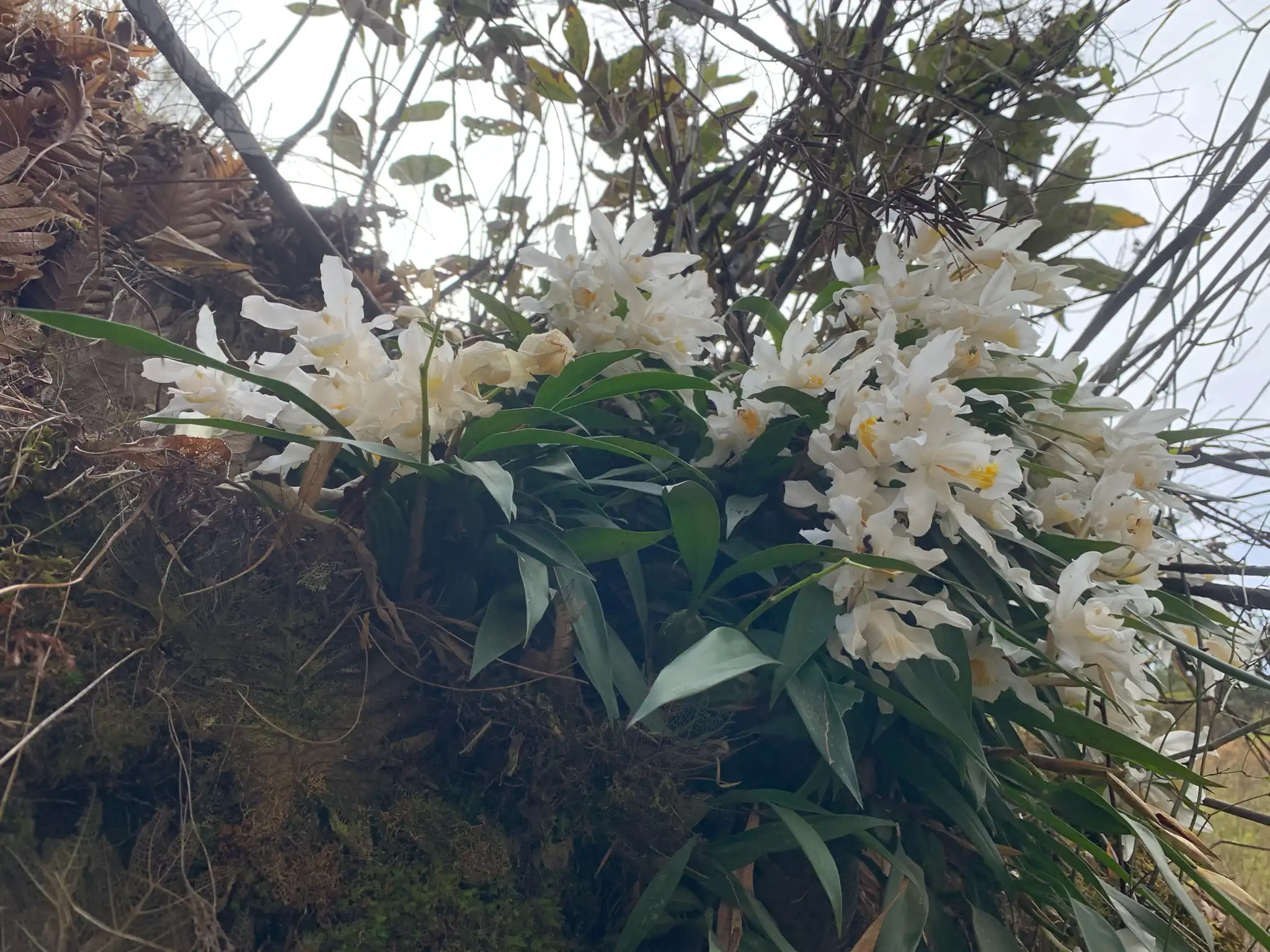
Coelogyne cristata is an epiphytic or lithophytic sympodial orchid native to the cool, high-altitude regions of the Himalayas and Southeast Asia. The plant produces glossy, egg-shaped pseudobulbs topped with pairs of arching, strap-like leaves and spreads via creeping rhizomes to form dense, cascading clumps.
This species is distinguished by its pendulous winter-to-spring flower spikes that carry large, fragrant, snow-white blooms marked with prominent golden-yellow fringed crests on the lip. New foliage emerges with a natural sticky sap that protects the developing shoots but requires occasional rinsing to prevent binding the flower spikes.
Uses & Benefits:
Essentials
At a Glance
Plant Type
Tropical
Height
18"
Width
24"
Light
Partial Sun, Shade
Water
Moderate (dry in winter)
Humidity
60% to 85%
Lifespan
Long-lived
Native To
Himalayas, Southeast Asia
Toxicity
Non-toxic
Bloom period
Winter – Spring
In flower about 6 months of the year
Planting
How to Grow
- Pot in a highly aerated, coarse medium such as medium-grade pine bark mixed with sphagnum moss.
- Position in bright, indirect light or dappled shade, avoiding direct midday sun which scorches the foliage.
- Water copiously during the active spring and summer growth phases, keeping the medium consistently moist but never waterlogged.
- Provide high humidity between 60% and 85% and maintain cool night temperatures, especially during the winter rest.
Pro Tip
Withhold fertilizer and sharply reduce watering during the late fall and winter rest period to trigger flower spike development; keeping the plant warm and wet year-round prevents blooming.
Keep It Thriving
Care Guide
Do
- Rinse sticky sap off emerging new leaves with tepid water to allow flower spikes to unfurl freely.
- Keep the plant in the same container for three to five years, as frequent repotting halts flowering.
- Provide a cool, dry winter rest with night temperatures dropping to 40-50°F (4-10°C) to initiate buds.
Don't
- Do not cut into old, leafless back pseudobulbs, as they store vital energy and water for the plant.
- Do not allow the roots to sit in stagnant, waterlogged potting media.
- Do not fertilize during the late fall and winter rest period.
Seasonal Care Calendar
| Task | Jan | Feb | Mar | Apr | May | Jun | Jul | Aug | Sep | Oct | Nov | Dec |
|---|---|---|---|---|---|---|---|---|---|---|---|---|
| Fertilize | ||||||||||||
| Pest Check | ||||||||||||
| Propagate | ||||||||||||
| Spring Cleanup | ||||||||||||
| Winter Prep |
Watch Out For
Pests & Diseases
Common Pests
Common Diseases
In the Garden
Landscape Uses & Companions
Landscape Uses
Companion Plants
Multiply
Propagation Methods
Good to Know
Common Questions
Crested Coelogyne questions
When does Crested Coelogyne bloom?
Crested Coelogyne typically blooms in winter through spring. Exact timing shifts a week or two with your zone — Sow's bloom calendar maps it to your garden.
Does Crested Coelogyne need full sun?
Crested Coelogyne does best in part shade.
Is Crested Coelogyne drought tolerant?
Yes — once established (usually after the first full season), Crested Coelogyne handles dry spells with minimal watering. Water deeply its first year to build the root system that makes that possible.
Keep exploring
Explore the genus
Grow Crested Coelogyne with confidence
See it in a design of your actual yard, get zone-matched care reminders, and track it season by season in your garden journal.