The Story
Plant Bio
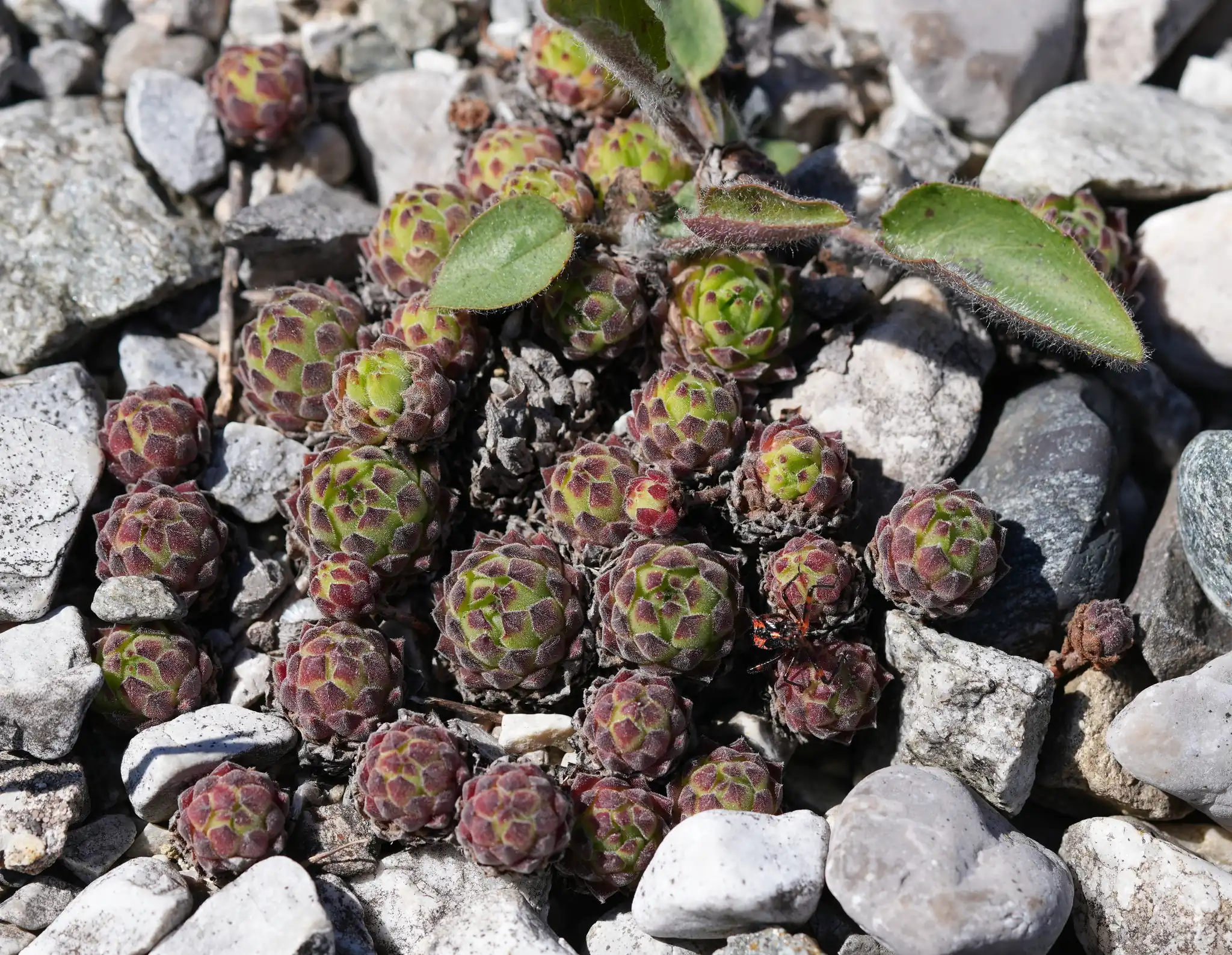
Sempervivum montanum, commonly known as mountain houseleek, is an evergreen succulent native to the high-altitude rocky slopes of southern and central Europe. It forms dense, low-growing mats of tight rosettes that spread steadily via short stolons.
This species is distinguished by its mid-green, lanceolate leaves covered in dense, sticky glandular hairs and often tipped with deep maroon-brown. In early summer, mature rosettes produce short, leafy stalks topped with clusters of star-shaped, reddish-purple flowers before dying.
Uses & Benefits:
Essentials
At a Glance
Plant Type
Cactus Succulent
Height
4"
Width
14"
Light
Full Sun, Partial Sun
Zones
4, 5, 6, 7, 8, 9, 10
Water
Low
Humidity
Low to moderate
Lifespan
Perennial (individual rosettes are monocarpic but colony is long-lived)
Native To
Southern and central Europe
Toxicity
Non-toxic
Bloom period
Early summer – Mid-summer
In flower about 2 months of the year
Planting
How to Grow
- Select a planting site in full sun with exceptionally sharp, gravelly, or sandy mineral soil.
- Dig a shallow hole just deep enough to accommodate the root system, ensuring the base of the rosette sits slightly above the surrounding soil level.
- Backfill with a lean, gritty soil mix and press gently to secure the plant without burying the foliage.
- Water sparingly to settle the soil, then withhold further irrigation until the substrate has dried out completely.
Pro Tip
Amateurs often kill this succulent by planting it in rich, moisture-retaining potting soil or treating it as an indoor houseplant. Grow it outdoors in lean, gritty, highly porous mineral substrates with maximum sun exposure to maintain tight, colorful rosettes and prevent fatal crown rot.
Keep It Thriving
Care Guide
Do
- Grow in highly porous, sandy, or stony mineral soils with excellent drainage.
- Remove spent mother rosettes cleanly at their base after they finish flowering.
- Provide full sun to maintain the tight, symmetrical shape and deep tip coloration.
Don't
- Do not plant in rich, organic, or moisture-retaining garden soils.
- Never allow the plant to sit in waterlogged or soggy substrate.
- Avoid overwatering during periods of high summer humidity.
Seasonal Care Calendar
| Task | Jan | Feb | Mar | Apr | May | Jun | Jul | Aug | Sep | Oct | Nov | Dec |
|---|---|---|---|---|---|---|---|---|---|---|---|---|
| Deadhead | ||||||||||||
| Fertilize | ||||||||||||
| Pest Check | ||||||||||||
| Propagate | ||||||||||||
| Spring Cleanup |
Watch Out For
Pests & Diseases
Common Pests
Common Diseases
In the Garden
Landscape Uses & Companions
Landscape Uses
Multiply
Propagation Methods
Good to Know
Common Questions
Mountain Houseleek questions
What zones can Mountain Houseleek grow in?
Mountain Houseleek is hardy in USDA Zones 4–10. Inside that range it survives winter in the ground; outside it, grow it as an annual or a container plant you protect.
Is Mountain Houseleek deer resistant?
Yes — Mountain Houseleek is rated deer-resistant. Deer typically pass it over, though extreme hunger can override any plant's defenses.
When does Mountain Houseleek bloom?
Mountain Houseleek typically blooms in early summer through mid-summer. Exact timing shifts a week or two with your zone — Sow's bloom calendar maps it to your garden.
Does Mountain Houseleek need full sun?
Mountain Houseleek does best in full sun to part shade. In hot climates, afternoon shade keeps blooms fresher longer.
Is Mountain Houseleek drought tolerant?
Yes — once established (usually after the first full season), Mountain Houseleek handles dry spells with minimal watering. Water deeply its first year to build the root system that makes that possible.
More Sempervivum to compare

Hens and Chicks
Sempervivum tectorum 'Mix'
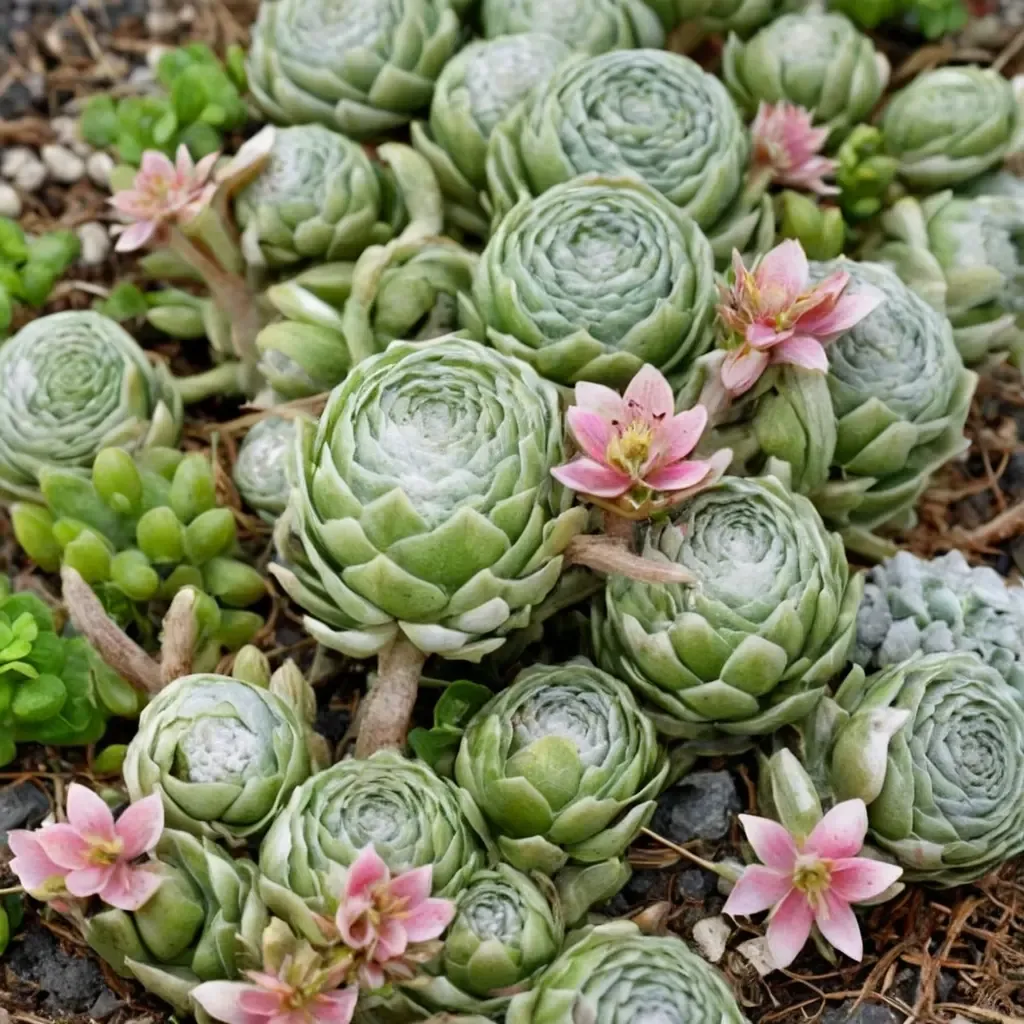
Cobweb Houseleek
Sempervivum tectorum 'Cobweb'
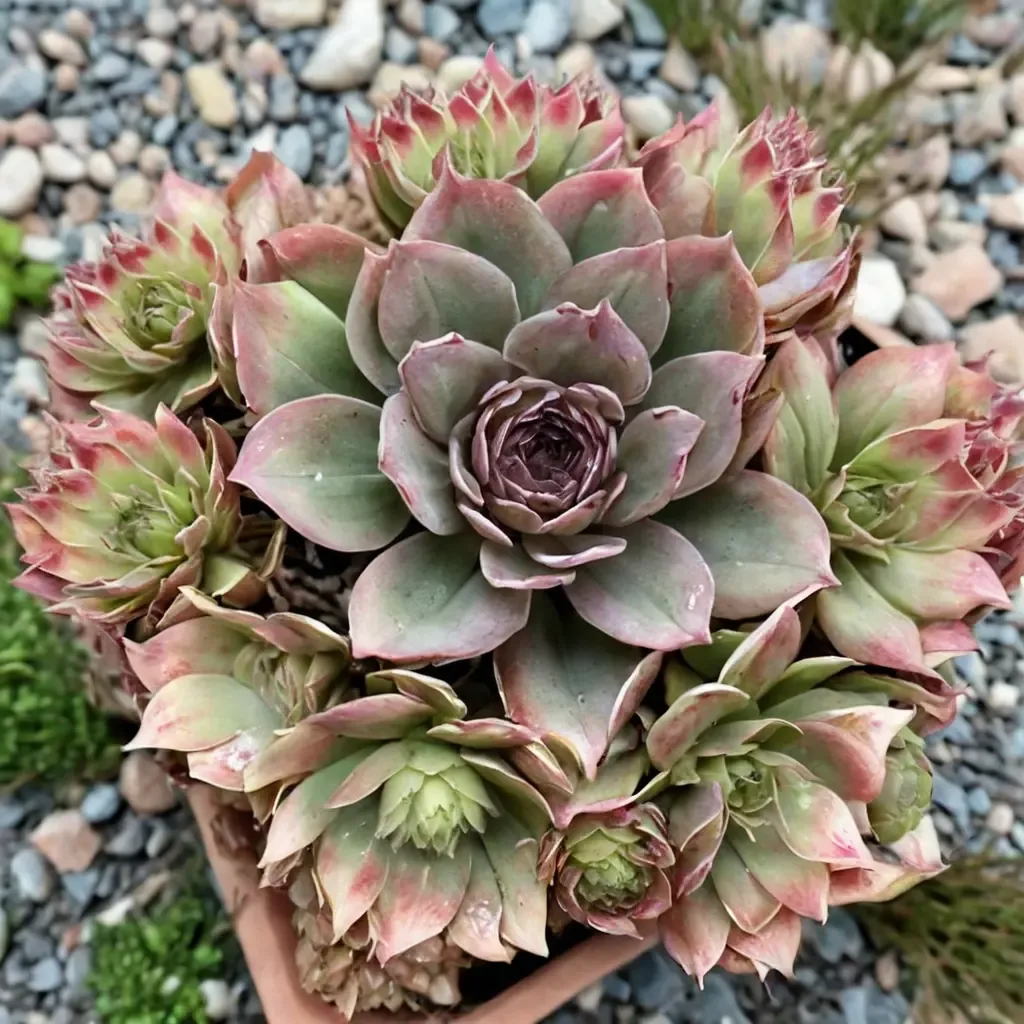
Dynamo Hens and Chicks
Sempervivum tectorum 'Dynamo Hens n Chicks'
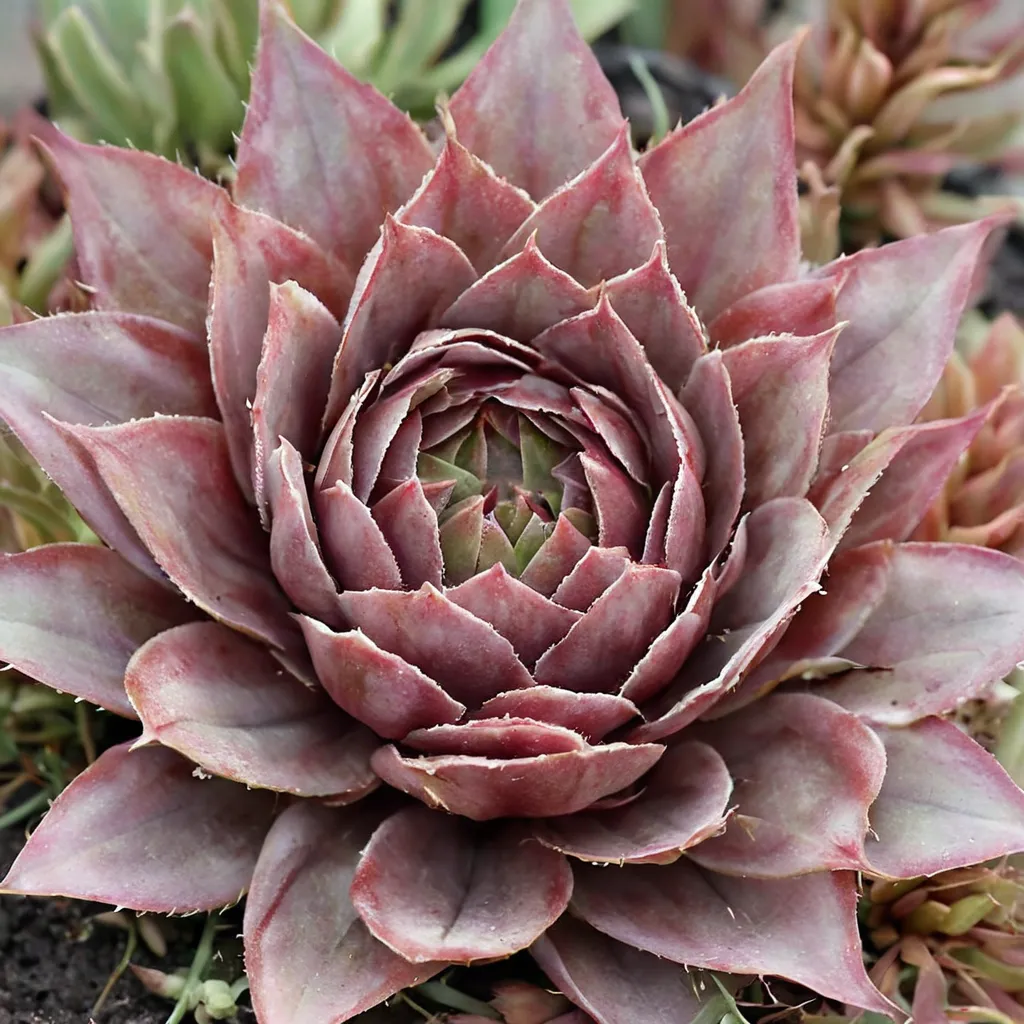
Sempervivum Red Beauty
Sempervivum x hybrida 'Red Beauty'
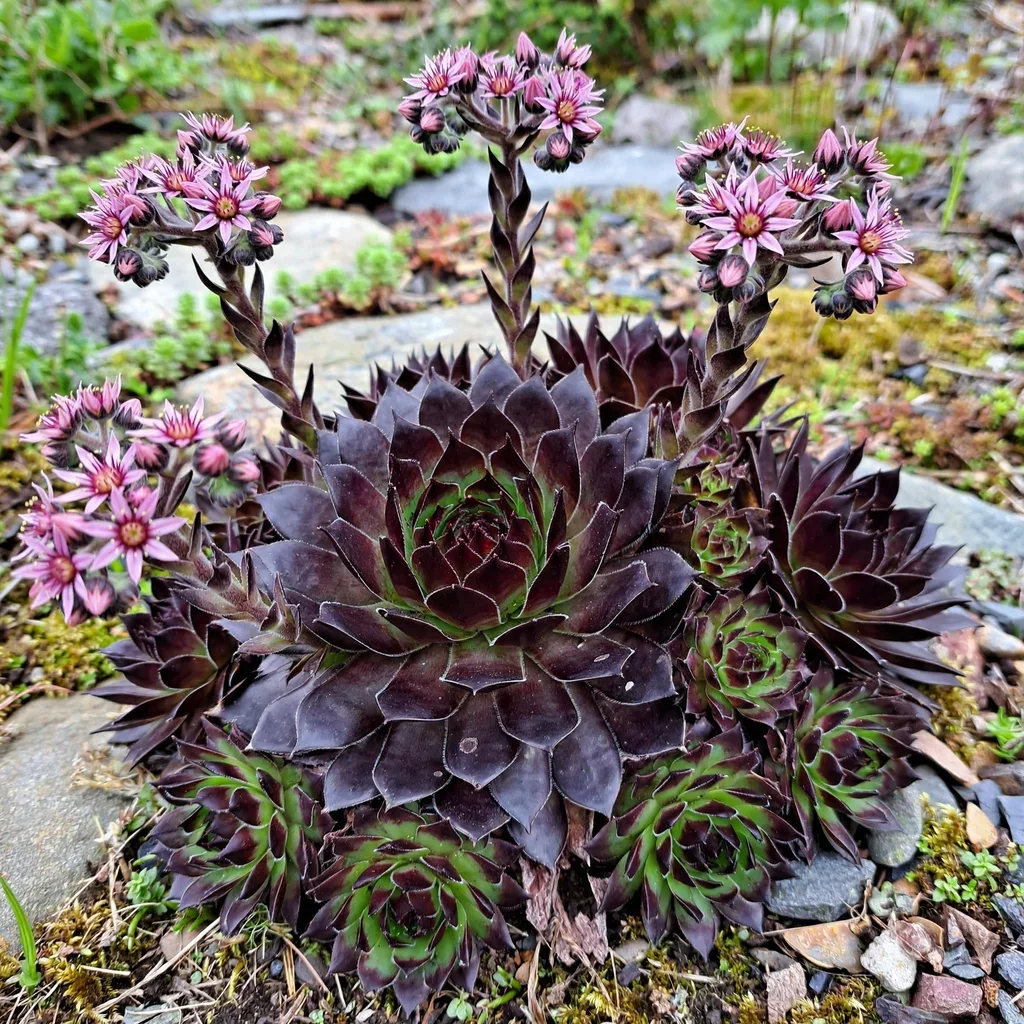
Black Hens and Chicks
Sempervivum tectorum 'Black'
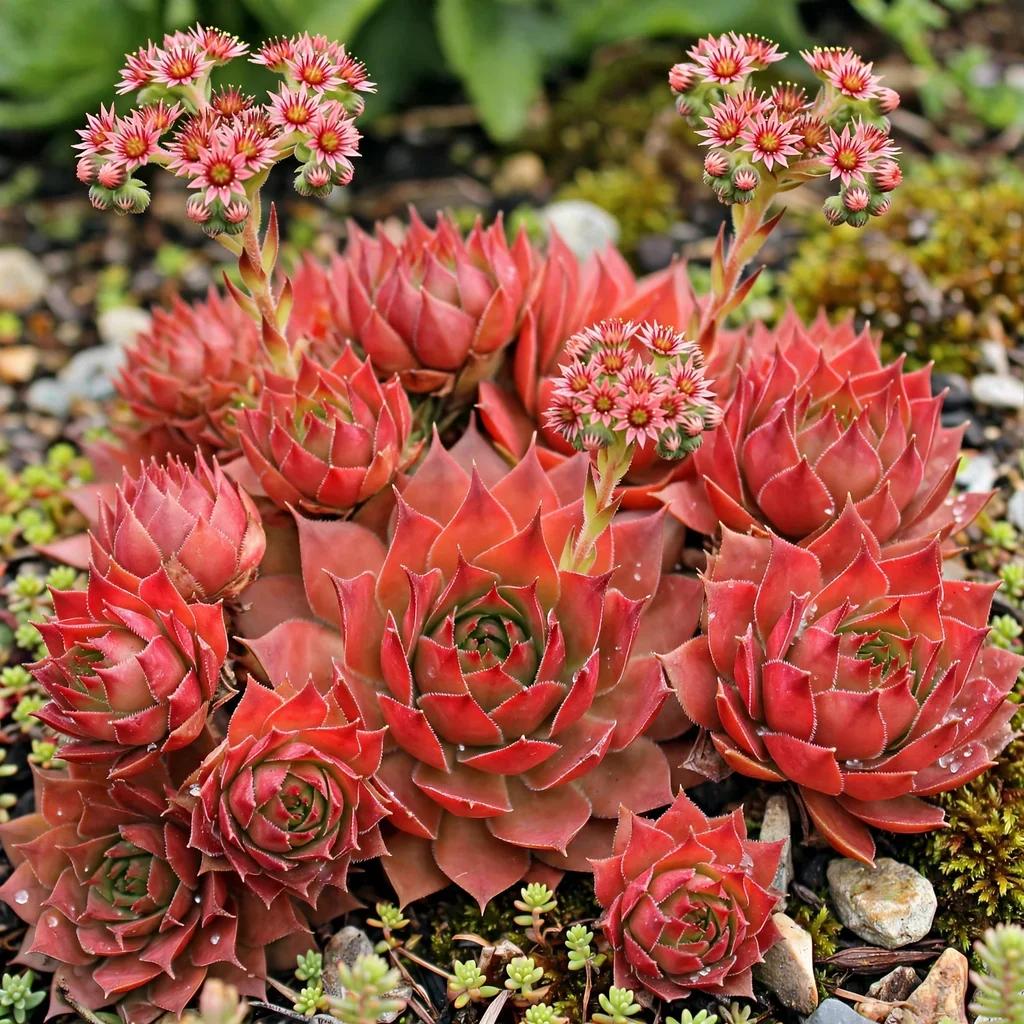
Coral Red Hens and Chicks
Sempervivum tectorum 'Coral Red'
Keep exploring
Explore the genus
Grow Mountain Houseleek with confidence
See it in a design of your actual yard, get zone-matched care reminders, and track it season by season in your garden journal.