The Story
Plant Bio
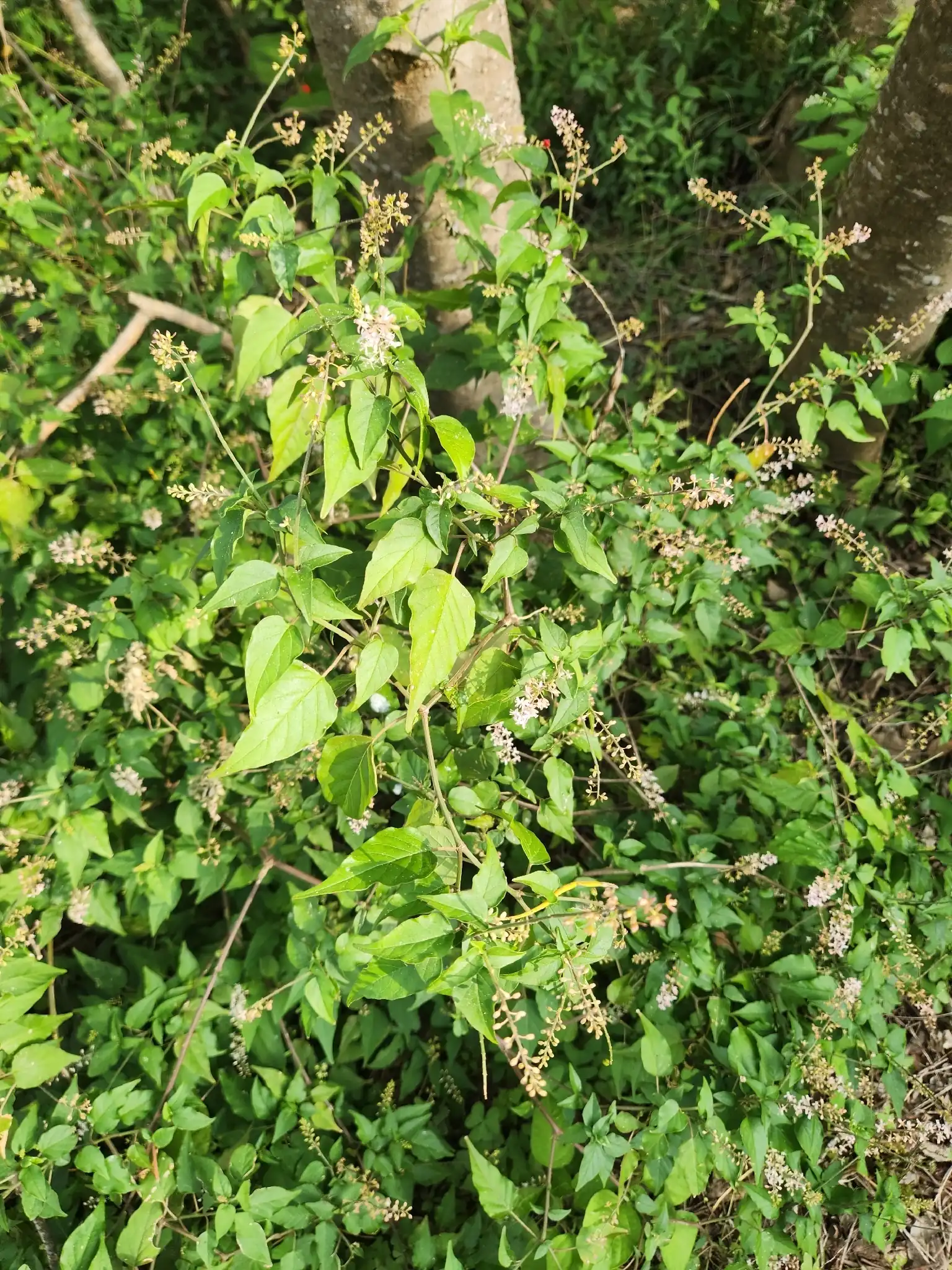
Rivina humilis, known as pigeonberry, is an erect to sprawling herbaceous perennial or subshrub native to the southern United States and tropical Americas. It produces slender, branching stems that become woody at the base, bearing soft green, ovate leaves and small white to pinkish flowers on elongating racemes.
The flowers are followed by clusters of glossy, bright red globose berries that provide a continuous food source for songbirds and small mammals. In frost-free southern zones, the plant maintains its flowering and fruiting cycle year-round, while in cooler climates it dies back to the root crown during winter freezes.
Uses & Benefits:
Essentials
At a Glance
Plant Type
Perennial
Height
39"
Width
35"
Light
Partial Sun, Shade
Zones
8, 9, 10
Water
Moderate
Humidity
High
Lifespan
Perennial
Native To
The Americas
Toxicity
Toxic if ingested
Bloom period
Spring – Fall
In flower about 9 months of the year
Planting
How to Grow
- Select a site in partial to full shade with well-draining sandy loam or organic-rich soil.
- Plant in spring after the last frost, spacing multiple plants 12 to 18 inches apart to allow for their sprawling habit.
- Water regularly until established, ensuring the soil drains completely to prevent root rot.
- Apply a thin layer of organic mulch around the base to retain moisture and suppress weeds without burying the crown.
Pro Tip
Site this plant carefully in shaded woodland beds where its aggressive self-seeding habit can be managed or utilized as a naturalizing understory groundcover. Avoid planting in areas with heavy afternoon sun, which scorches the foliage.
Keep It Thriving
Care Guide
Do
- Prune back hard to a few inches above the soil line in late winter to maintain a compact shape.
- Grow in partial to full shade to protect the foliage from scorching.
- Ensure high soil drainage to prevent Pythium and Phytophthora root rot.
Don't
- Do not shear into old, leafless woody stems, as this limits new growth.
- Do not over-fertilize, as heavy feeding leads to weak, lanky stems.
- Do not plant in poorly draining clay soils where standing water accumulates.
Seasonal Care Calendar
| Task | Jan | Feb | Mar | Apr | May | Jun | Jul | Aug | Sep | Oct | Nov | Dec |
|---|---|---|---|---|---|---|---|---|---|---|---|---|
| Fertilize | ||||||||||||
| Pest Check | ||||||||||||
| Prune | ||||||||||||
| Spring Cleanup |
Watch Out For
Pests & Diseases
Common Pests
Common Diseases
In the Garden
Landscape Uses & Companions
Landscape Uses
Companion Plants
Multiply
Propagation Methods
Good to Know
Common Questions
Pigeonberry questions
What zones can Pigeonberry grow in?
Pigeonberry is hardy in USDA Zones 8–10. Inside that range it survives winter in the ground; outside it, grow it as an annual or a container plant you protect.
Is Pigeonberry deer resistant?
Not reliably. Deer may browse Pigeonberry, especially tender spring growth — plan on repellents or fencing where pressure is high.
When does Pigeonberry bloom?
Pigeonberry typically blooms in spring through fall. Exact timing shifts a week or two with your zone — Sow's bloom calendar maps it to your garden.
Does Pigeonberry need full sun?
Pigeonberry does best in part shade.
Is Pigeonberry drought tolerant?
Yes — once established (usually after the first full season), Pigeonberry handles dry spells with minimal watering. Water deeply its first year to build the root system that makes that possible.
Keep exploring
Explore the genus
Hardy in your zone?
Grow Pigeonberry with confidence
See it in a design of your actual yard, get zone-matched care reminders, and track it season by season in your garden journal.