The Story
Plant Bio
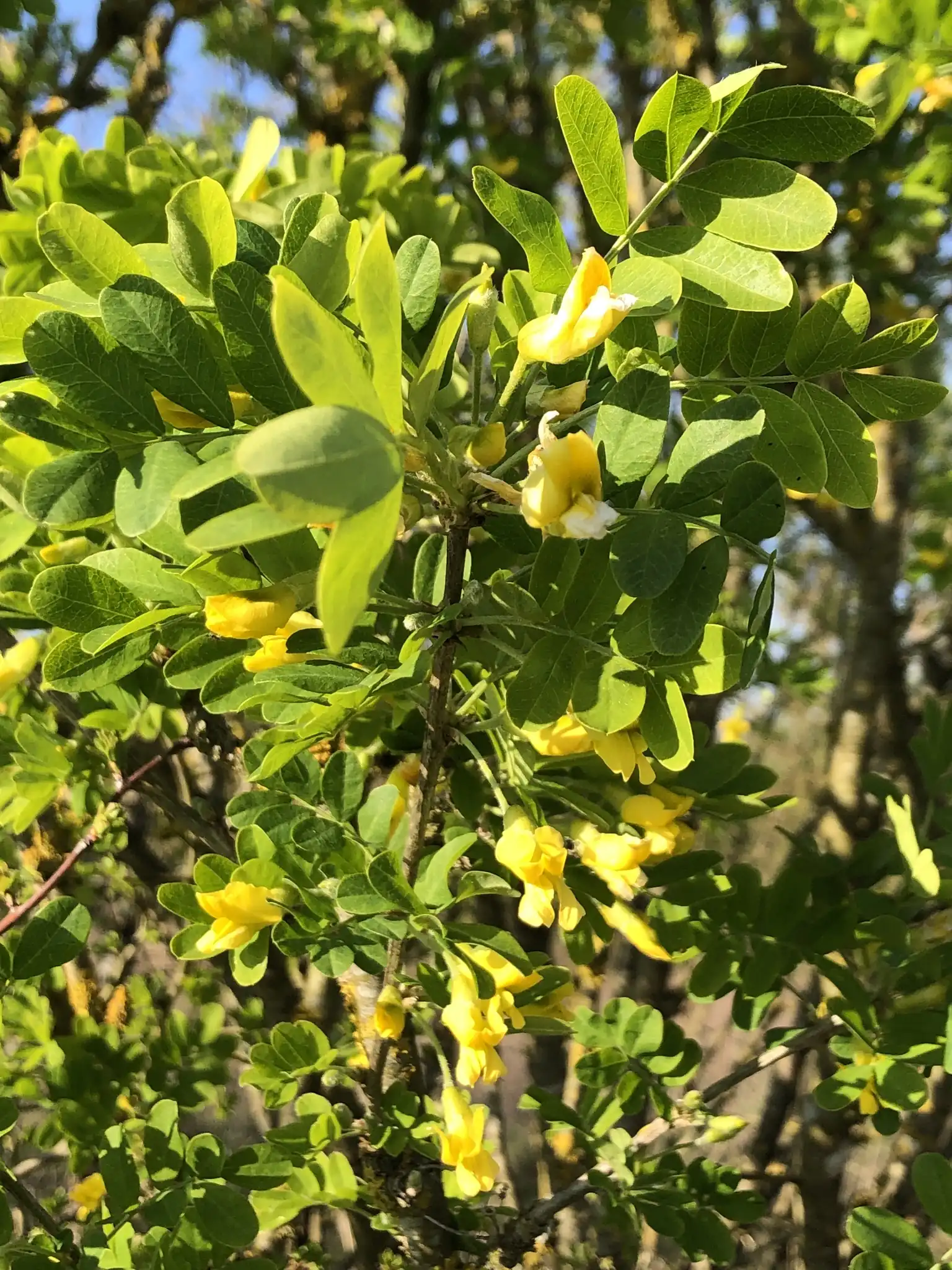
Colutea arborescens is a fast-growing, deciduous woody shrub native to parts of Central and Southern Europe and North Africa. It forms an open, spreading habit with dull to pale green, odd-pinnately compound leaves.
This species produces bright yellow to yellow-orange, pea-like flowers from spring through summer, often continuing until the first frosts. Its most distinctive feature is the inflated, bladder-like seed pods that develop after flowering.
Uses & Benefits:
Essentials
At a Glance
Plant Type
Shrub
Height
118"
Width
94"
Light
Full Sun
Zones
4, 5, 6, 7, 8
Water
Low
Humidity
Moderate
Lifespan
Many years
Native To
Central and Southern Europe, North Africa
Toxicity
Toxic if ingested
Bloom period
Spring – Summer
In flower about 6 months of the year
Planting
How to Grow
- Choose a site with full sun and well-drained soil, avoiding waterlogged conditions.
- Plant in spring or fall, ensuring the root ball is at the same level as in the nursery pot.
- Water regularly during the first growing season to establish a strong root system.
- Prune hard each winter, cutting back almost to the old woody framework to encourage dense growth and abundant flowering.
Pro Tip
Prune stems hard back to the old woody framework each winter, as flowers develop on the current season's growth. Avoid planting in damp, rich soils, which can lead to overly lush growth, reduced hardiness, and root rot.
Keep It Thriving
Care Guide
Do
- Ensure excellent soil drainage to prevent root rot.
- Prune aggressively each winter to maintain a dense, floriferous habit.
- Provide full sun for best flowering and overall plant health.
- Allow the soil to dry out between waterings once established, as it is highly drought-tolerant.
Don't
- Do not plant in waterlogged or soggy soils, as this will lead to root rot.
- Avoid leaving long, weak, unpruned branches, which can become leggy and reduce flowering.
- Do not over-fertilize, especially with nitrogen, due to its nitrogen-fixing capacity.
- Do not expose to direct maritime salt spray.
Seasonal Care Calendar
| Task | Jan | Feb | Mar | Apr | May | Jun | Jul | Aug | Sep | Oct | Nov | Dec |
|---|---|---|---|---|---|---|---|---|---|---|---|---|
| Mulch | ||||||||||||
| Pest Check | ||||||||||||
| Propagate | ||||||||||||
| Prune |
Watch Out For
Pests & Diseases
Common Pests
Common Diseases
In the Garden
Landscape Uses & Companions
Landscape Uses
Multiply
Propagation Methods
Good to Know
Common Questions
Bladder Senna questions
What zones can Bladder Senna grow in?
Bladder Senna is hardy in USDA Zones 4–8. Inside that range it survives winter in the ground; outside it, grow it as an annual or a container plant you protect.
When does Bladder Senna bloom?
Bladder Senna typically blooms in spring through summer. Exact timing shifts a week or two with your zone — Sow's bloom calendar maps it to your garden.
Does Bladder Senna need full sun?
Bladder Senna does best in full sun (6+ hours).
Is Bladder Senna drought tolerant?
Yes — once established (usually after the first full season), Bladder Senna handles dry spells with minimal watering. Water deeply its first year to build the root system that makes that possible.
Keep exploring
Explore the genus
Hardy in your zone?
Grow Bladder Senna with confidence
See it in a design of your actual yard, get zone-matched care reminders, and track it season by season in your garden journal.