The Story
Plant Bio
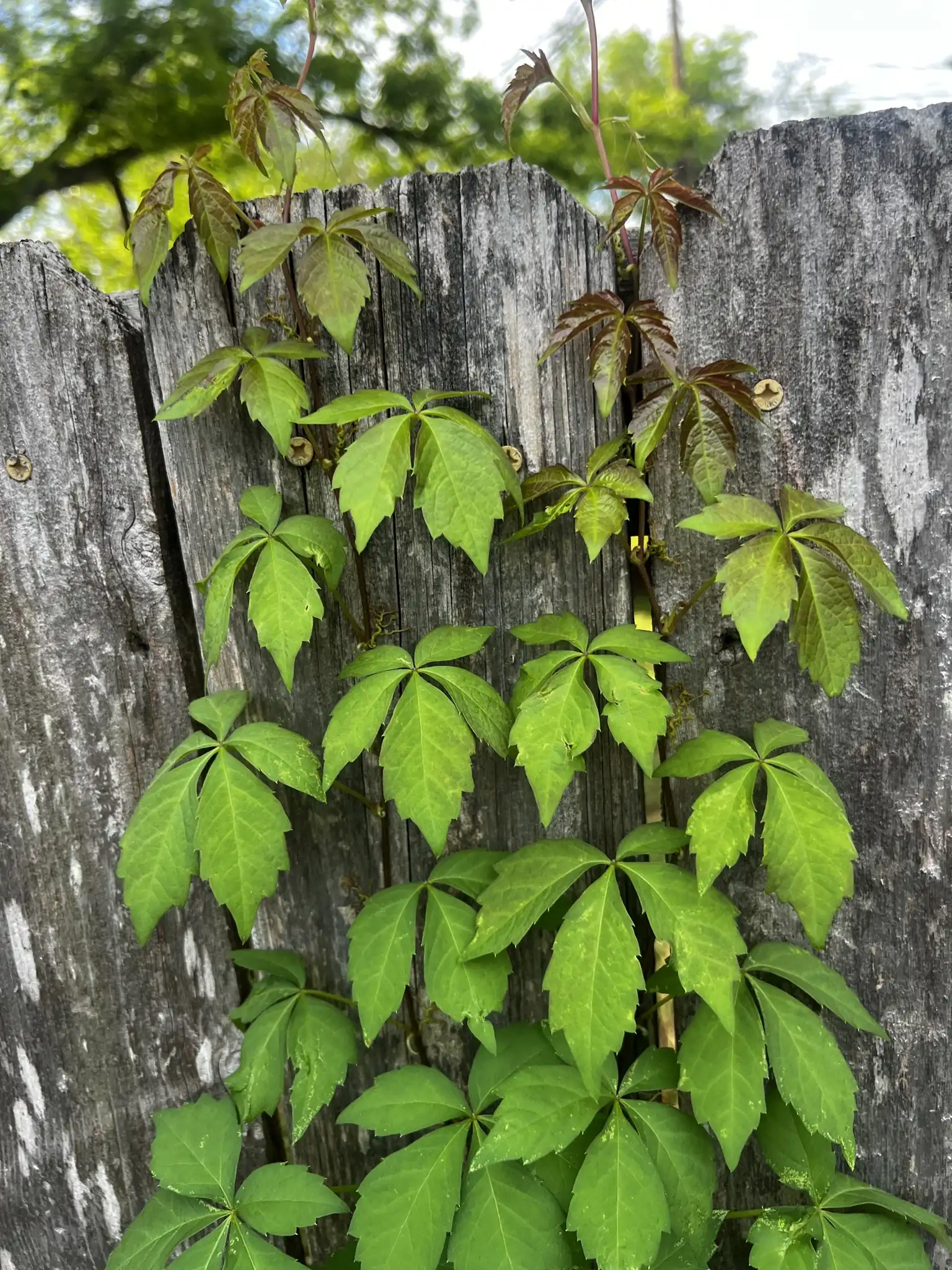
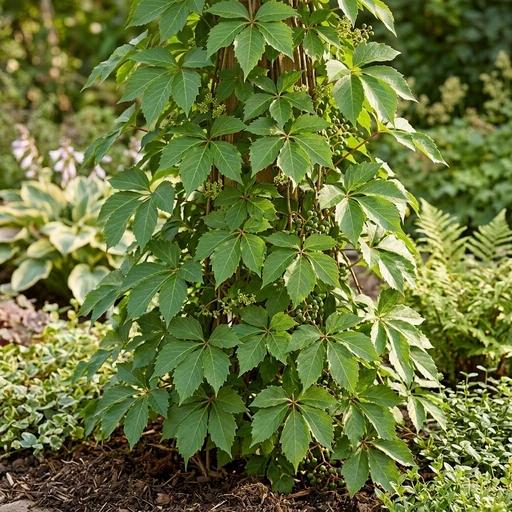
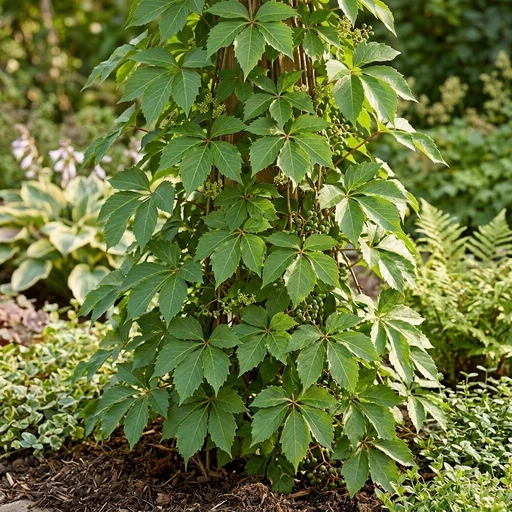
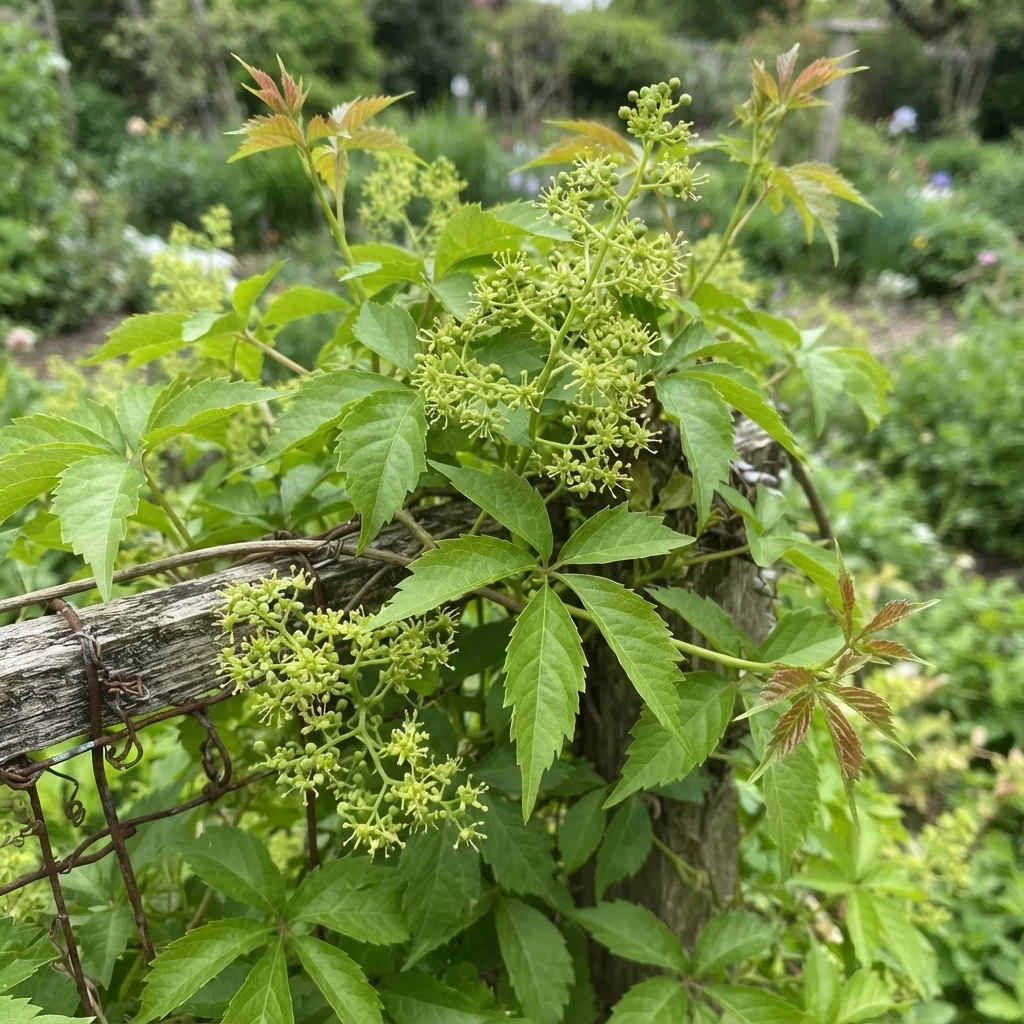
A vigorous, fast-growing deciduous woody vine that climbs by tendrils with adhesive tips, allowing it to scale walls and trees. It is known for its palmately compound leaves with five leaflets and brilliant fall color.
The species is most notable for its extreme adaptability to a wide range of soils and light conditions, and its spectacular transformation to fiery shades of scarlet and burgundy in autumn.
Uses & Benefits:
Essentials
At a Glance
Plant Type
Vine
Height
600"
Width
120"
Light
Full Sun, Partial Sun, Shade
Zones
4, 5, 6, 7, 8, 9
Water
Low to moderate
Humidity
Adaptable
Lifespan
Long-lived woody vine
Native To
Eastern and Central North America
Toxicity
Berries toxic to humans; sap can cause skin irritation
Marketplace
Where to Buy
Shipping costs Year-round shipping Free shipping
Planting
How to Grow
- Select a location with support for climbing or space to sprawl.
- Dig a hole as deep as the root ball and twice as wide.
- Place the plant in the hole, ensuring it's at the same depth.
- Backfill with soil and water thoroughly to remove air pockets.
- Provide initial guidance to help it attach to a structure.
- Water regularly during the first year to establish a deep root system.
Pro Tip
Prune annually in late winter to keep its vigorous growth in check and prevent it from covering windows, gutters, or overwhelming other plants.
Keep It Thriving
Care Guide
Do
- Provide a sturdy structure for it to climb.
- Prune regularly to control its aggressive growth.
- Allow it to dry out between waterings once established.
- Plant it where its brilliant fall color can be appreciated.
- Use it as a groundcover on difficult slopes.
Don't
- Do not plant on painted surfaces or siding, as adhesive tips are hard to remove.
- Avoid planting near delicate shrubs it could smother.
- Don't let it grow into gutters, eaves, or roof shingles.
- Do not ingest the berries, which are poisonous to humans.
- Avoid handling extensively without gloves if you have sensitive skin.
Seasonal Care Calendar
| Task | Jan | Feb | Mar | Apr | May | Jun | Jul | Aug | Sep | Oct | Nov | Dec |
|---|---|---|---|---|---|---|---|---|---|---|---|---|
| Plant | ||||||||||||
| Prune |
Watch Out For
Pests & Diseases
Common Pests
Common Diseases
In the Garden
Landscape Uses & Companions
Landscape Uses
Multiply
Propagation Methods
Good to Know
Common Questions
Virginia Creeper questions
What zones can Virginia Creeper grow in?
Virginia Creeper is hardy in USDA Zones 4–9. Inside that range it survives winter in the ground; outside it, grow it as an annual or a container plant you protect.
Is Virginia Creeper deer resistant?
Yes — Virginia Creeper is rated deer-resistant. Deer typically pass it over, though extreme hunger can override any plant's defenses.
When does Virginia Creeper bloom?
Virginia Creeper typically blooms in early summer through mid-summer. Exact timing shifts a week or two with your zone — Sow's bloom calendar maps it to your garden.
Does Virginia Creeper need full sun?
Virginia Creeper does best in full sun to part shade. In hot climates, afternoon shade keeps blooms fresher longer.
Is Virginia Creeper drought tolerant?
Yes — once established (usually after the first full season), Virginia Creeper handles dry spells with minimal watering. Water deeply its first year to build the root system that makes that possible.
More Parthenocissus to compare
Keep exploring
Explore the genus
Grow Virginia Creeper with confidence
See it in a design of your actual yard, get zone-matched care reminders, and track it season by season in your garden journal.