The Story
Plant Bio
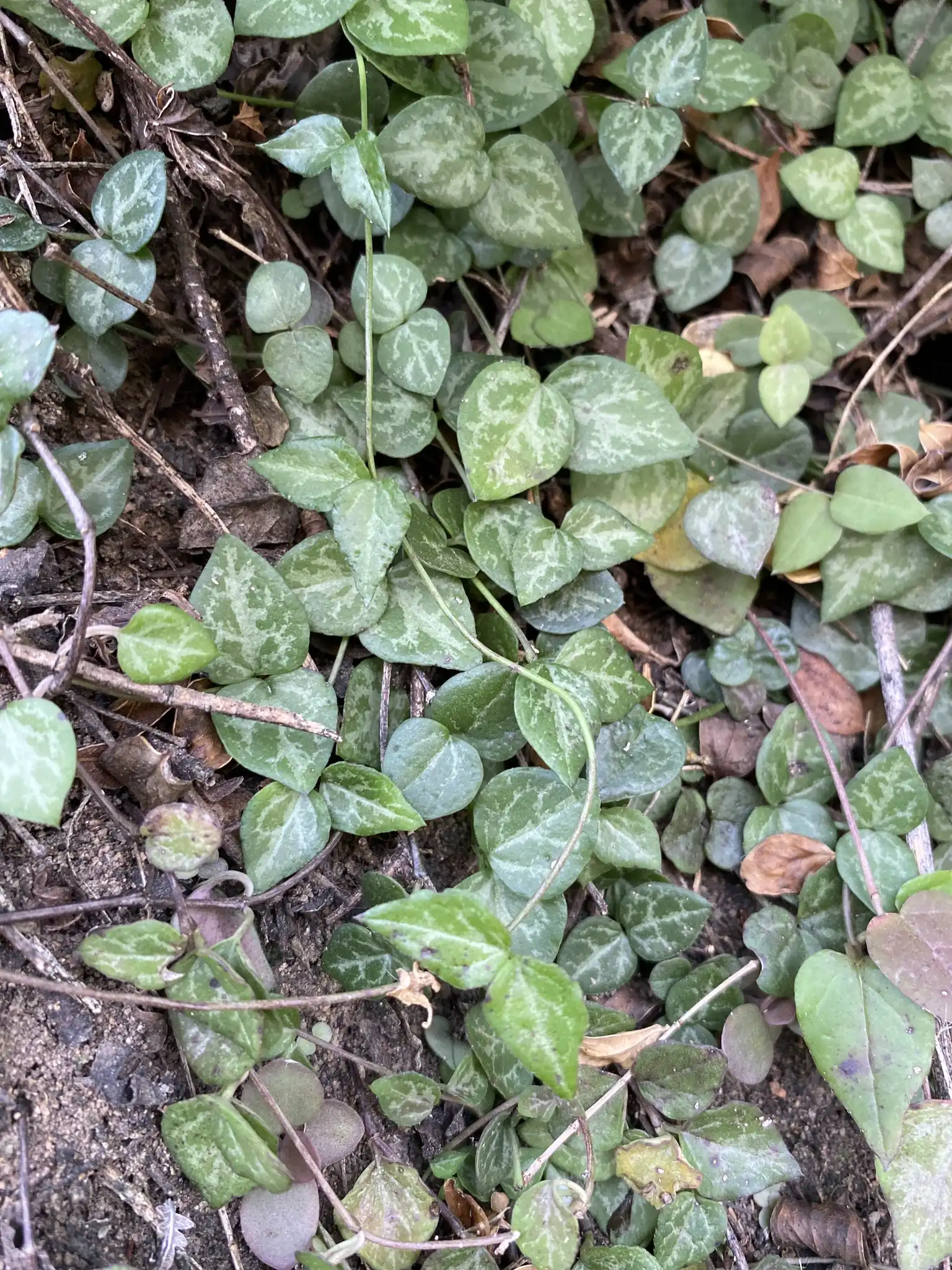
Ceropegia woodii is an evergreen, tuberous succulent vine native to southern Africa, characterized by slender, pinkish-purple trailing stems that emerge from a woody caudex. The opposite, fleshy, heart-shaped leaves feature a dark green upper surface marbled with silver-white and a deep purple underside.
Warty, potato-like aerial tubers form at the stem nodes and root readily upon contact with soil. The lantern-shaped, pale magenta flowers feature a balloon-like base and dark purple apex lobes lined with fine hairs that temporarily trap pollinating flies.
Uses & Benefits:
Essentials
At a Glance
Plant Type
Cactus Succulent
Height
12"
Width
118"
Light
Partial Sun, Shade
Zones
10
Water
Low
Humidity
Average
Lifespan
Perennial
Native To
Southern Africa
Toxicity
Non-toxic
Bloom period
Summer – Fall
In flower about 6 months of the year
Marketplace
Where to Buy
Shipping costs Year-round shipping Free shipping
Planting
How to Grow
- Plant in a gritty, well-draining potting mix, such as a specialized cactus and succulent blend, in a container with drainage holes.
- Position the plant in a location that receives bright indirect light to partial sun to maintain intense leaf variegation.
- Water thoroughly only when the potting medium has dried out completely, and avoid leaving the pot sitting in standing water.
- Maintain warm indoor temperatures and protect the plant from drafts, ensuring it is never exposed to temperatures below 40°F.
Pro Tip
Never cut back into the old, completely leafless woody base where nodes lack viable eyes; instead, propagate new vines by pressing the aerial node tubers directly onto moist sandy soil.
Keep It Thriving
Care Guide
Do
- Allow the soil to dry out completely between waterings to prevent root rot.
- Provide bright indirect light to maximize the silver marbling on the foliage.
- Keep the plant in a slightly root-bound state to encourage healthy growth.
Don't
- Do not overwater or allow the container to sit in waterlogged saucers.
- Do not cut heavily into the old, completely leafless woody base when pruning.
- Do not expose the plant to freezing temperatures or frost.
Seasonal Care Calendar
| Task | Jan | Feb | Mar | Apr | May | Jun | Jul | Aug | Sep | Oct | Nov | Dec |
|---|---|---|---|---|---|---|---|---|---|---|---|---|
| Fertilize | ||||||||||||
| Pest Check | ||||||||||||
| Propagate | ||||||||||||
| Prune |
Watch Out For
Pests & Diseases
Common Pests
Common Diseases
In the Garden
Landscape Uses & Companions
Landscape Uses
Companion Plants
Multiply
Propagation Methods
Good to Know
Common Questions
String of Hearts questions
What zones can String of Hearts grow in?
String of Hearts is hardy in USDA Zone 10. Inside that range it survives winter in the ground; outside it, grow it as an annual or a container plant you protect.
When does String of Hearts bloom?
String of Hearts typically blooms in summer through fall. Exact timing shifts a week or two with your zone — Sow's bloom calendar maps it to your garden.
Does String of Hearts need full sun?
String of Hearts does best in part shade.
Is String of Hearts drought tolerant?
Yes — once established (usually after the first full season), String of Hearts handles dry spells with minimal watering. Water deeply its first year to build the root system that makes that possible.
Keep exploring
Explore the genus
Hardy in your zone?
Grow String of Hearts with confidence
See it in a design of your actual yard, get zone-matched care reminders, and track it season by season in your garden journal.