The Story
Plant Bio
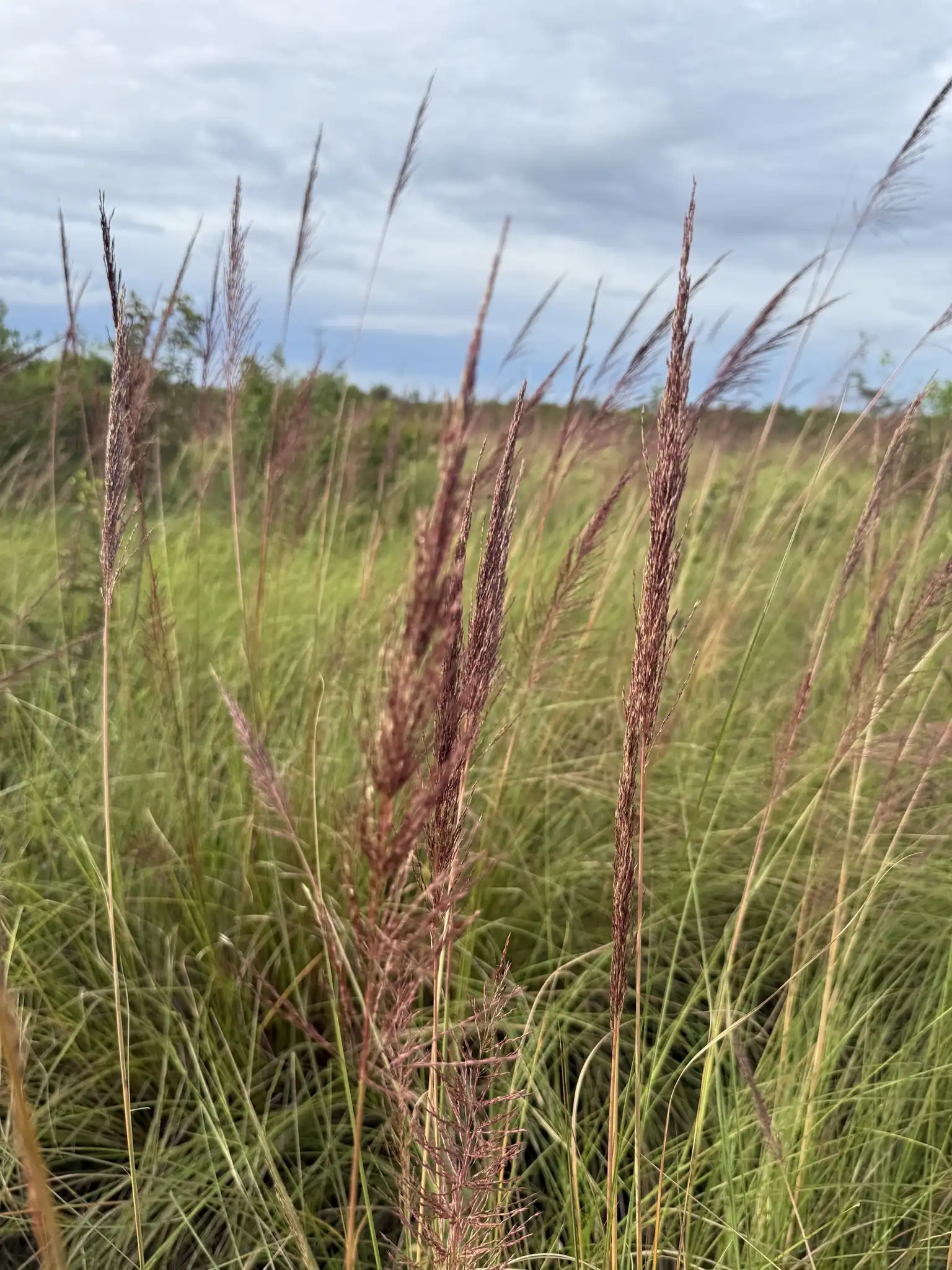
Chrysopogon zizanioides is a dense, erect, warm-season perennial bunchgrass that forms heavy clumps with a massive, vertically descending root system. The long, narrow, rigid green leaves often bend downward near the tips, taking on an attractive bronze or purple flush during cooler weather.
When planting in North America, sterile certified cultivars such as 'Sunshine' must be used to prevent any risk of seed production or ecological spread. These selections do not produce fertile seeds or spread via creeping stolons or rhizomes.
Uses & Benefits:
Essentials
At a Glance
Plant Type
Grass
Height
94"
Width
60"
Light
Full Sun
Zones
7, 8, 9, 10
Water
Low
Humidity
High
Lifespan
Perennial
Native To
Tropical South Asia
Toxicity
Non-toxic
Bloom period
Summer – Fall
In flower about 6 months of the year
Planting
How to Grow
- Plant in a location that receives full sun and has sufficient space to accommodate a mature clump width of up to five feet.
- Water regularly during the establishment phase to encourage deep root development, even in heavy clay or sandy soils.
- Cut the foliage back hard or shear the old top growth once every few years just before the spring flush to clear out dead thatch.
- Propagate established clumps exclusively by mechanical division of the crown, as sterile cultivars will not grow from seed.
Pro Tip
Do not shear this grass into formal hedges or over-fertilize it, as frequent pruning weakens the crown. Instead, treat it as a structural bioengineering tool and leave it undisturbed except for a periodic hard coppice to clear dead thatch.
Keep It Thriving
Care Guide
Do
- Plant in full sun to ensure vigorous growth and maintain plant health.
- Use certified sterile cultivars to prevent any potential ecological spread.
- Provide well-drained soil during the initial establishment period.
Don't
- Do not prune into the old, leafless wood of the crown, as new growth must regenerate from the base.
- Do not apply heavy applications of fertilizer, as the plant is highly responsive but rarely requires supplemental nutrients.
- Do not plant in heavy shade where stagnant, waterlogged conditions can induce root rot.
Seasonal Care Calendar
| Task | Jan | Feb | Mar | Apr | May | Jun | Jul | Aug | Sep | Oct | Nov | Dec |
|---|---|---|---|---|---|---|---|---|---|---|---|---|
| Pest Check | ||||||||||||
| Plant | ||||||||||||
| Propagate | ||||||||||||
| Prune |
Watch Out For
Pests & Diseases
Common Pests
Common Diseases
In the Garden
Landscape Uses & Companions
Landscape Uses
Companion Plants
Multiply
Propagation Methods
Good to Know
Common Questions
Vetiver questions
What zones can Vetiver grow in?
Vetiver is hardy in USDA Zones 7–10. Inside that range it survives winter in the ground; outside it, grow it as an annual or a container plant you protect.
Is Vetiver deer resistant?
Yes — Vetiver is rated deer-resistant. Deer typically pass it over, though extreme hunger can override any plant's defenses.
When does Vetiver bloom?
Vetiver typically blooms in summer through fall. Exact timing shifts a week or two with your zone — Sow's bloom calendar maps it to your garden.
Does Vetiver need full sun?
Vetiver does best in full sun (6+ hours).
Is Vetiver drought tolerant?
Yes — once established (usually after the first full season), Vetiver handles dry spells with minimal watering. Water deeply its first year to build the root system that makes that possible.
Keep exploring
Explore the genus
Hardy in your zone?
Grow Vetiver with confidence
See it in a design of your actual yard, get zone-matched care reminders, and track it season by season in your garden journal.