The Story
Plant Bio
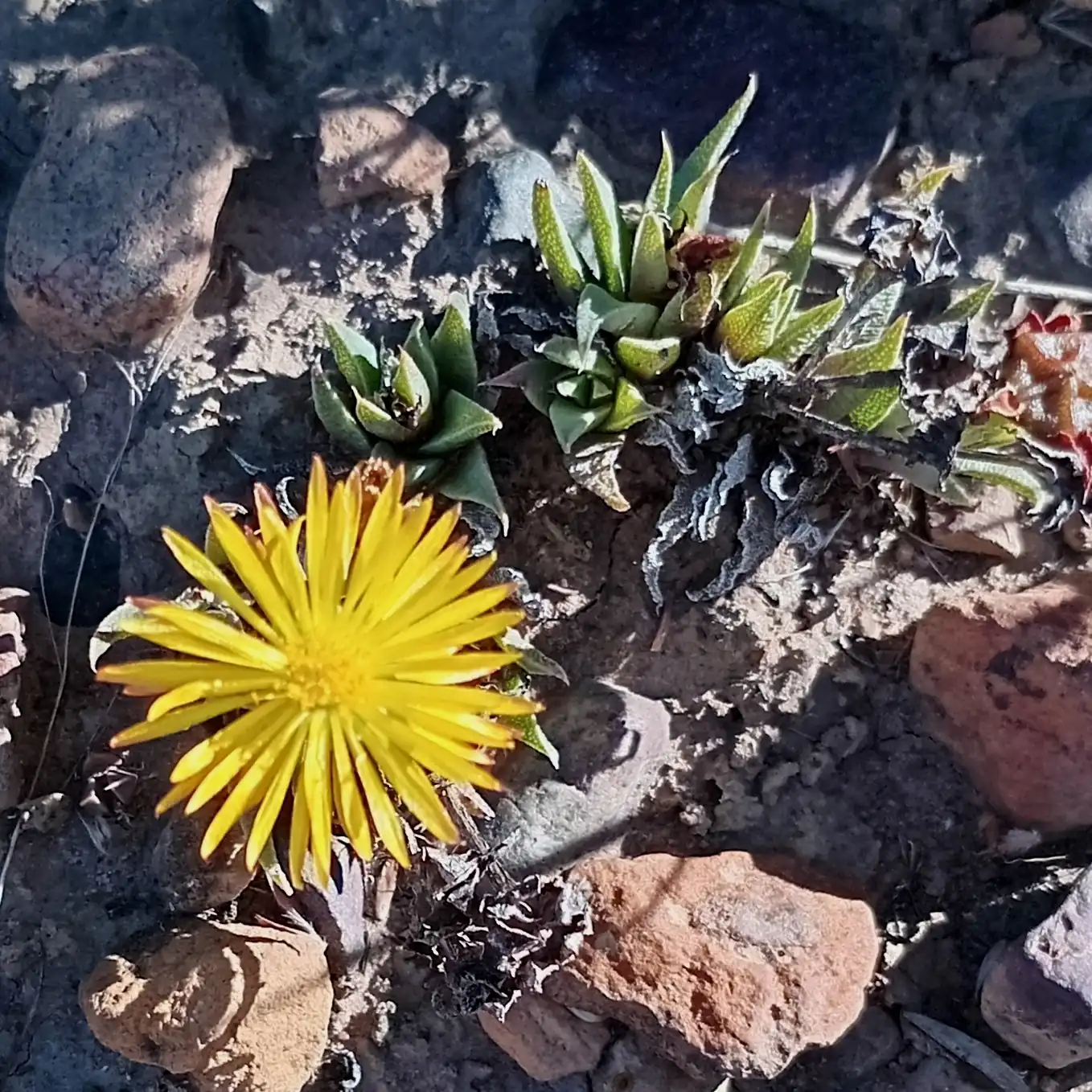
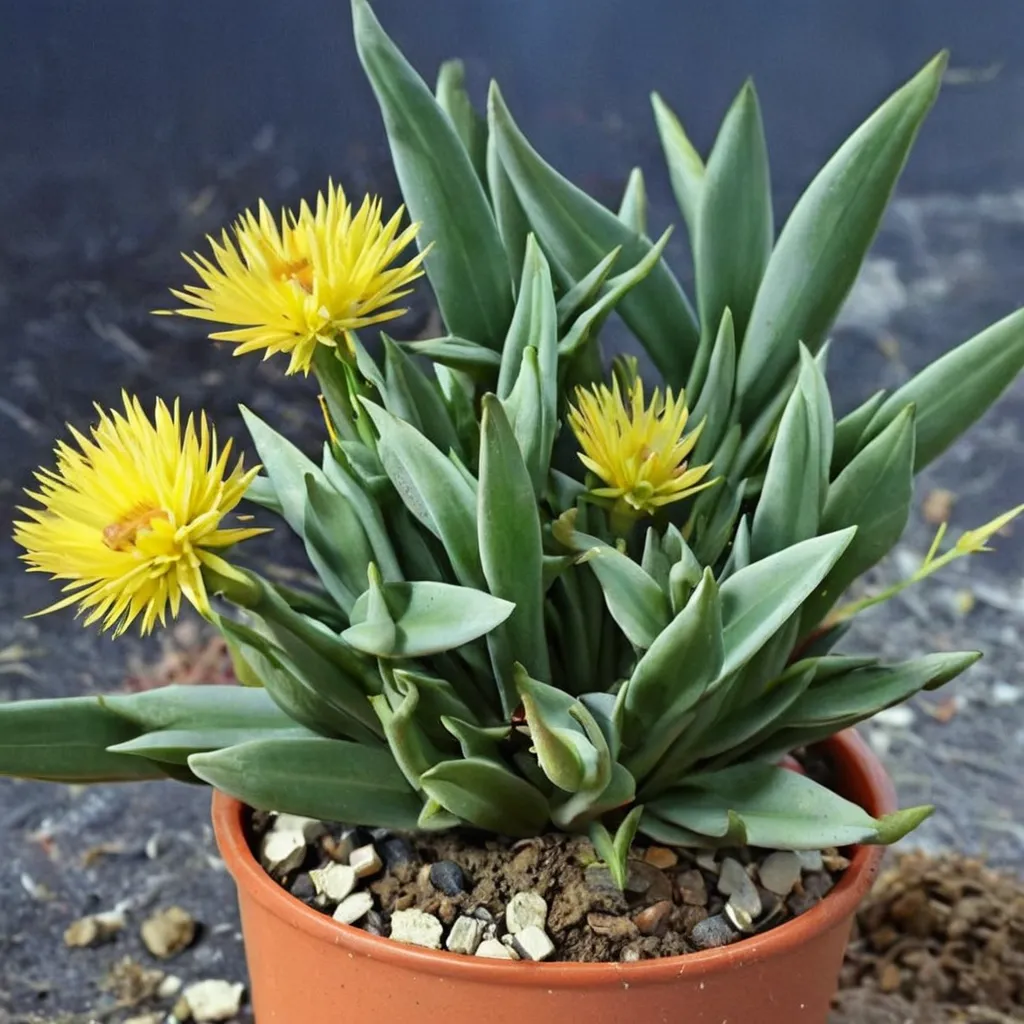
Bergeranthus multiceps is a fast-clumping, mat-forming dwarf succulent native to South African sandstone outcrops, growing from a single fleshy rootstock that can reach up to 1.6 inches in diameter. The plant forms tightly packed clusters of suberect, dark green to gray-green leaves that are triangular in cross-section and taper to a point.
The daisy-like yellow flowers reach up to 1.5 inches in diameter and frequently feature a distinct pink reverse on the petals. These blooms are borne on slender stems and characteristically open in the late afternoon or early evening.
Uses & Benefits:
Essentials
At a Glance
Plant Type
Cactus Succulent
Height
4"
Width
8"
Light
Full Sun, Partial Sun
Zones
9, 10
Water
Low
Humidity
Low to Moderate
Lifespan
Perennial
Native To
South Africa (Eastern Cape)
Toxicity
Toxic to Cats and Dogs
Bloom period
Summer – Winter
In flower about 9 months of the year
Planting
How to Grow
- Select a container with ample drainage holes and fill it with a highly porous, gritty succulent mix containing significant gravel or sand.
- Position the plant in a location receiving at least four to six hours of direct daily sunlight, providing light afternoon shade in extremely hot climates.
- Water thoroughly during the active growing season, allowing the substrate to dry out completely before watering again.
- Reduce watering significantly in late autumn and winter to allow the plant to enter its natural dormancy period.
Pro Tip
Provide an explicit dry-rest period during winter dormancy by withholding water, and plant in a highly gritty, mineral-heavy substrate to replicate its native sandstone ledge environment.
Keep It Thriving
Care Guide
Do
- Use a gritty, fast-draining mineral substrate.
- Provide bright, direct sunlight for several hours daily.
- Allow the soil to dry completely between waterings.
Don't
- Do not overwater or allow the pot to sit in standing water.
- Avoid using standard, heavy potting soils that retain moisture.
- Never cut back into old, leafless wood when trimming.
Seasonal Care Calendar
| Task | Jan | Feb | Mar | Apr | May | Jun | Jul | Aug | Sep | Oct | Nov | Dec |
|---|---|---|---|---|---|---|---|---|---|---|---|---|
| Fertilize | ||||||||||||
| Pest Check | ||||||||||||
| Propagate | ||||||||||||
| Winter Prep |
Watch Out For
Pests & Diseases
Common Pests
Common Diseases
In the Garden
Landscape Uses & Companions
Landscape Uses
Companion Plants
Multiply
Propagation Methods
Good to Know
Common Questions
Many-headed Bergeranthus questions
What zones can Many-headed Bergeranthus grow in?
Many-headed Bergeranthus is hardy in USDA Zones 9–10. Inside that range it survives winter in the ground; outside it, grow it as an annual or a container plant you protect.
When does Many-headed Bergeranthus bloom?
Many-headed Bergeranthus typically blooms in summer through winter. Exact timing shifts a week or two with your zone — Sow's bloom calendar maps it to your garden.
Does Many-headed Bergeranthus need full sun?
Many-headed Bergeranthus does best in full sun to part shade. In hot climates, afternoon shade keeps blooms fresher longer.
Is Many-headed Bergeranthus drought tolerant?
Yes — once established (usually after the first full season), Many-headed Bergeranthus handles dry spells with minimal watering. Water deeply its first year to build the root system that makes that possible.
More Bergeranthus to compare
Keep exploring
Explore the genus
Hardy in your zone?
Grow Many-headed Bergeranthus with confidence
See it in a design of your actual yard, get zone-matched care reminders, and track it season by season in your garden journal.