The Story
Plant Bio
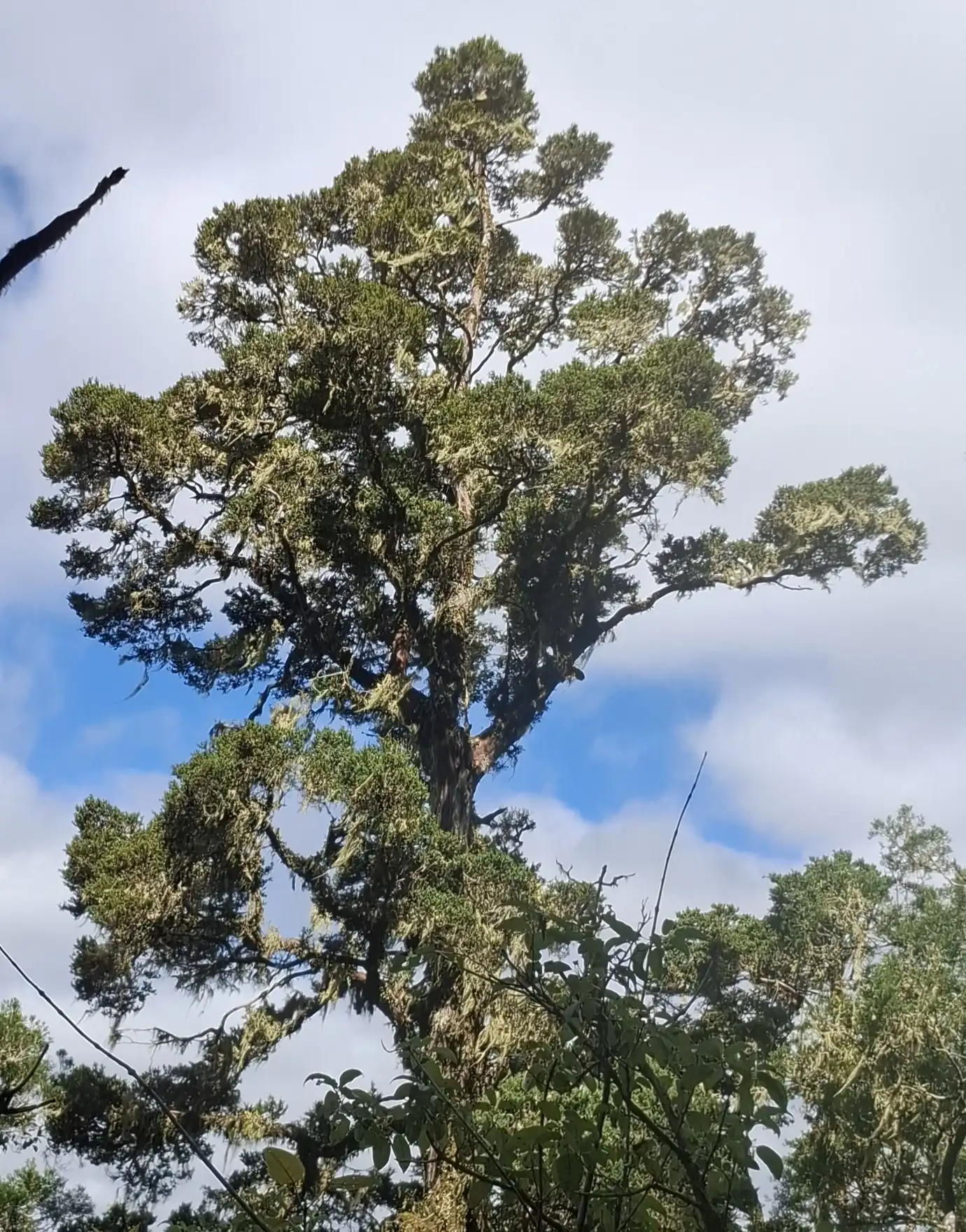
Dacrycarpus dacrydioides, the kahikatea, is a towering evergreen conifer native to New Zealand that develops a strictly columnar to conical habit with a buttressed trunk at maturity. The foliage is highly dimorphic, transitioning from weeping, bronze-toned juvenile needles to tight, dark green compressed scales on adult branches.
This ancient conifer naturally thrives in swampy, alluvial soils where most other trees suffer from waterlogged roots. In fall, female trees produce distinctive seeds seated on fleshy, swollen, bright orange-red receptacles known as koroi.
Uses & Benefits:
Essentials
At a Glance
Plant Type
Tree
Height
354"
Width
394"
Light
Full Sun, Partial Sun
Zones
8, 9, 10
Water
High
Humidity
High
Lifespan
Long-lived
Native To
New Zealand
Toxicity
Non-toxic
Bloom period
Spring – Fall
In flower about 9 months of the year
Planting
How to Grow
- Select a planting site in full sun to partial shade with heavy, fertile, moisture-retentive soil.
- Provide young juvenile plants with temporary light shade or protection from hard freezes while they establish.
- Water deeply and regularly to maintain constant soil moisture, never allowing the root zone to dry out.
- Apply a thick layer of organic mulch around the base to help retain soil moisture and mimic a forest floor.
Pro Tip
Do not plant this conifer in sharp, sandy, or dry soils; it requires constant moisture and easily tolerates poorly drained, heavy clay sites with wet feet.
Keep It Thriving
Care Guide
Do
- Keep the soil consistently moist or wet.
- Protect young plants from severe winter freezes.
- Provide partial shade for young juvenile specimens.
Don't
- Do not prune hard into old, leafless wood as it will fail to regenerate.
- Do not plant in dry, sandy, or sharply drained soils.
- Do not allow the root zone to dry out even temporarily.
Seasonal Care Calendar
| Task | Jan | Feb | Mar | Apr | May | Jun | Jul | Aug | Sep | Oct | Nov | Dec |
|---|---|---|---|---|---|---|---|---|---|---|---|---|
| Fertilize | ||||||||||||
| Propagate | ||||||||||||
| Prune | ||||||||||||
| Winter Prep |
Watch Out For
Pests & Diseases
Common Pests
Common Diseases
In the Garden
Landscape Uses & Companions
Landscape Uses
Multiply
Propagation Methods
Good to Know
Common Questions
Kahikatea questions
What zones can Kahikatea grow in?
Kahikatea is hardy in USDA Zones 8–10. Inside that range it survives winter in the ground; outside it, grow it as an annual or a container plant you protect.
When does Kahikatea bloom?
Kahikatea typically blooms in spring through fall. Exact timing shifts a week or two with your zone — Sow's bloom calendar maps it to your garden.
Does Kahikatea need full sun?
Kahikatea does best in full sun to part shade. In hot climates, afternoon shade keeps blooms fresher longer.
Keep exploring
Explore the genus
Hardy in your zone?
Grow Kahikatea with confidence
See it in a design of your actual yard, get zone-matched care reminders, and track it season by season in your garden journal.