The Story
Plant Bio
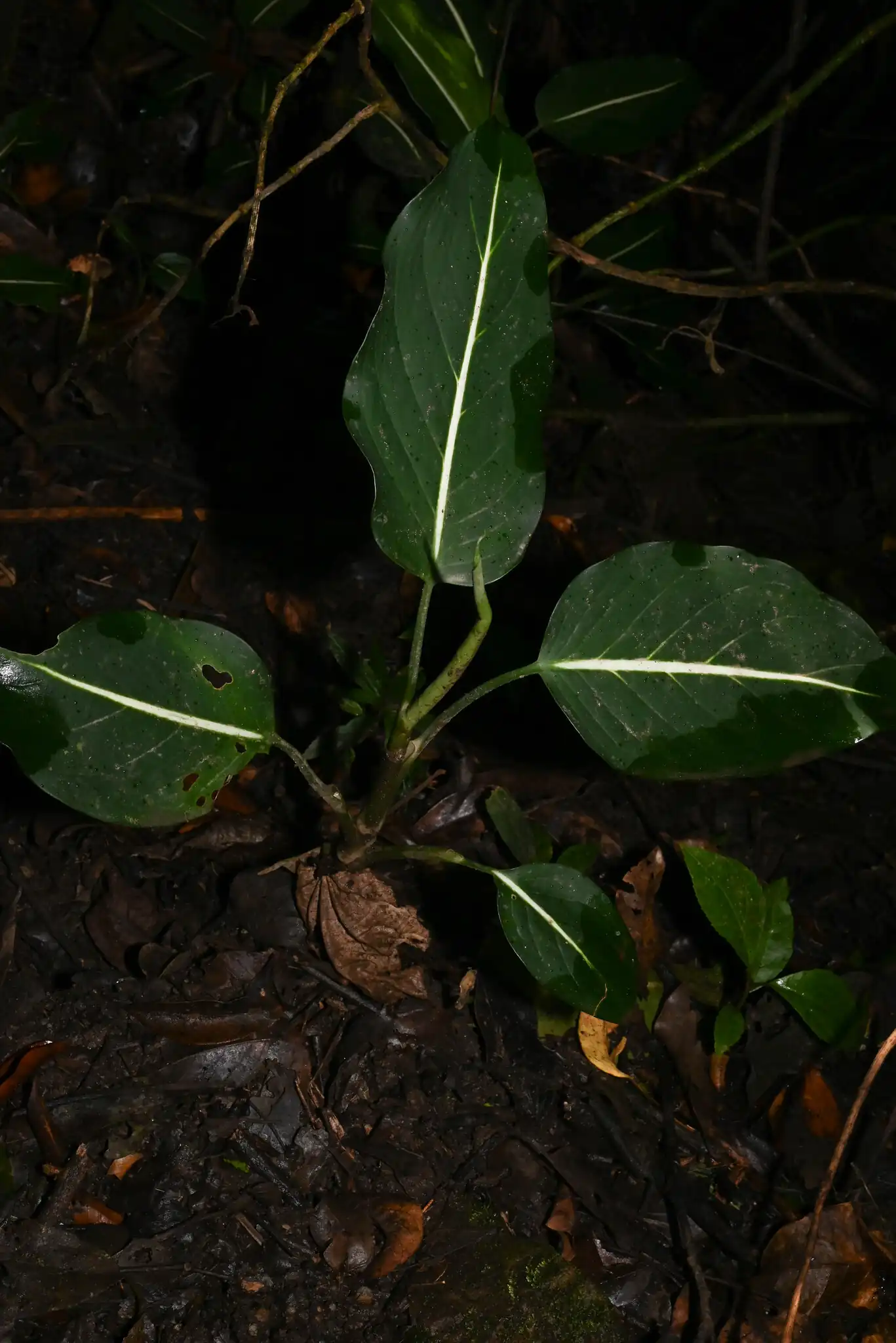
Dieffenbachia oerstedii is an erect, evergreen tropical subshrub native to the Neotropics of Central and South America, growing from single or clustered succulent stems. The glossy, deep green leaves are lanceolate to ovate with sheathing petioles, often featuring a contrasting pale green or white stripe along the central midrib.
This species is distinguished by its compact growth habit, reaching up to thirty-nine inches in height, and its tolerance of deep indoor shade. The inconspicuous inflorescence consists of a greenish-white or yellowish spathe enclosing a pale spadix, which rarely appears under indoor cultivation.
Uses & Benefits:
Essentials
At a Glance
Plant Type
Tropical
Height
39"
Width
35"
Light
Partial Sun, Shade
Zones
10
Water
Low drought tolerance; keep consistently moist but well-drained
Humidity
High (above 50%)
Lifespan
Perennial
Native To
Central and South America
Toxicity
Highly toxic to humans and pets; causes skin irritation and swelling
Bloom period
Summer – Fall
In flower about 6 months of the year
Planting
How to Grow
- Select a container with ample drainage holes and fill it with a rich, organic, well-draining potting mix with a pH between 6.1 and 6.5.
- Position the plant in a location that receives bright indirect light or partial shade, ensuring it is completely shielded from direct, scorching sunlight.
- Water thoroughly when the top one to two inches of soil dry out, allowing excess water to drain completely to prevent root rot.
- Maintain indoor temperatures above 50 degrees Fahrenheit and provide high humidity, ideally above 50 percent, to prevent leaf tips from turning brown.
Pro Tip
Provide bright, indirect ambient light to maintain the sharp contrast of the central midrib stripe; keeping the plant in deep shade causes weak, leggy growth and loss of foliage variegation.
Keep It Thriving
Care Guide
Do
- Allow the top 1.5 inches of soil to dry completely before re-watering.
- Wear gloves when handling or pruning to protect skin from irritating sap.
- Keep the plant in a warm room free from cold drafts and temperatures below 50 degrees Fahrenheit.
Don't
- Do not allow the pot to sit in standing water or a water-filled saucer.
- Do not place the plant in direct, intense sunlight which burns the foliage.
- Do not cut into old, leafless woody main stems unless propagating.
Seasonal Care Calendar
| Task | Jan | Feb | Mar | Apr | May | Jun | Jul | Aug | Sep | Oct | Nov | Dec |
|---|---|---|---|---|---|---|---|---|---|---|---|---|
| Fertilize | ||||||||||||
| Pest Check | ||||||||||||
| Prune | ||||||||||||
| Winter Prep |
Watch Out For
Pests & Diseases
Common Pests
Common Diseases
In the Garden
Landscape Uses & Companions
Landscape Uses
Companion Plants
Multiply
Propagation Methods
Good to Know
Common Questions
Dumb Cane questions
What zones can Dumb Cane grow in?
Dumb Cane is hardy in USDA Zone 10. Inside that range it survives winter in the ground; outside it, grow it as an annual or a container plant you protect.
Is Dumb Cane deer resistant?
Yes — Dumb Cane is rated deer-resistant. Deer typically pass it over, though extreme hunger can override any plant's defenses.
When does Dumb Cane bloom?
Dumb Cane typically blooms in summer through fall. Exact timing shifts a week or two with your zone — Sow's bloom calendar maps it to your garden.
Does Dumb Cane need full sun?
Dumb Cane does best in part shade.
Keep exploring
Explore the genus
Hardy in your zone?
Grow Dumb Cane with confidence
See it in a design of your actual yard, get zone-matched care reminders, and track it season by season in your garden journal.