The Story
Plant Bio
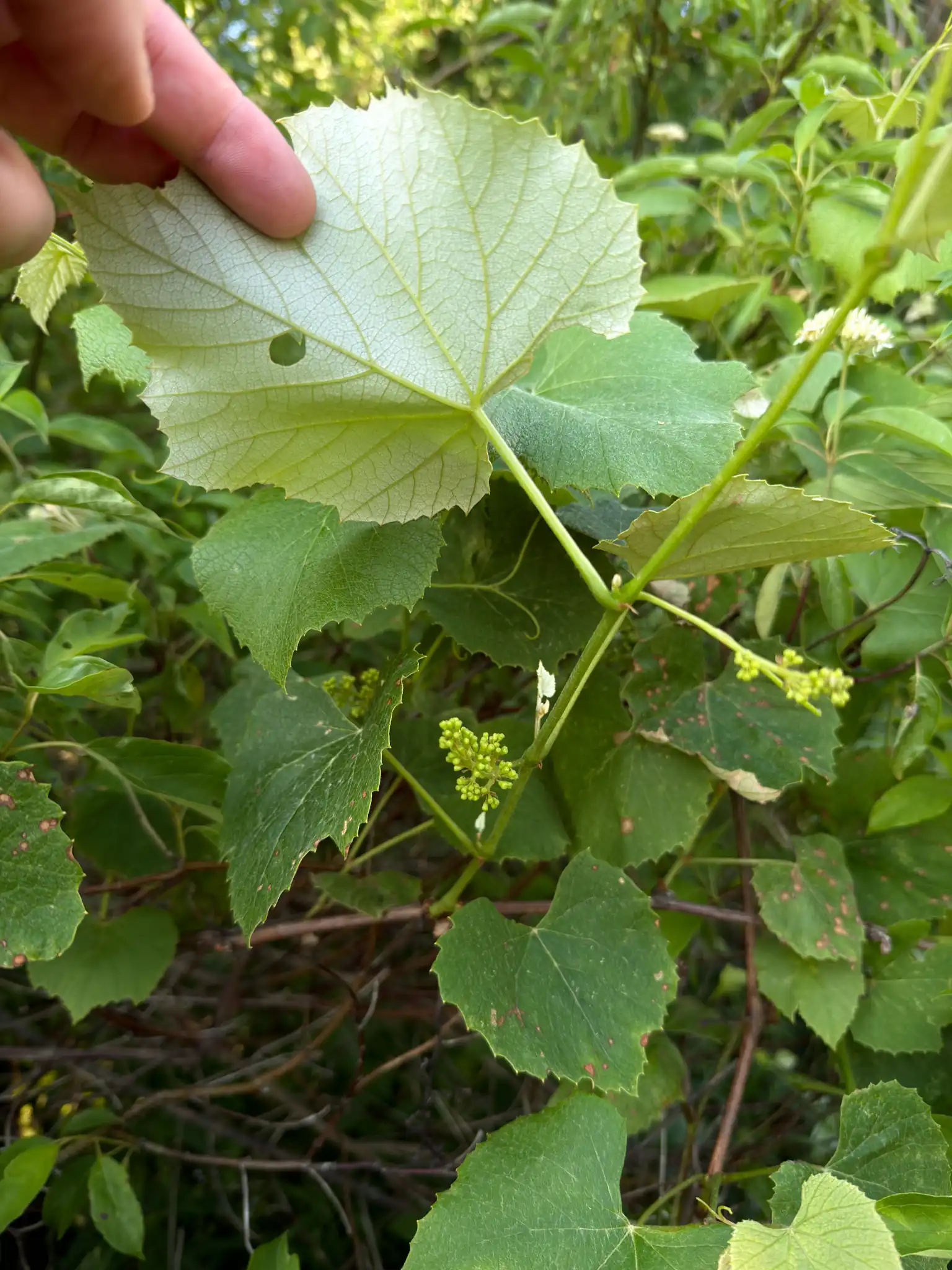
Vitis labrusca, the fox grape, is a vigorous deciduous vine native to eastern North America, climbing by tendrils to heights of forty feet or more. The bold-textured, alternate leaves feature dark green upper surfaces and distinctive whitish to rusty-brown woolly hairs underneath.
This species is distinguished by its high tolerance for hot, humid summer conditions and its sweet, musk-scented flowers borne opposite the leaves. The ripening fruit provides a vital food source for native birds and mammals, while the shredded, peeling bark on mature stems adds structural texture.
Uses & Benefits:
Essentials
At a Glance
Plant Type
Vine
Height
480"
Width
480"
Light
Full Sun, Partial Sun
Zones
4, 5, 6, 7, 8
Water
Medium
Humidity
High
Lifespan
Long
Native To
Eastern North America
Toxicity
Non-toxic
Bloom period
Late spring – Early summer
In flower about 2 months of the year
Planting
How to Grow
- Select a planting site in full sun with deep, loamy, well-drained soil and a pH between 5.5 and 6.5.
- Install a sturdy, load-bearing trellis or support system capable of holding the weight of a mature woody vine.
- Plant bareroot or container-grown vines in early spring, watering thoroughly to settle the soil around the roots.
- Train the main shoots onto the trellis system during the first growing season to establish a strong structural framework.
Pro Tip
Prune vines heavily during winter dormancy to remove up to ninety percent of the previous year's growth; fruiting occurs only on new wood, and unpruned vines quickly become overcrowded and unproductive.
Keep It Thriving
Care Guide
Do
- Prune heavily every winter to maintain a clean structure and stimulate productive new fruiting canes.
- Ensure excellent soil drainage, as the root system will rot in waterlogged or poorly drained soils.
- Apply a balanced organic fertilizer sparingly in early spring if vine growth appears sluggish.
Don't
- Do not over-apply nitrogen fertilizer, which drives excessive leafy growth at the expense of fruit production.
- Do not allow the vine to sprawl without a strong support system, as mature woody trunks will collapse under their own weight.
- Do not neglect winter pruning, which leads to dense canopy overcrowding and minimal fruit set.
Seasonal Care Calendar
| Task | Jan | Feb | Mar | Apr | May | Jun | Jul | Aug | Sep | Oct | Nov | Dec |
|---|---|---|---|---|---|---|---|---|---|---|---|---|
| Fertilize | ||||||||||||
| Harvest | ||||||||||||
| Pest Check | ||||||||||||
| Prune | ||||||||||||
| Spray |
Watch Out For
Pests & Diseases
Common Pests
Common Diseases
In the Garden
Landscape Uses & Companions
Landscape Uses
Companion Plants
Multiply
Propagation Methods
Good to Know
Common Questions
Fox Grape questions
What zones can Fox Grape grow in?
Fox Grape is hardy in USDA Zones 4–8. Inside that range it survives winter in the ground; outside it, grow it as an annual or a container plant you protect.
Is Fox Grape deer resistant?
Not reliably. Deer may browse Fox Grape, especially tender spring growth — plan on repellents or fencing where pressure is high.
When does Fox Grape bloom?
Fox Grape typically blooms in late spring through early summer. Exact timing shifts a week or two with your zone — Sow's bloom calendar maps it to your garden.
Does Fox Grape need full sun?
Fox Grape does best in full sun to part shade. In hot climates, afternoon shade keeps blooms fresher longer.
Is Fox Grape drought tolerant?
Yes — once established (usually after the first full season), Fox Grape handles dry spells with minimal watering. Water deeply its first year to build the root system that makes that possible.
More Vitis to compare
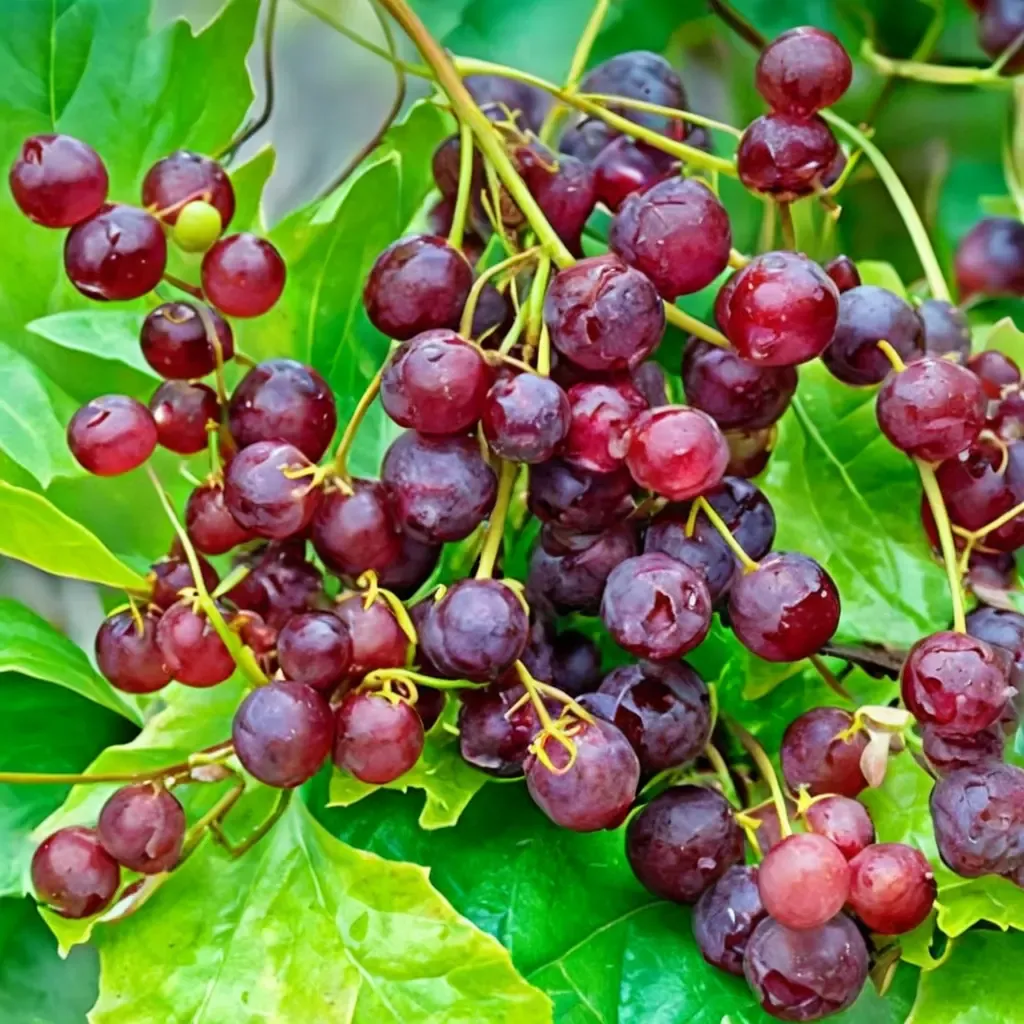
RazzMatazz Grape
Vitis vinifera 'RazzMatazz'
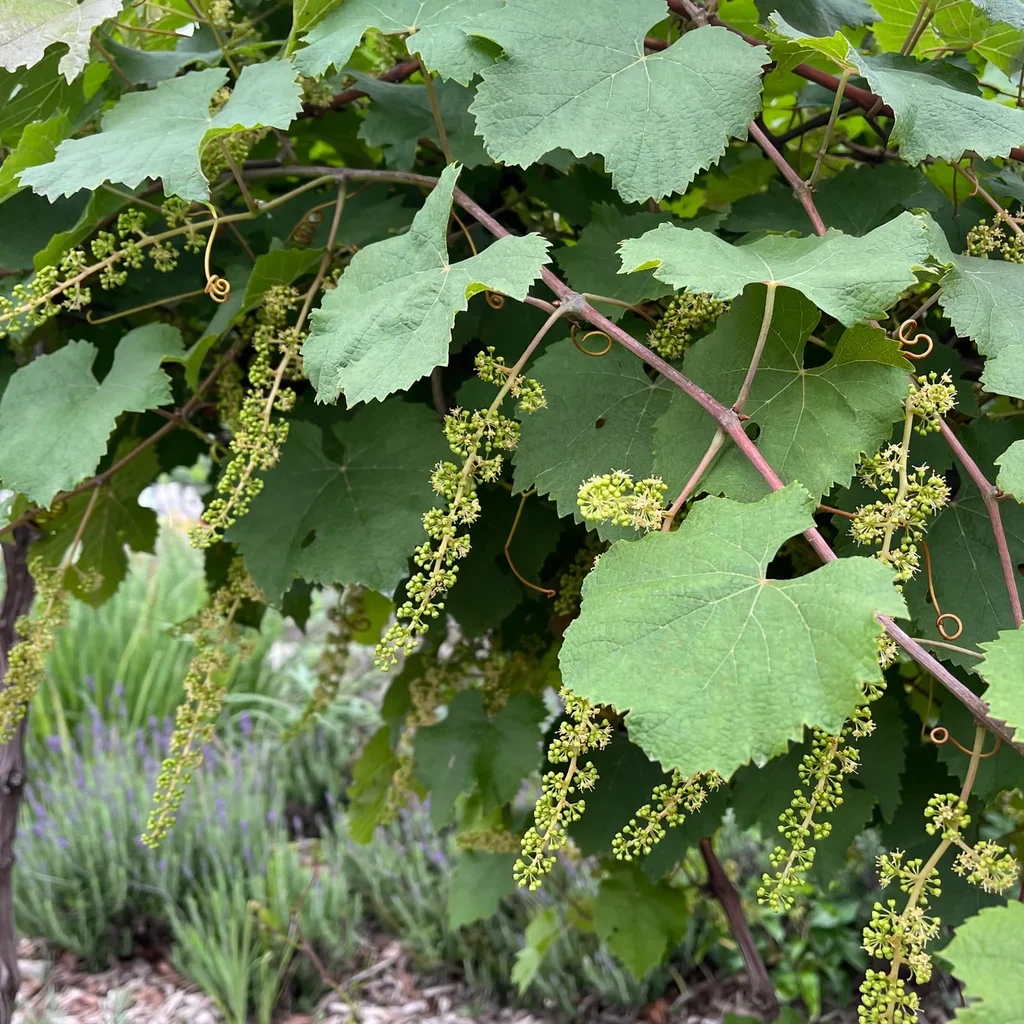
Roger's Red Grape
Vitis x californica 'Roger's Red'
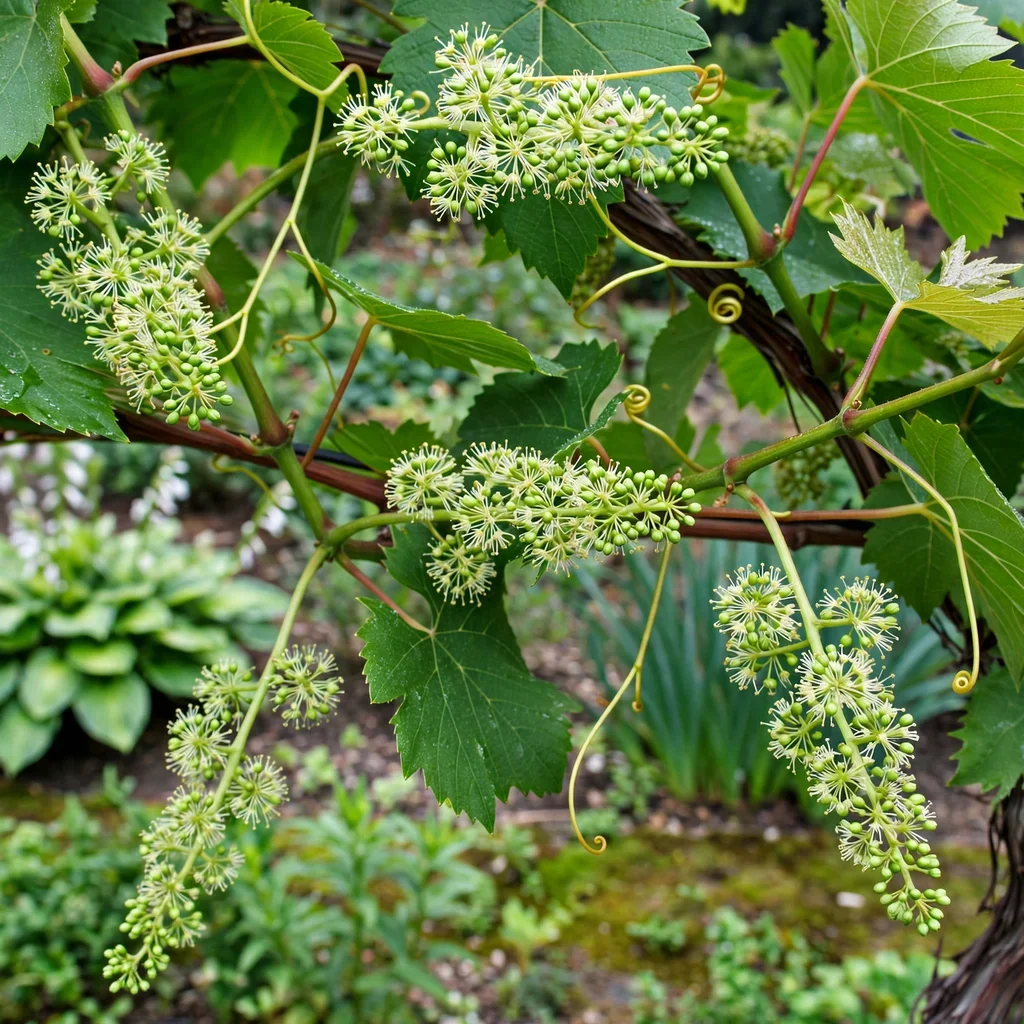
Cabernet Sauvignon Grape
Vitis vinifera 'Cabernet Sauvignon Tulip Blend'
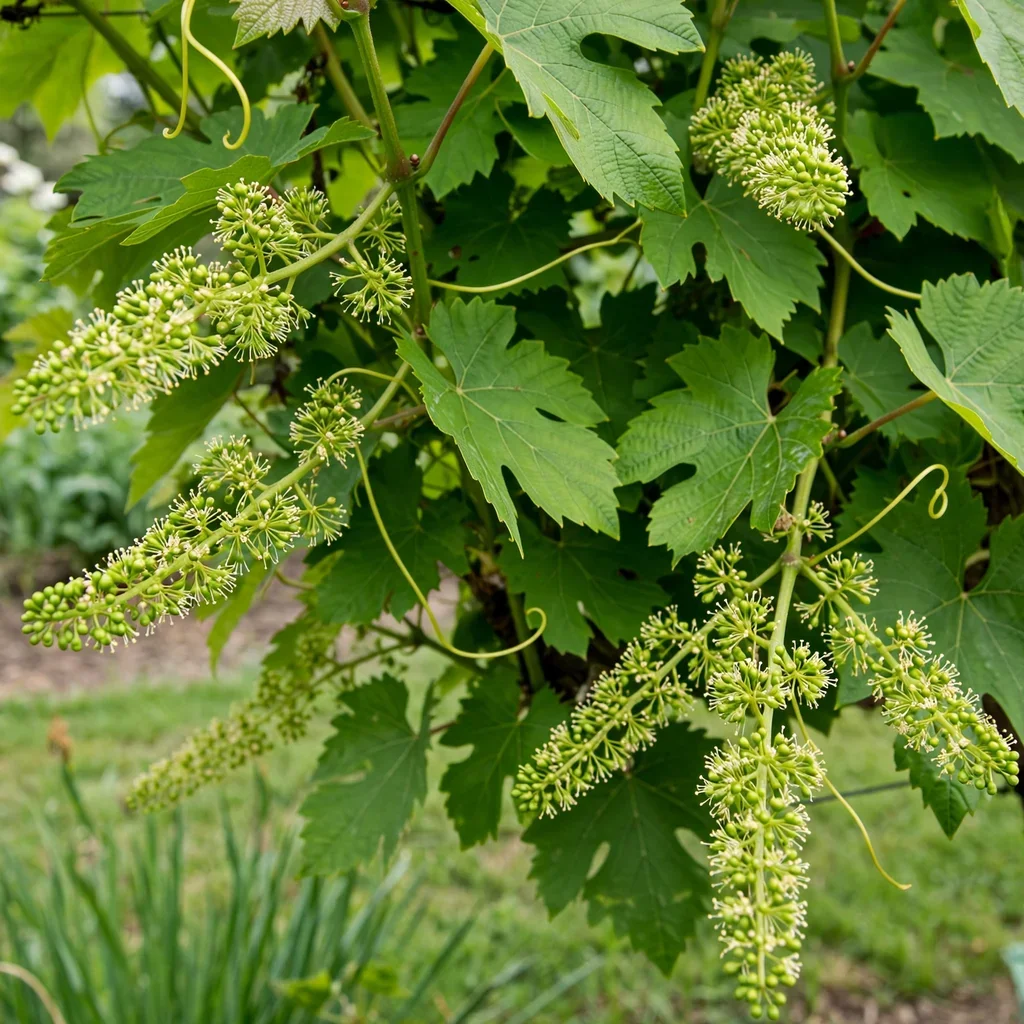
Thompson Seedless Grape
Vitis vinifera 'Thompson Seedless'
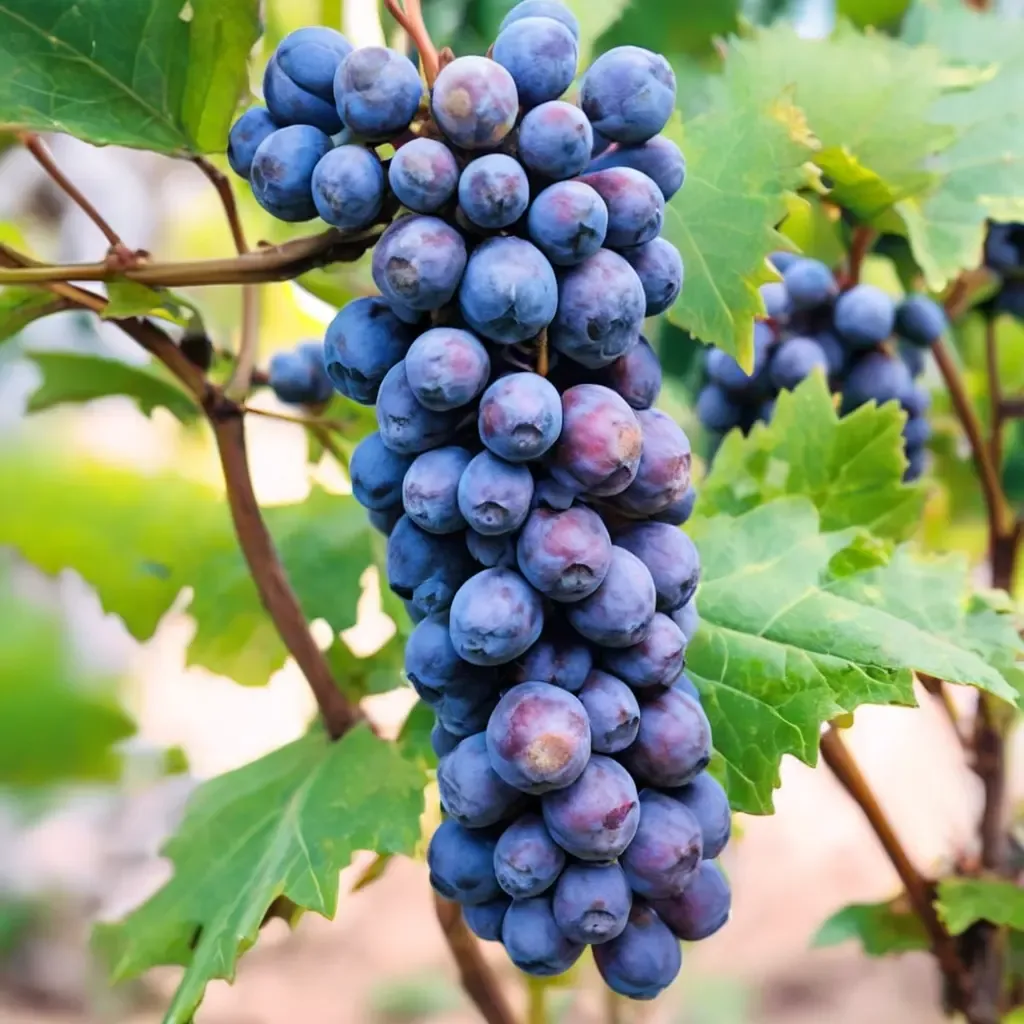
Blue Concord Seedless Grape
Vitis vinifera 'Blue Concord Seedless'
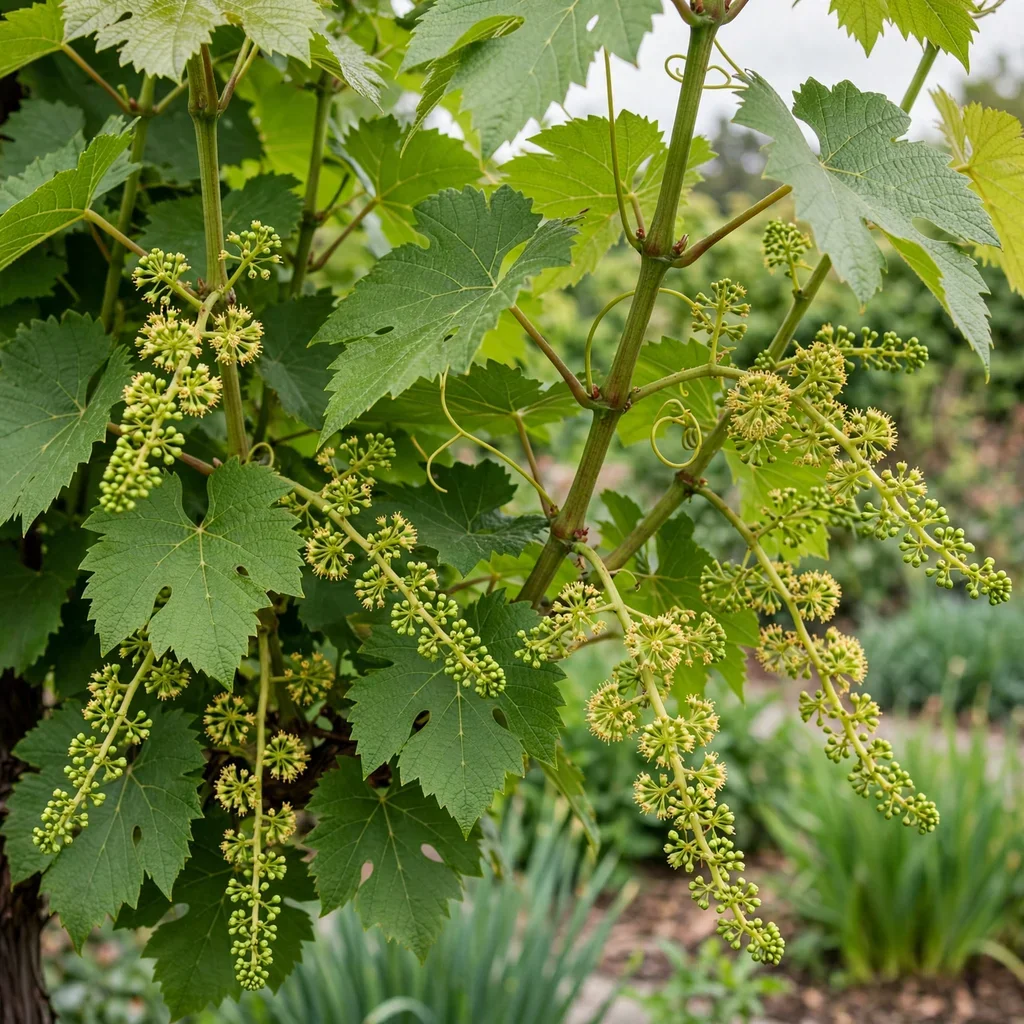
Emeryville Pink Grape
Vitis vinifera 'Emeryville Pink'
Keep exploring
Explore the genus
Hardy in your zone?
Grow Fox Grape with confidence
See it in a design of your actual yard, get zone-matched care reminders, and track it season by season in your garden journal.