Species
1 other cultivar
The Story
Plant Bio
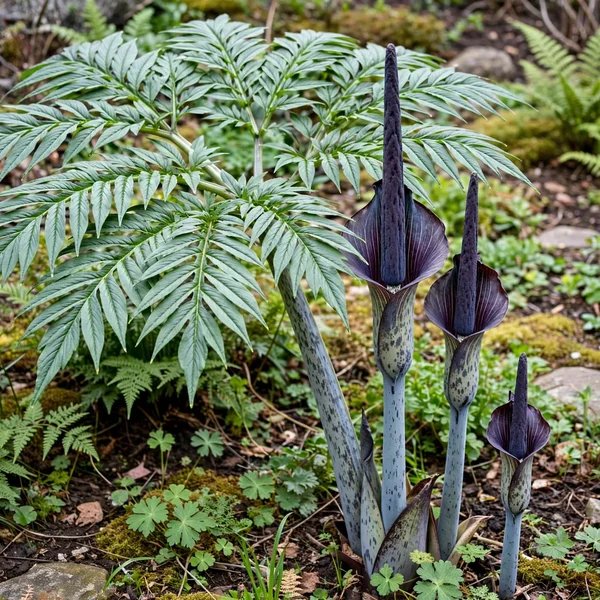
A tuberous, aroid perennial that produces a single, large, intricately divided leaf on a mottled stalk. In spring, before the leaf emerges, it produces a striking inflorescence consisting of a spathe and spadix, which emits a foul odor to attract pollinators.
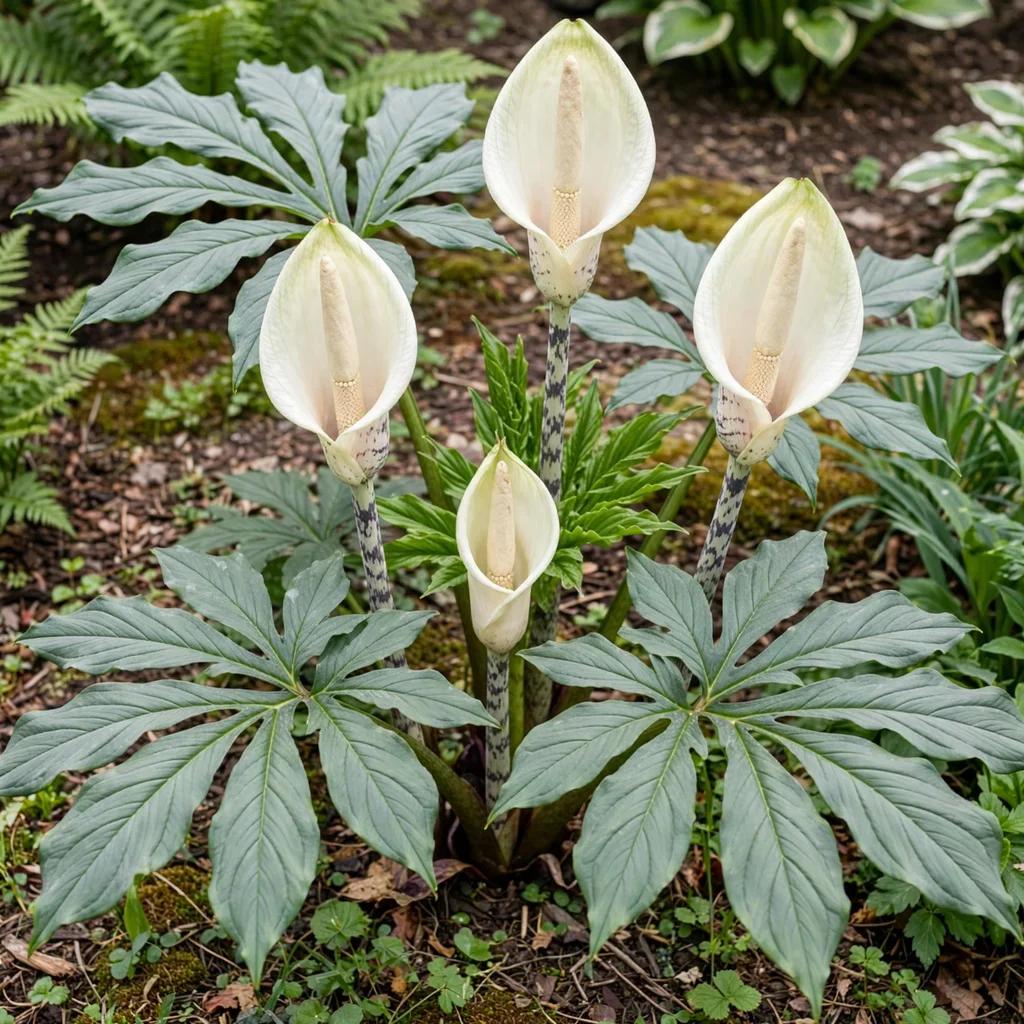
This form is selected for its distinctly glaucous (bluish-waxy) petiole and peduncle, which provides a striking contrast to the green leaf. The spathe is typically white, sometimes with a bluish cast.
Uses & Benefits:
Essentials
At a Glance
Plant Type
Perennial
Height
48"
Width
24"
Light
Partial Sun
Zones
10
Water
Moderate
Humidity
High
Lifespan
Perennial
Native To
Southeast Asia
Toxicity
Toxic if ingested
Bloom period
Spring – Late fall
In flower about 9 months of the year
Planting
How to Grow
- Tuck corms 4 inches deep in well-draining soil
- Water regularly to keep soil moist but not soggy
- Place in partial shade for best growth
- Fertilize monthly with balanced fertilizer during growing season
- Mulch to retain soil moisture and regulate temperature
- Allow plant to rest in winter in colder zones
Pro Tip
Plant corms in well-draining soil and avoid overwatering to prevent rot.
Keep It Thriving
Care Guide
Do
- Water consistently during active growth 🌱
- Mulch to conserve moisture
- Fertilize monthly during growing season
Don't
- Overwater in winter ❌
- Expose to direct harsh sunlight in hot zones
- Allow soil to become waterlogged
Seasonal Care Calendar
| Task | Jan | Feb | Mar | Apr | May | Jun | Jul | Aug | Sep | Oct | Nov | Dec |
|---|---|---|---|---|---|---|---|---|---|---|---|---|
| Fertilize | ||||||||||||
| Lift Store | ||||||||||||
| Pest Check | ||||||||||||
| Plant | ||||||||||||
| Spring Cleanup |
Watch Out For
Pests & Diseases
Common Pests
Common Diseases
In the Garden
Landscape Uses & Companions
Landscape Uses
Multiply
Propagation Methods
Good to Know
Common Questions
Blue Form Amorphophallus questions
What zones can Blue Form Amorphophallus grow in?
Blue Form Amorphophallus is hardy in USDA Zone 10. Inside that range it survives winter in the ground; outside it, grow it as an annual or a container plant you protect.
Is Blue Form Amorphophallus deer resistant?
Not reliably. Deer may browse Blue Form Amorphophallus, especially tender spring growth — plan on repellents or fencing where pressure is high.
When does Blue Form Amorphophallus bloom?
Blue Form Amorphophallus typically blooms in spring through late fall. Exact timing shifts a week or two with your zone — Sow's bloom calendar maps it to your garden.
Does Blue Form Amorphophallus need full sun?
Blue Form Amorphophallus does best in part shade.
More Amorphophallus to compare
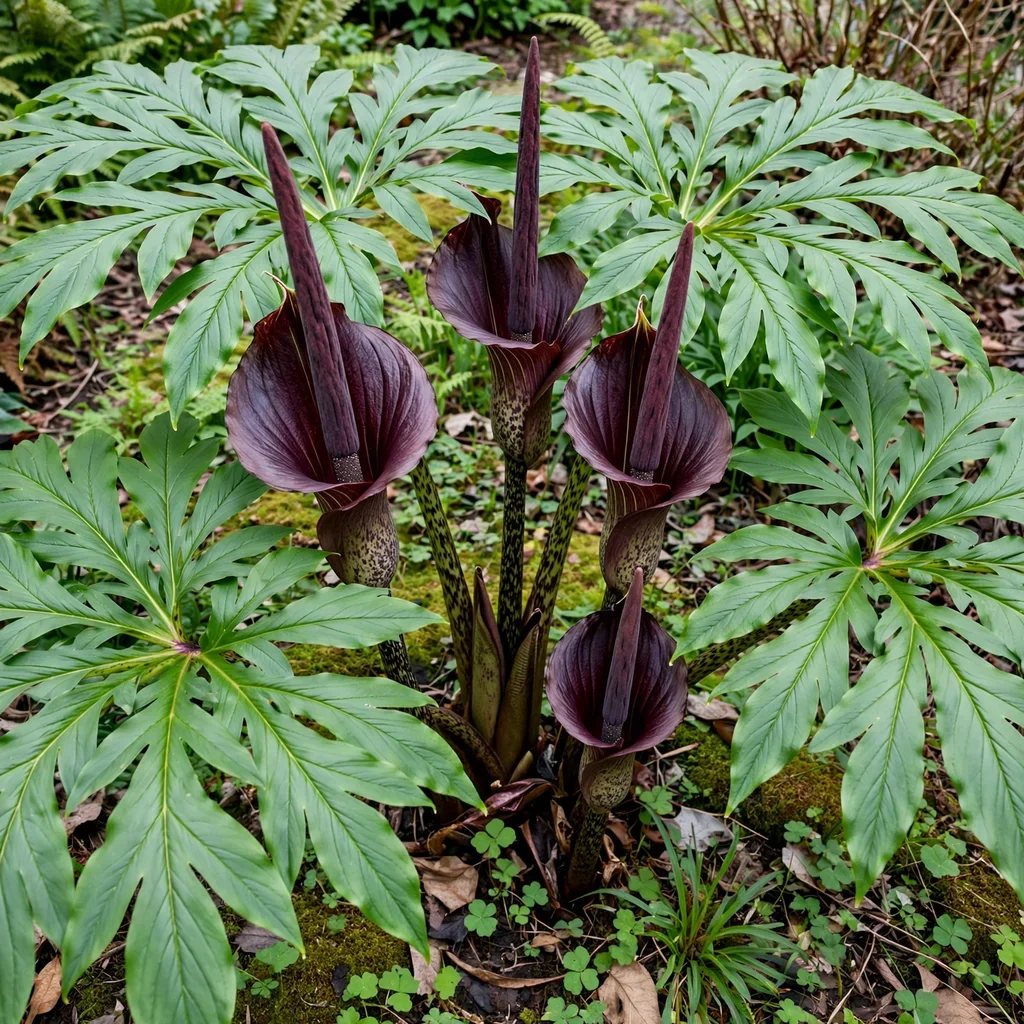
Konjac Voodoo Lily
Amorphophallus konjac
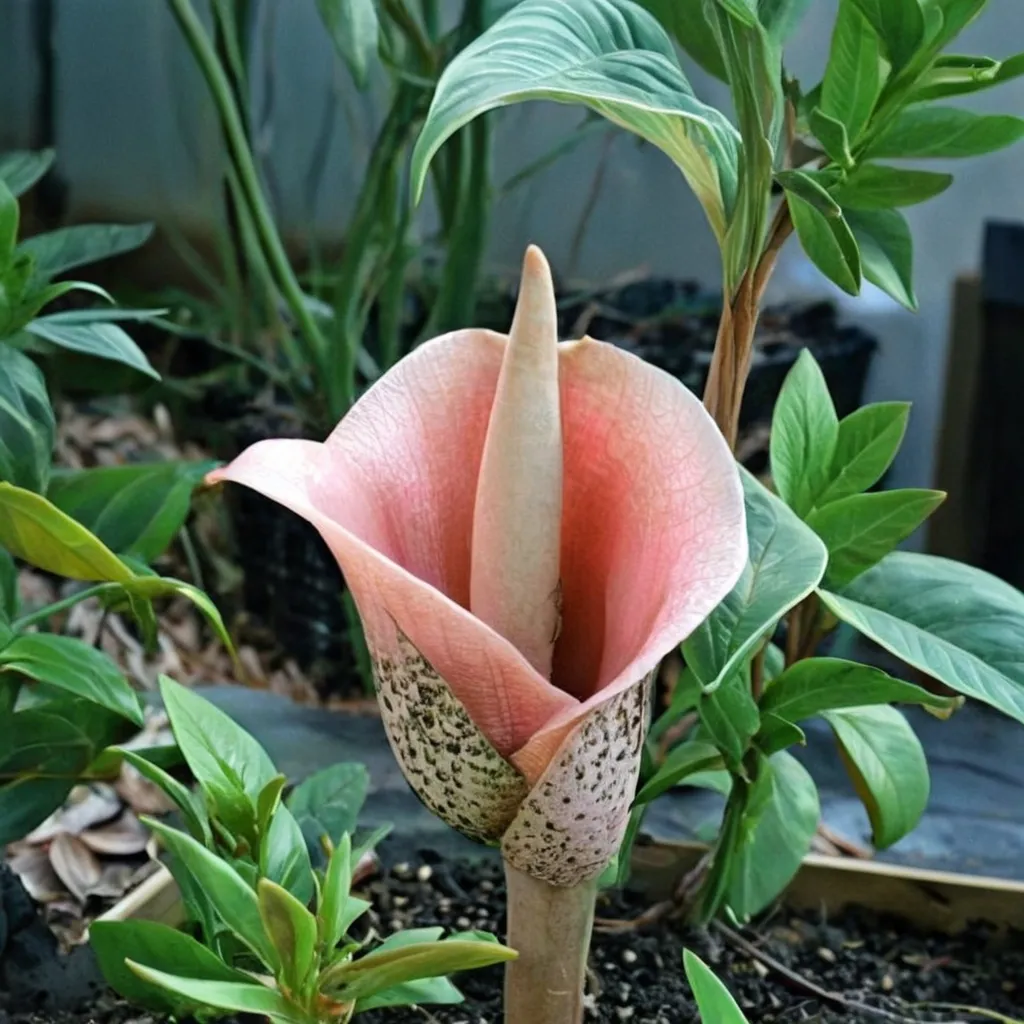
Voodoo Lily
Amorphophallus bulbifer
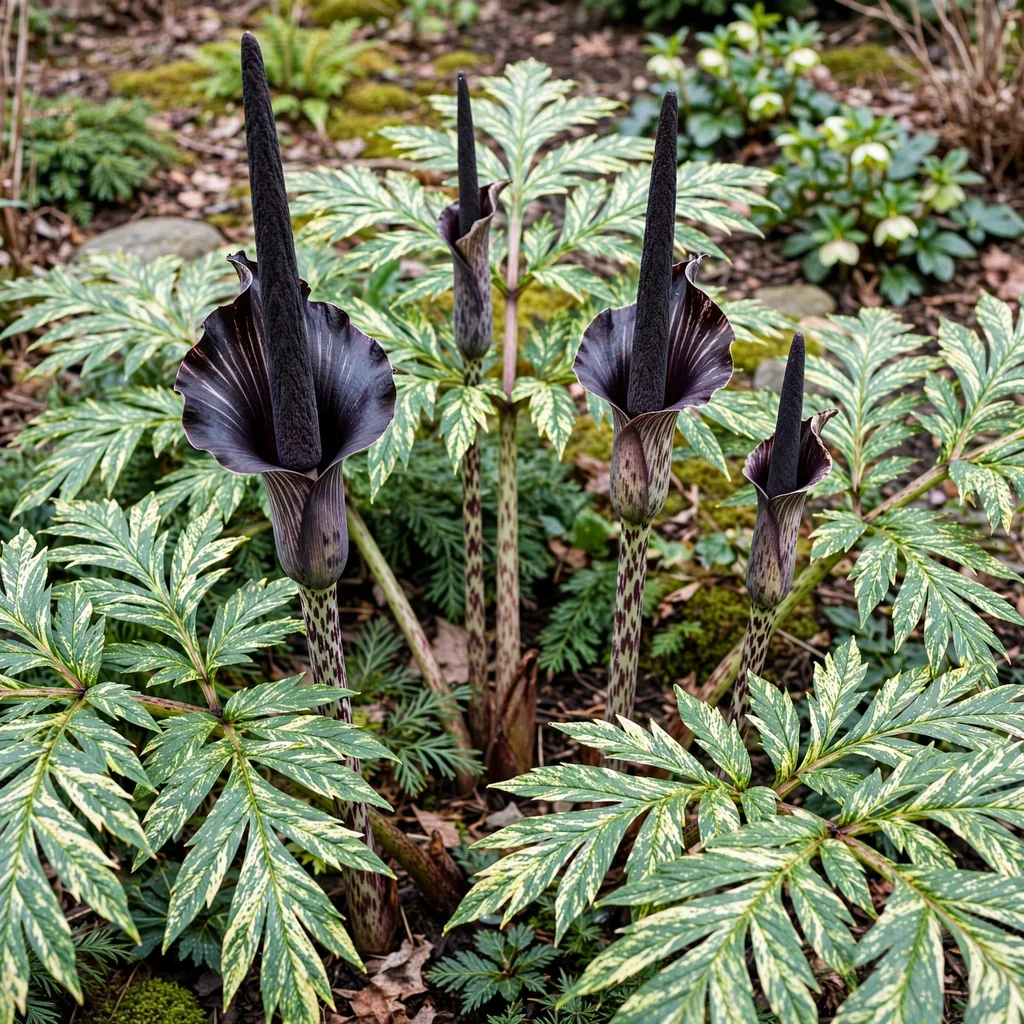
Pinto Voodoo Lily
Amorphophallus konjac 'Pinto'
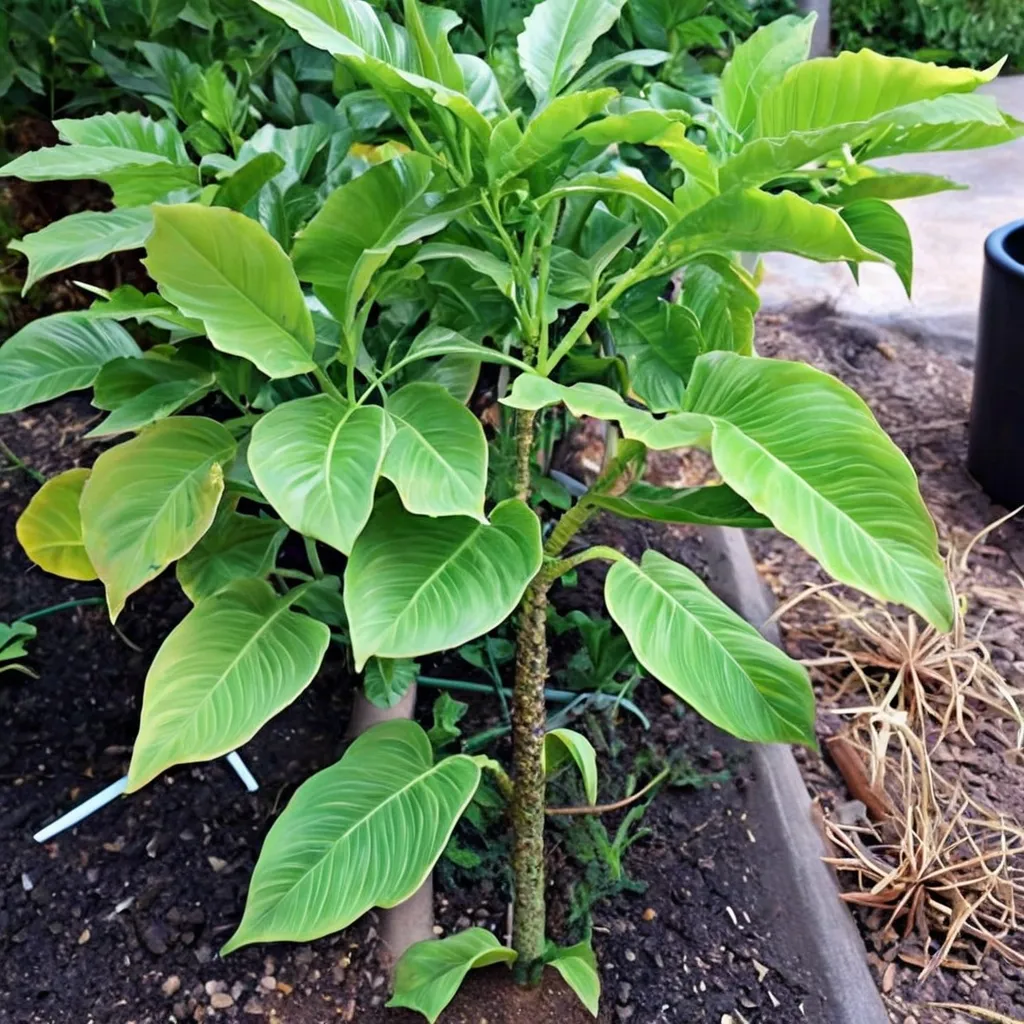
Korat Amorphophallus
Amorphophallus koratensis 'Green Stem Form'
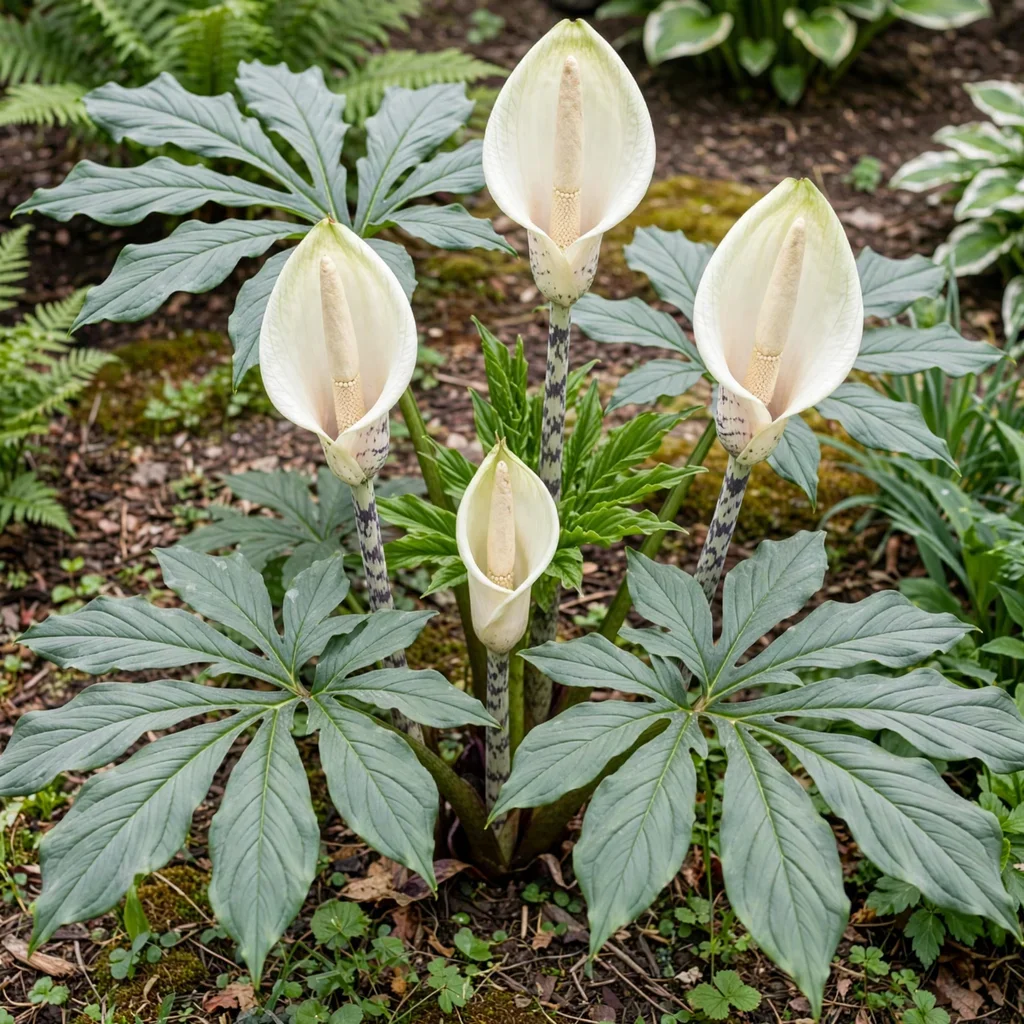
White Spathe Voodoo Lily
Amorphophallus albispathus 'PDN 08'
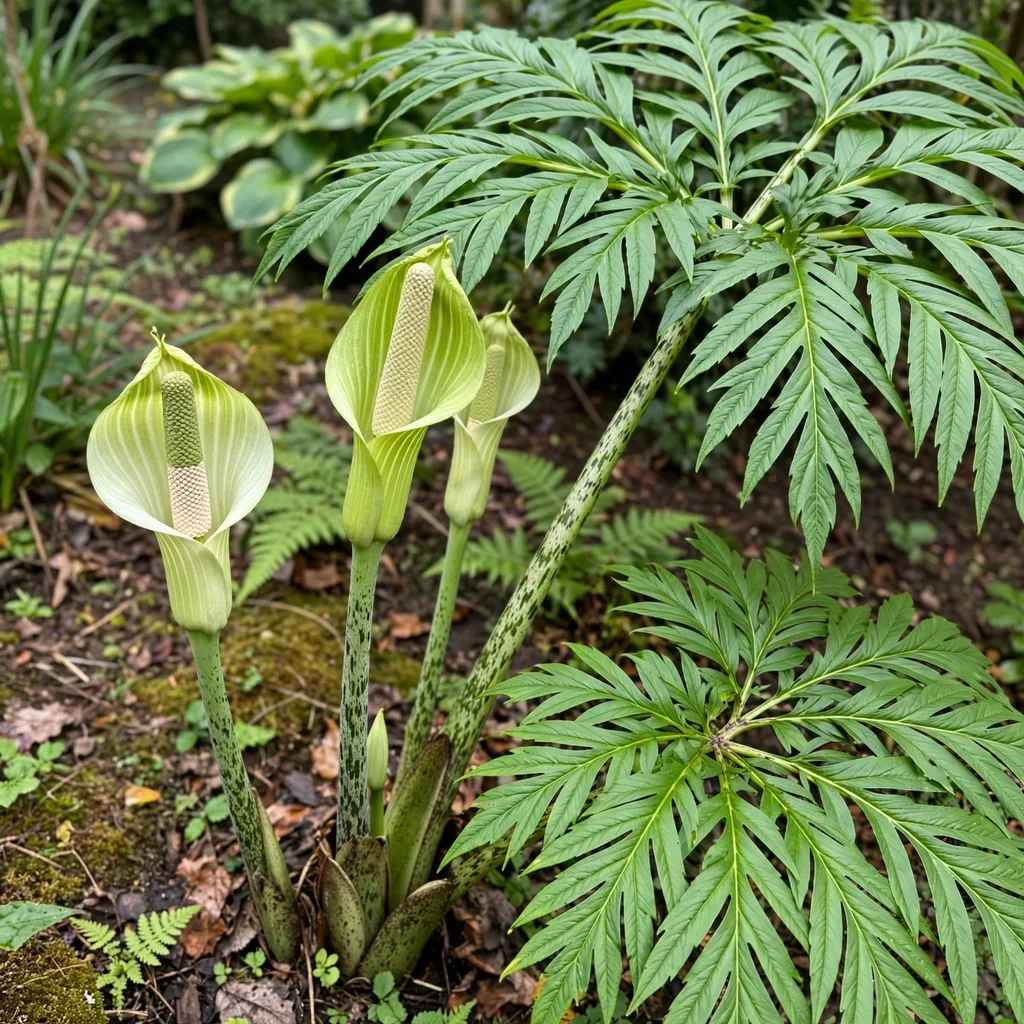
Green Stalkings White Voodoo Lily
Amorphophallus albus 'Green Stalkings'
Keep exploring
Explore the genus
Hardy in your zone?
Grow Blue Form Amorphophallus with confidence
See it in a design of your actual yard, get zone-matched care reminders, and track it season by season in your garden journal.