The Story
Plant Bio
Lunaria annua, commonly known as annual honesty, is an upright-branching biennial herb that forms a low rosette of heart-shaped foliage in its first year. In its second spring, the plant bolts to produce tall, hairy stems topped with terminal clusters of four-petaled purple or white flowers.
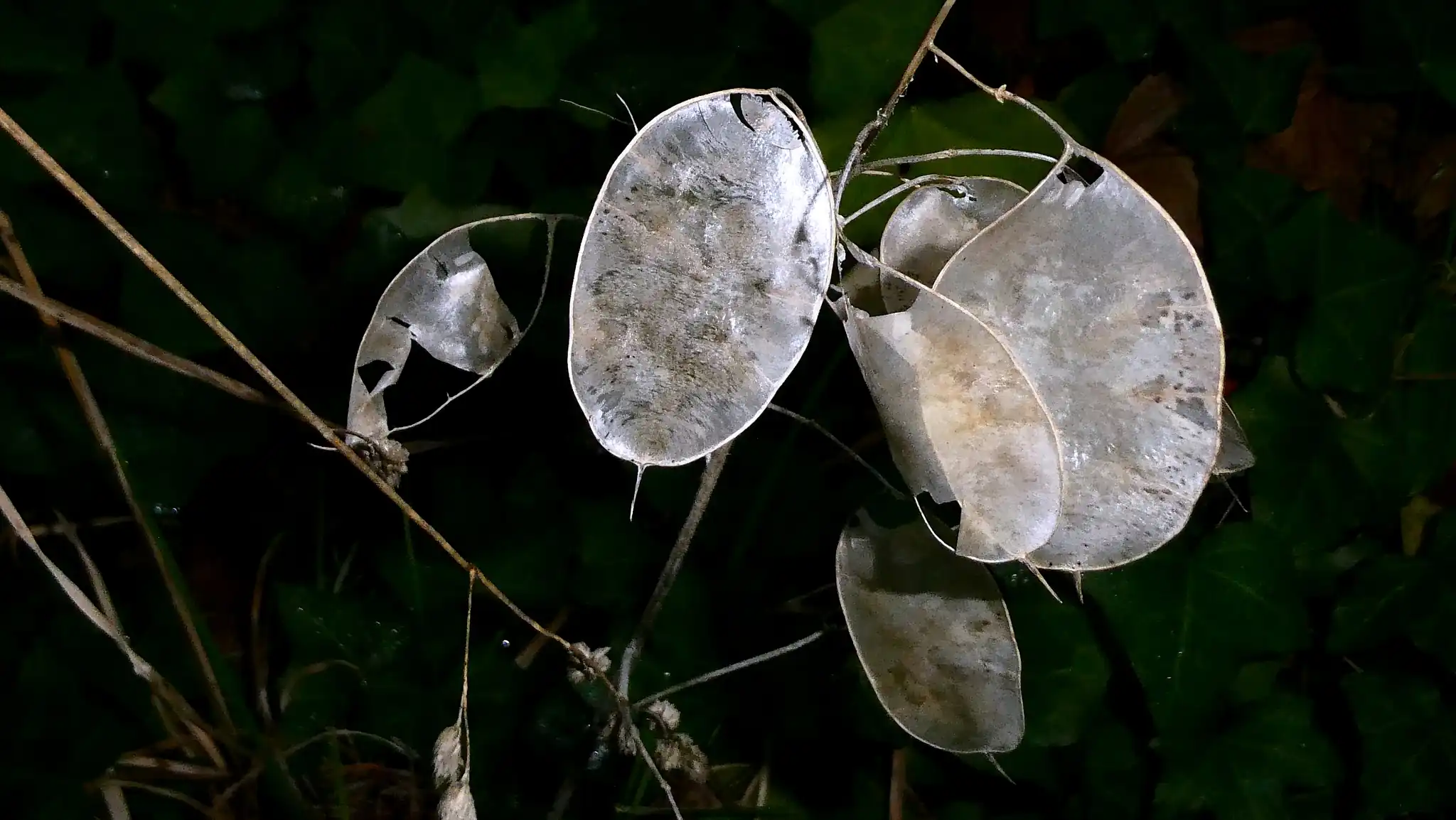
The flowers give way in mid-summer to distinctive, flattened, paper-thin seed pods that dry to a translucent, silvery appearance. These coin-shaped silicles persist on the stems and are highly valued for dried floral arrangements.
Uses & Benefits:
Essentials
At a Glance
Plant Type
Perennial
Height
36"
Width
18"
Light
Full Sun, Partial Sun
Zones
4, 5, 6, 7, 8
Water
Medium
Humidity
Moderate
Lifespan
Biennial
Native To
Europe
Toxicity
Mildly toxic if ingested
Bloom period
Spring
In flower about 3 months of the year
Marketplace
Where to Buy
Shipping costs Year-round shipping Free shipping
Planting
How to Grow
- Sow seeds directly outdoors in spring as soon as the soil can be worked.
- Lightly cover the seeds with soil and keep the area consistently moist until germination.
- Thin the emerged seedlings to allow adequate spacing for mature growth.
- Allow the plants to self-seed naturally in fall to establish a permanent colony.
Pro Tip
Do not prune the vegetative first-year rosettes in an attempt to shape them, and avoid cutting back second-year flowering stems until the seed pods have fully developed and dried if you wish to harvest them.
Keep It Thriving
Care Guide
Do
- Ensure the soil remains consistently moist during the active growing season.
- Allow the plants to complete their natural two-year cycle to self-seed.
- Provide afternoon shade in hotter southern zones to protect the foliage.
Don't
- Do not prune into old, leafless wood as this will prevent regrowth.
- Do not over-fertilize, as heavy feeding is generally unnecessary.
- Do not plant in poorly drained soils where root rot can develop.
Seasonal Care Calendar
| Task | Jan | Feb | Mar | Apr | May | Jun | Jul | Aug | Sep | Oct | Nov | Dec |
|---|---|---|---|---|---|---|---|---|---|---|---|---|
| Fertilize | ||||||||||||
| Harvest | ||||||||||||
| Pest Check | ||||||||||||
| Propagate | ||||||||||||
| Spring Cleanup |
Watch Out For
Pests & Diseases
Common Pests
Common Diseases
In the Garden
Landscape Uses & Companions
Landscape Uses
Companion Plants
Multiply
Propagation Methods
Good to Know
Common Questions
Annual Honesty questions
What zones can Annual Honesty grow in?
Annual Honesty is hardy in USDA Zones 4–8. Inside that range it survives winter in the ground; outside it, grow it as an annual or a container plant you protect.
Is Annual Honesty deer resistant?
Not reliably. Deer may browse Annual Honesty, especially tender spring growth — plan on repellents or fencing where pressure is high.
When does Annual Honesty bloom?
Annual Honesty typically blooms in spring through spring. Exact timing shifts a week or two with your zone — Sow's bloom calendar maps it to your garden.
Does Annual Honesty need full sun?
Annual Honesty does best in full sun to part shade. In hot climates, afternoon shade keeps blooms fresher longer.
Keep exploring
Explore the genus
Hardy in your zone?
Grow Annual Honesty with confidence
See it in a design of your actual yard, get zone-matched care reminders, and track it season by season in your garden journal.