The Story
Plant Bio
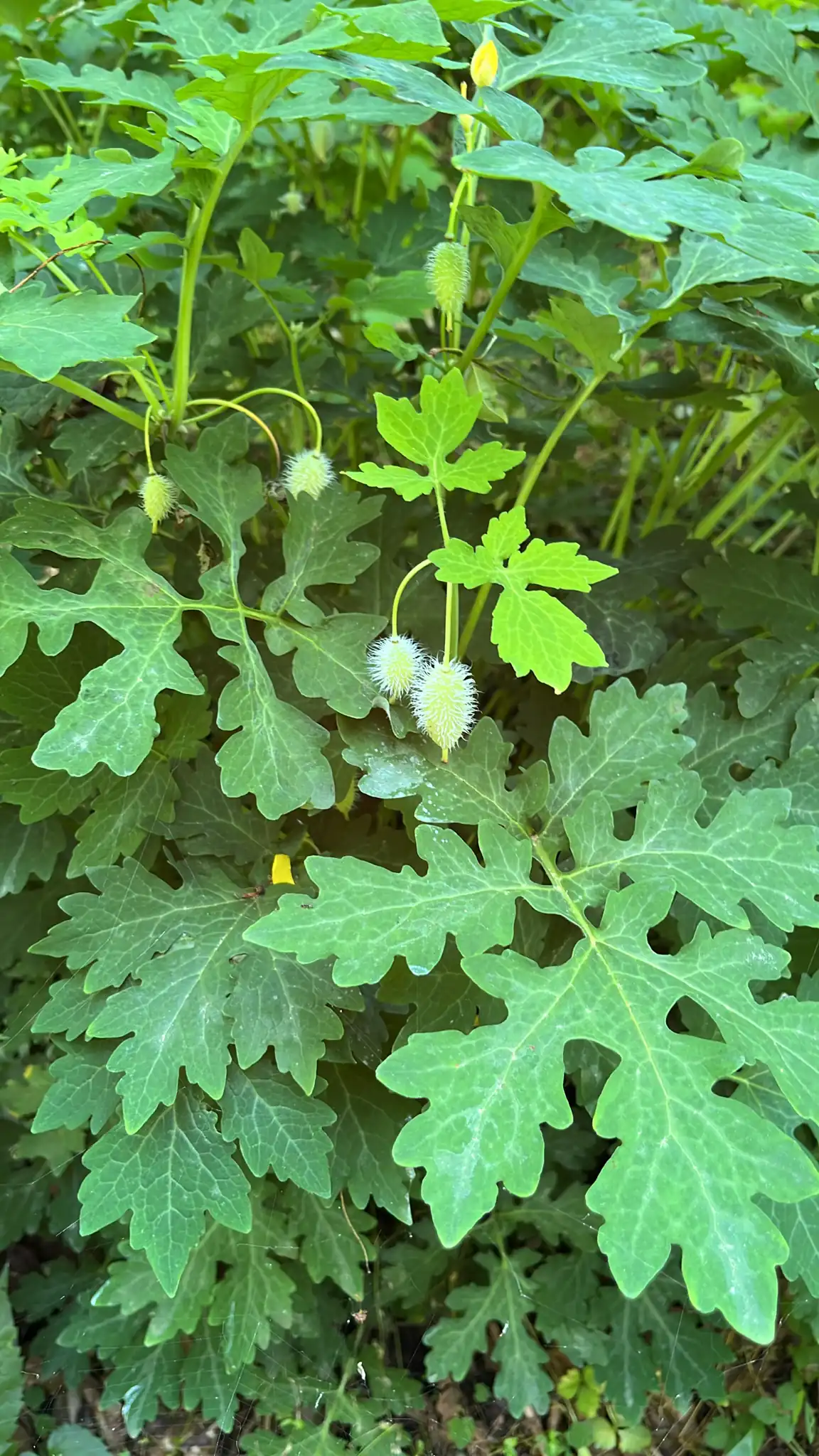
Stylophorum diphyllum is a native woodland wildflower that forms clumps of deeply lobed, bluish-green leaves. It produces bright, sunny yellow, poppy-like flowers in spring.
After flowering, it develops distinctive fuzzy, nodding seed pods. The plant contains a bright yellow-orange sap, similar to its relative, bloodroot.
Uses & Benefits:
Essentials
At a Glance
Plant Type
Perennial
Height
18"
Width
12"
Light
Partial Sun, Shade
Zones
4, 5, 6, 7, 8, 9
Water
Medium to moist
Humidity
Prefers moderate to high
Lifespan
Perennial, may go dormant in summer
Native To
Eastern North America
Toxicity
All parts are toxic if ingested.
Bloom period
Mid-spring – Late spring
In flower about 2 months of the year
Marketplace
Where to Buy
Shipping costs Year-round shipping Free shipping
Planting
How to Grow
- Select a shady location with rich, moist, well-drained soil.
- Amend soil with compost or leaf mold to mimic a forest floor.
- Dig a hole large enough to accommodate the root ball.
- Plant at the same depth it was in its container.
- Water well after planting.
- Mulch with shredded leaves to conserve moisture.
Pro Tip
Allow it to self-seed to form beautiful, naturalized colonies in a woodland or shade garden setting.
Keep It Thriving
Care Guide
Do
- Provide consistent moisture to prevent summer dormancy.
- Allow plants to self-sow to create larger drifts.
- Plant in a location protected from harsh afternoon sun.
- Enrich the soil with plenty of organic matter.
Don't
- Don't plant in dry soil or full sun.
- Don't disturb the roots once established.
- Don't worry if it goes dormant in a hot, dry summer; it will return.
- Don't remove the fuzzy seed pods if you want it to naturalize.
Seasonal Care Calendar
| Task | Jan | Feb | Mar | Apr | May | Jun | Jul | Aug | Sep | Oct | Nov | Dec |
|---|---|---|---|---|---|---|---|---|---|---|---|---|
| Plant |
In the Garden
Landscape Uses & Companions
Landscape Uses
Multiply
Propagation Methods
Good to Know
Common Questions
Celandine Poppy questions
What zones can Celandine Poppy grow in?
Celandine Poppy is hardy in USDA Zones 4–9. Inside that range it survives winter in the ground; outside it, grow it as an annual or a container plant you protect.
Is Celandine Poppy deer resistant?
Yes — Celandine Poppy is rated deer-resistant. Deer typically pass it over, though extreme hunger can override any plant's defenses.
When does Celandine Poppy bloom?
Celandine Poppy typically blooms in mid-spring through late spring. Exact timing shifts a week or two with your zone — Sow's bloom calendar maps it to your garden.
Does Celandine Poppy need full sun?
Celandine Poppy does best in part shade.
Keep exploring
Explore the genus
Grow Celandine Poppy with confidence
See it in a design of your actual yard, get zone-matched care reminders, and track it season by season in your garden journal.