

The Story
Plant Bio
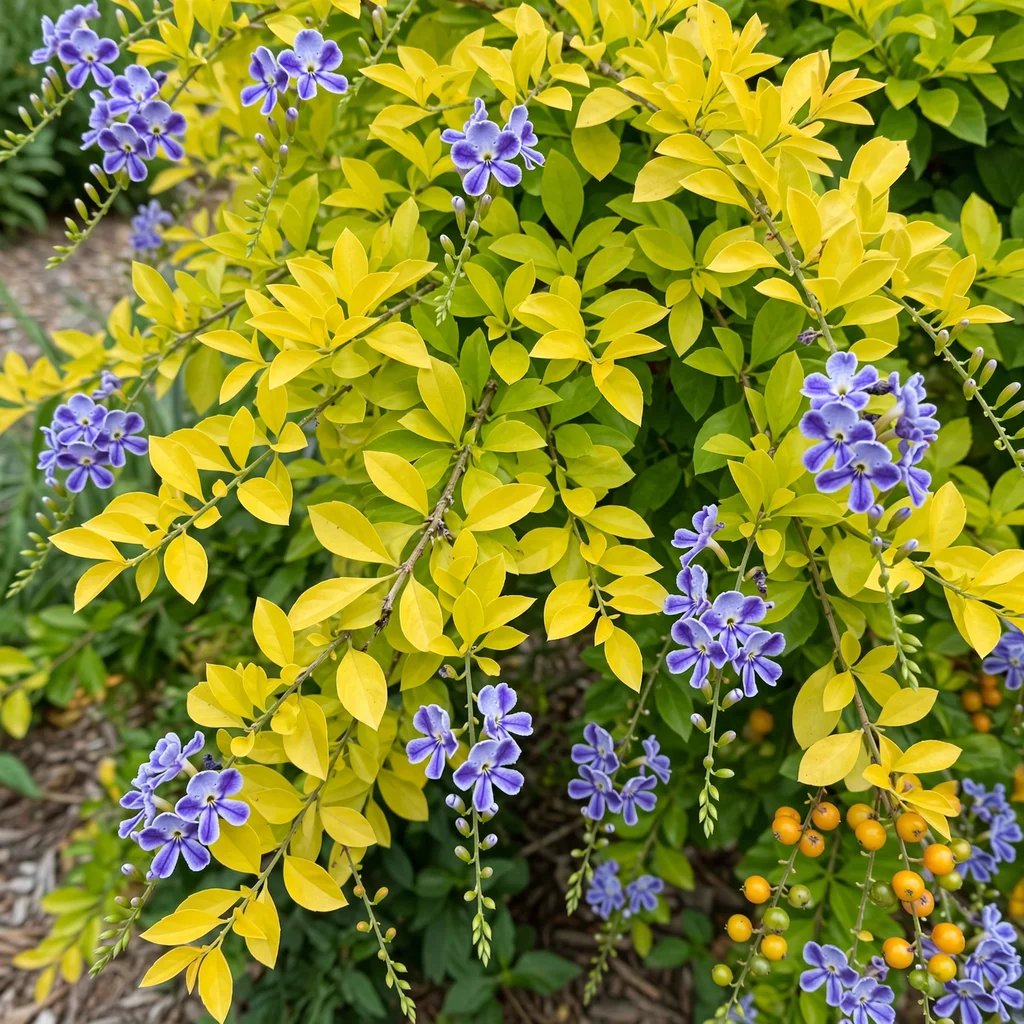
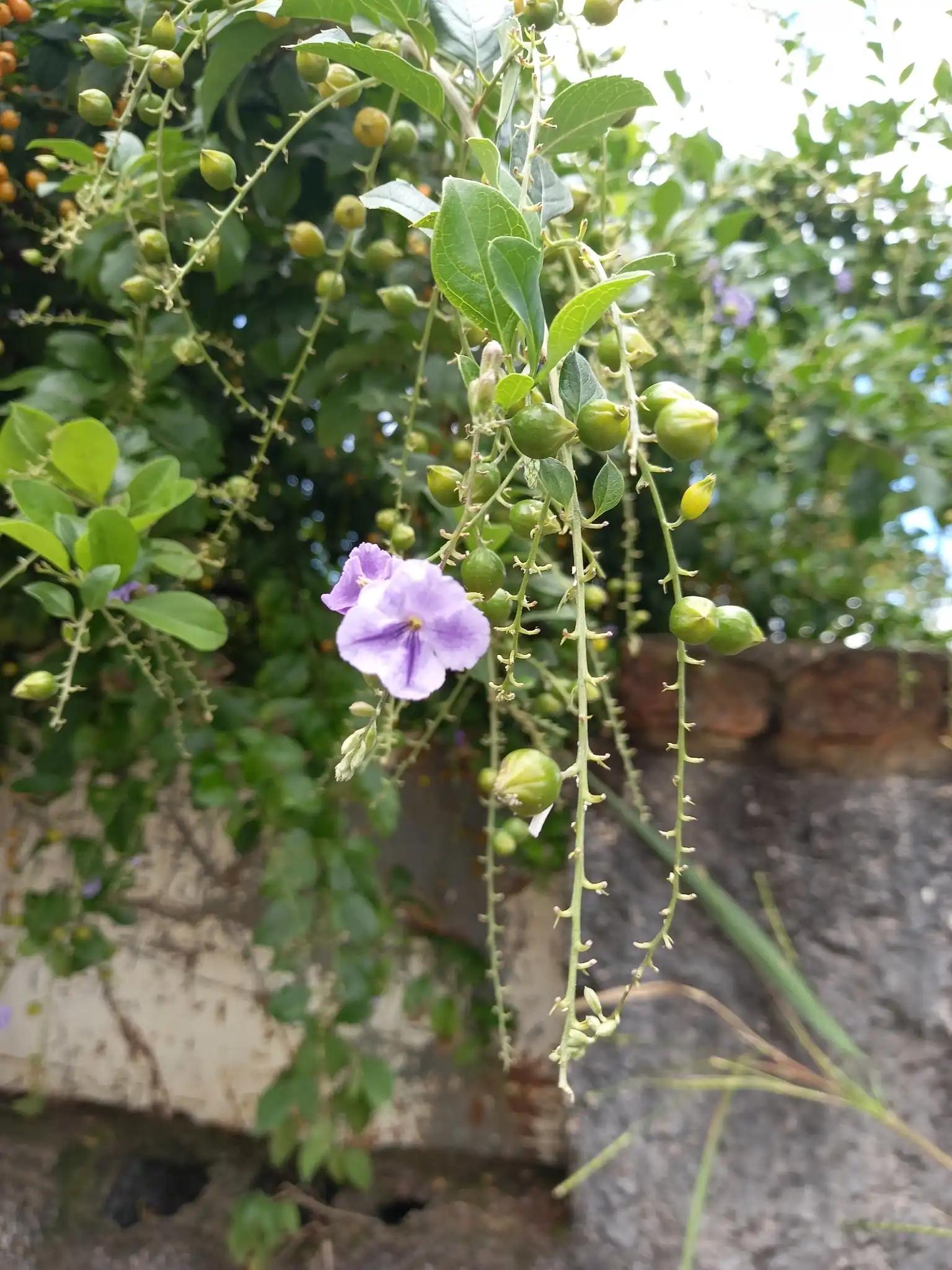
Duranta erecta is a sprawling, mounding evergreen shrub native to the tropical and subtropical Americas, where it can reach up to eighteen feet tall if left unpruned. The species features small, opposite ovate leaves and terminal racemes of light blue, violet, or white flowers followed by yellow-orange berries.
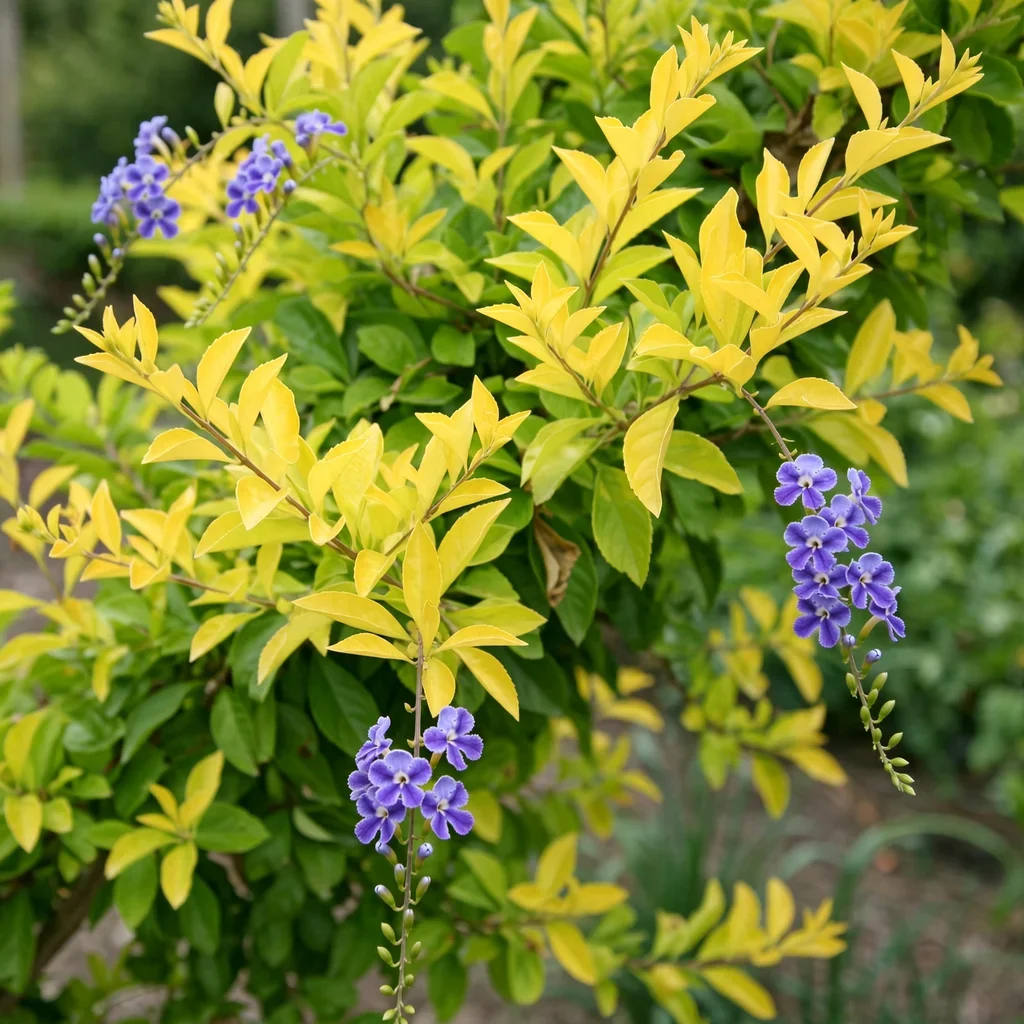
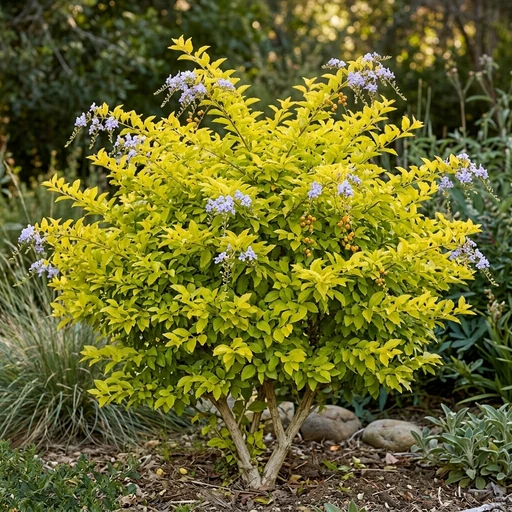
'Aurea' is a compact foliage selection grown for its striking, bright chartreuse to golden-yellow leaves. This cultivar reaches two to four feet in height and width, producing flowers and berries far more sparsely than the wild-type species.
Uses & Benefits:
Essentials
At a Glance
Plant Type
Shrub
Height
48"
Width
48"
Light
Full Sun, Partial Sun
Zones
9, 10
Water
Low to moderate
Humidity
High
Lifespan
Perennial
Native To
Americas
Toxicity
High
Bloom period
Summer – Fall
In flower about 6 months of the year
Planting
How to Grow
- Plant in a location with full sun to partial shade, opting for afternoon shade in hot climates to prevent foliage scorch.
- Ensure the soil is well-drained, though the plant adapts to clay, loam, or sandy textures once established.
- Water regularly until established, after which the shrub exhibits high drought tolerance.
- Apply a balanced, slow-release granular fertilizer in spring to support foliage growth without over-fertilizing.
Pro Tip
Avoid heavy cutting into old, leafless woody stems where re-sprouting is poor; instead, shear the outer foliage regularly during spring and summer to maintain a tight, dense mounding form.
Keep It Thriving
Care Guide
Do
- Shear back the outer growth regularly during the active spring and summer growing seasons.
- Provide partial shade in hot regions to protect the bright golden leaves from scorching.
- Insulate the root zone with mulch in USDA Zone 9 to help the plant recover if frost kills the top growth.
Don't
- Do not cut heavily into old, completely leafless woody stems.
- Do not over-fertilize, which washes out the bright golden color into a dull green.
- Do not plant where children, pets, or livestock can access the toxic leaves and berries.
Seasonal Care Calendar
| Task | Jan | Feb | Mar | Apr | May | Jun | Jul | Aug | Sep | Oct | Nov | Dec |
|---|---|---|---|---|---|---|---|---|---|---|---|---|
| Fertilize | ||||||||||||
| Pest Check | ||||||||||||
| Prune | ||||||||||||
| Winter Prep |
Watch Out For
Pests & Diseases
Common Pests
Common Diseases
In the Garden
Landscape Uses & Companions
Landscape Uses
Companion Plants
Multiply
Propagation Methods
Good to Know
Common Questions
Golden Dewdrop questions
What zones can Golden Dewdrop grow in?
Golden Dewdrop is hardy in USDA Zones 9–10. Inside that range it survives winter in the ground; outside it, grow it as an annual or a container plant you protect.
When does Golden Dewdrop bloom?
Golden Dewdrop typically blooms in summer through fall. Exact timing shifts a week or two with your zone — Sow's bloom calendar maps it to your garden.
Does Golden Dewdrop need full sun?
Golden Dewdrop does best in full sun to part shade. In hot climates, afternoon shade keeps blooms fresher longer.
Is Golden Dewdrop drought tolerant?
Yes — once established (usually after the first full season), Golden Dewdrop handles dry spells with minimal watering. Water deeply its first year to build the root system that makes that possible.
More Duranta to compare
Keep exploring
Explore the genus
Hardy in your zone?
Grow Golden Dewdrop with confidence
See it in a design of your actual yard, get zone-matched care reminders, and track it season by season in your garden journal.