The Story
Plant Bio
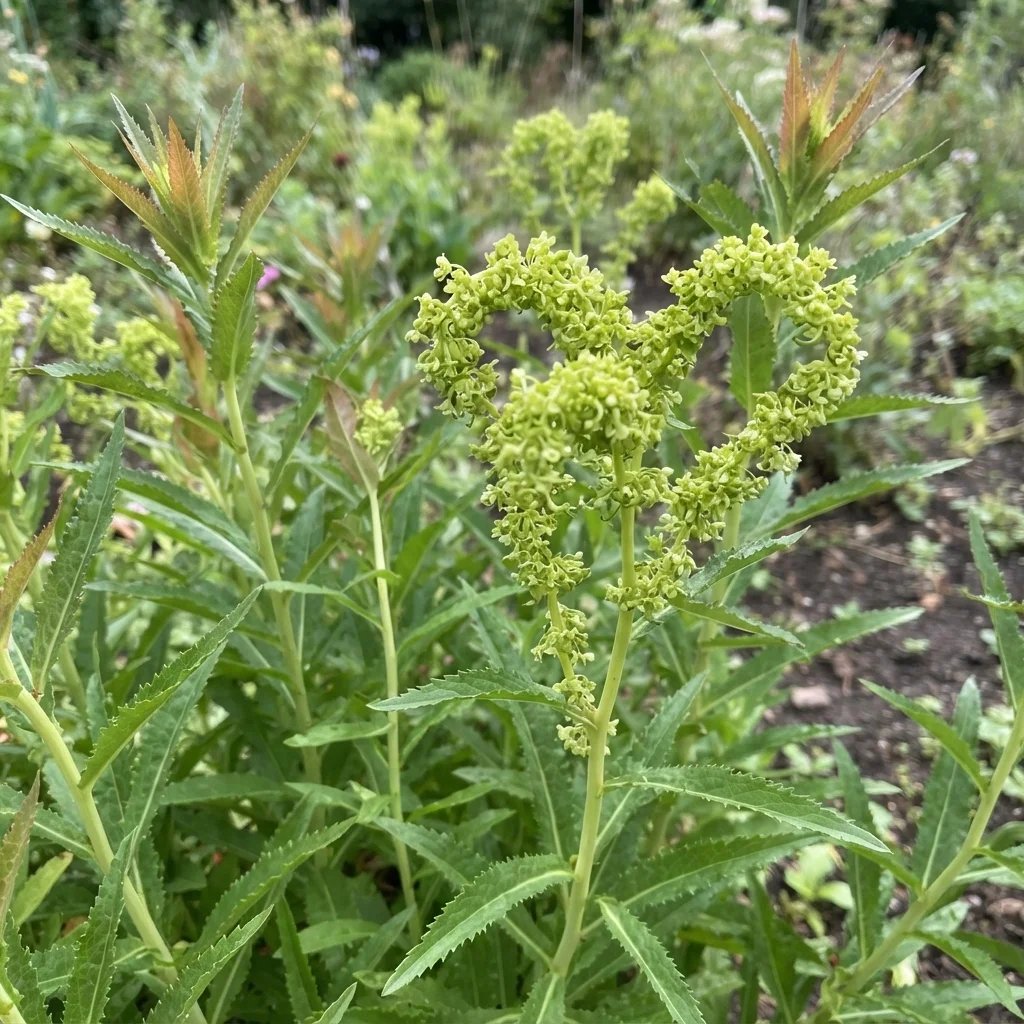
Penthorum sedoides, commonly known as ditch stonecrop, is an upright, rhizomatous perennial native to wetlands, marshes, and floodplains across eastern North America. Unlike true stonecrops, this species is non-succulent, featuring finely serrated lanceolate leaves and terminal, curved branching cymes of petal-less, greenish-yellow flowers.
The star-shaped seed capsules mature to a distinctive rusty red-orange in fall, providing late-season interest along pond margins and rain gardens. The foliage also frequently develops reddish tints as the season progresses, contrasting with the pale green stems.
Uses & Benefits:
Essentials
At a Glance
Plant Type
Perennial
Height
31"
Width
24"
Light
Full Sun, Partial Sun
Zones
4, 5, 6, 7, 8, 9
Water
High
Humidity
High
Lifespan
Perennial
Native To
North America
Toxicity
Non-toxic
Bloom period
Summer – Autumn
In flower about 6 months of the year
Planting
How to Grow
- Select a site with full sun to partial shade that remains consistently wet, such as a rain garden, pond margin, or low-lying boggy area.
- Amend the planting area with organic matter or muck if the soil lacks natural organic richness.
- Space plants 12 to 24 inches apart to allow the short rhizomes room to spread and form a stabilizing colony.
- Water deeply immediately after planting and maintain saturated soil conditions throughout the first growing season.
Pro Tip
Do not plant this species in dry garden borders; despite the common name stonecrop, it is an obligate wetland plant that wilts and dies rapidly without constant soil moisture or seasonal inundation.
Keep It Thriving
Care Guide
Do
- Keep the soil consistently moist or wet at all times.
- Cut back dead stems in late winter or early spring before new basal shoots emerge.
- Allow the plant to colonize wet areas naturally via its rhizomatous root system.
Don't
- Do not let the soil dry out completely, as drought tolerance is extremely low.
- Do not apply supplemental fertilizers when grown in rich, organic wetland soils.
- Avoid heavy pruning into old, leafless wood during the active growing season.
Seasonal Care Calendar
| Task | Jan | Feb | Mar | Apr | May | Jun | Jul | Aug | Sep | Oct | Nov | Dec |
|---|---|---|---|---|---|---|---|---|---|---|---|---|
| Pest Check | ||||||||||||
| Propagate | ||||||||||||
| Spring Cleanup | ||||||||||||
| Winter Prep |
Watch Out For
Pests & Diseases
Common Pests
Common Diseases
In the Garden
Landscape Uses & Companions
Landscape Uses
Companion Plants
Multiply
Propagation Methods
Good to Know
Common Questions
Ditch Stonecrop questions
What zones can Ditch Stonecrop grow in?
Ditch Stonecrop is hardy in USDA Zones 4–9. Inside that range it survives winter in the ground; outside it, grow it as an annual or a container plant you protect.
Is Ditch Stonecrop deer resistant?
Not reliably. Deer may browse Ditch Stonecrop, especially tender spring growth — plan on repellents or fencing where pressure is high.
When does Ditch Stonecrop bloom?
Ditch Stonecrop typically blooms in summer through autumn. Exact timing shifts a week or two with your zone — Sow's bloom calendar maps it to your garden.
Does Ditch Stonecrop need full sun?
Ditch Stonecrop does best in full sun to part shade. In hot climates, afternoon shade keeps blooms fresher longer.
Keep exploring
Explore the genus
Grow Ditch Stonecrop with confidence
See it in a design of your actual yard, get zone-matched care reminders, and track it season by season in your garden journal.