The Story
Plant Bio
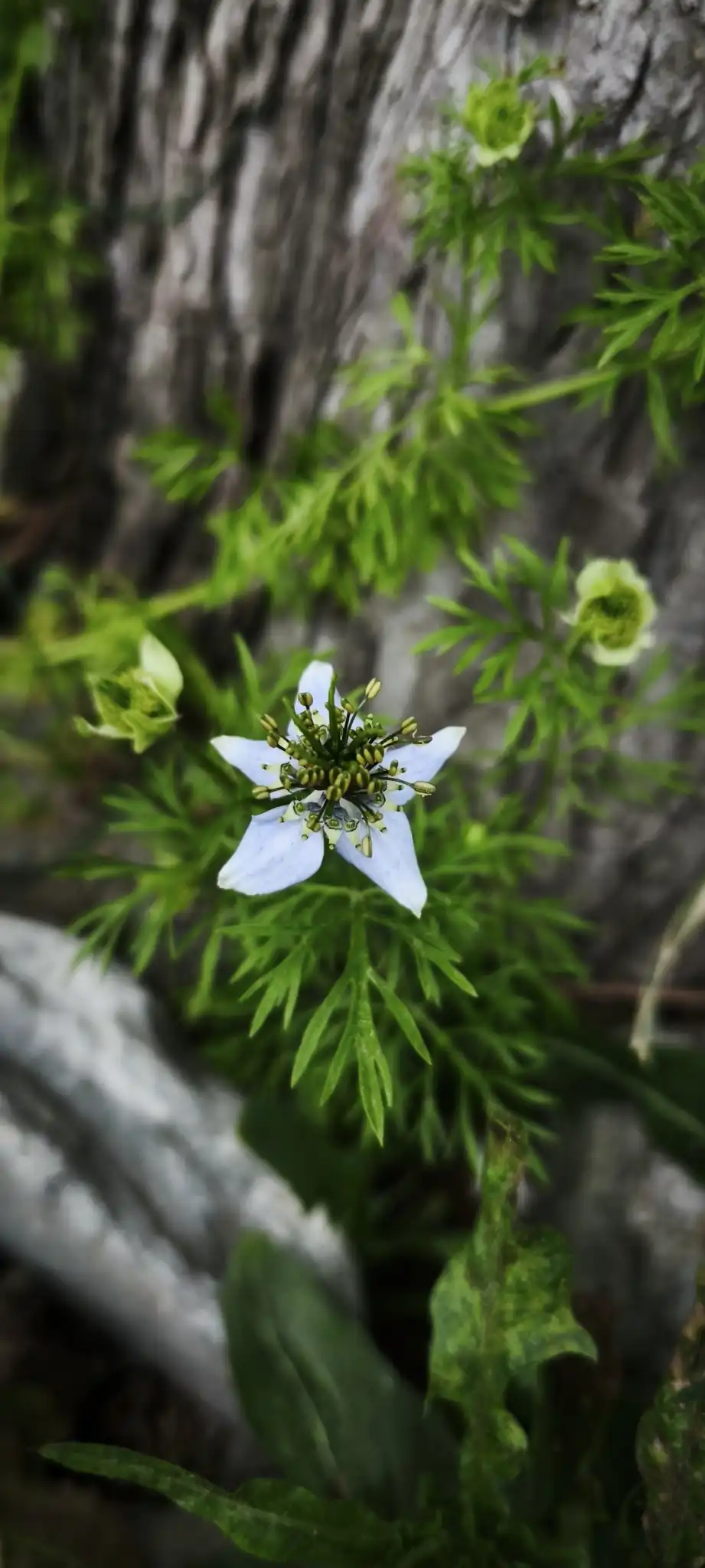
Nigella sativa is an erect, branching annual herb reaching eight to twenty-four inches in height, featuring finely divided, bright green foliage. The solitary, terminal flowers are pale blue or white and lack the leafy, lace-like collar of bracts characteristic of other species in the genus.
This species is cultivated primarily for its aromatic black seeds, which develop within inflated capsules following the spring and summer bloom. Unlike Nigella damascena, the flowers sit completely naked on slender stems without a surrounding ruff of feathery foliage.
Uses & Benefits:
Essentials
At a Glance
Plant Type
Annual
Height
24"
Width
12"
Light
Full Sun
Zones
4, 5, 6, 7, 8, 9
Water
Low to Moderate
Humidity
Low to Moderate
Lifespan
Annual
Native To
Western Asia, Levant, Cyprus, Turkey, Iran, Iraq, Southern/Eastern Europe, Northern Africa
Toxicity
Toxic to Cats
Bloom period
Spring – Summer
In flower about 6 months of the year
Planting
How to Grow
- Select a site in full sun with highly drained loamy, sandy, or well-drained clay soil.
- Sow seeds directly into the garden in early spring or fall, pressing them lightly into the soil.
- Water sparingly once established, allowing the top few inches of soil to dry completely between waterings.
- Harvest the mature, dry seed pods in late summer when they turn brown and begin to split open.
Pro Tip
Sow seeds directly into their permanent garden location; this species develops a sensitive taproot that reacts poorly to transplanting shock.
Keep It Thriving
Care Guide
Do
- Direct-sow seeds where they are to grow permanently.
- Ensure excellent soil drainage to prevent root rot.
- Provide full sun exposure for optimal seed and oil development.
Don't
- Do not attempt to transplant seedlings started indoors.
- Do not apply heavy nitrogen fertilizers, which degrade seed and essential oil quality.
- Do not overwater or plant in heavy, waterlogged soils.
Seasonal Care Calendar
| Task | Jan | Feb | Mar | Apr | May | Jun | Jul | Aug | Sep | Oct | Nov | Dec |
|---|---|---|---|---|---|---|---|---|---|---|---|---|
| Deadhead | ||||||||||||
| Harvest | ||||||||||||
| Pest Check | ||||||||||||
| Plant |
Watch Out For
Pests & Diseases
Common Pests
Common Diseases
In the Garden
Landscape Uses & Companions
Landscape Uses
Companion Plants
Multiply
Propagation Methods
Good to Know
Common Questions
Black Cumin questions
What zones can Black Cumin grow in?
Black Cumin is hardy in USDA Zones 4–9. Inside that range it survives winter in the ground; outside it, grow it as an annual or a container plant you protect.
When does Black Cumin bloom?
Black Cumin typically blooms in spring through summer. Exact timing shifts a week or two with your zone — Sow's bloom calendar maps it to your garden.
Does Black Cumin need full sun?
Black Cumin does best in full sun (6+ hours).
Is Black Cumin drought tolerant?
Yes — once established (usually after the first full season), Black Cumin handles dry spells with minimal watering. Water deeply its first year to build the root system that makes that possible.
More Nigella to compare
Keep exploring
Explore the genus
Grow Black Cumin with confidence
See it in a design of your actual yard, get zone-matched care reminders, and track it season by season in your garden journal.