The Story
Plant Bio
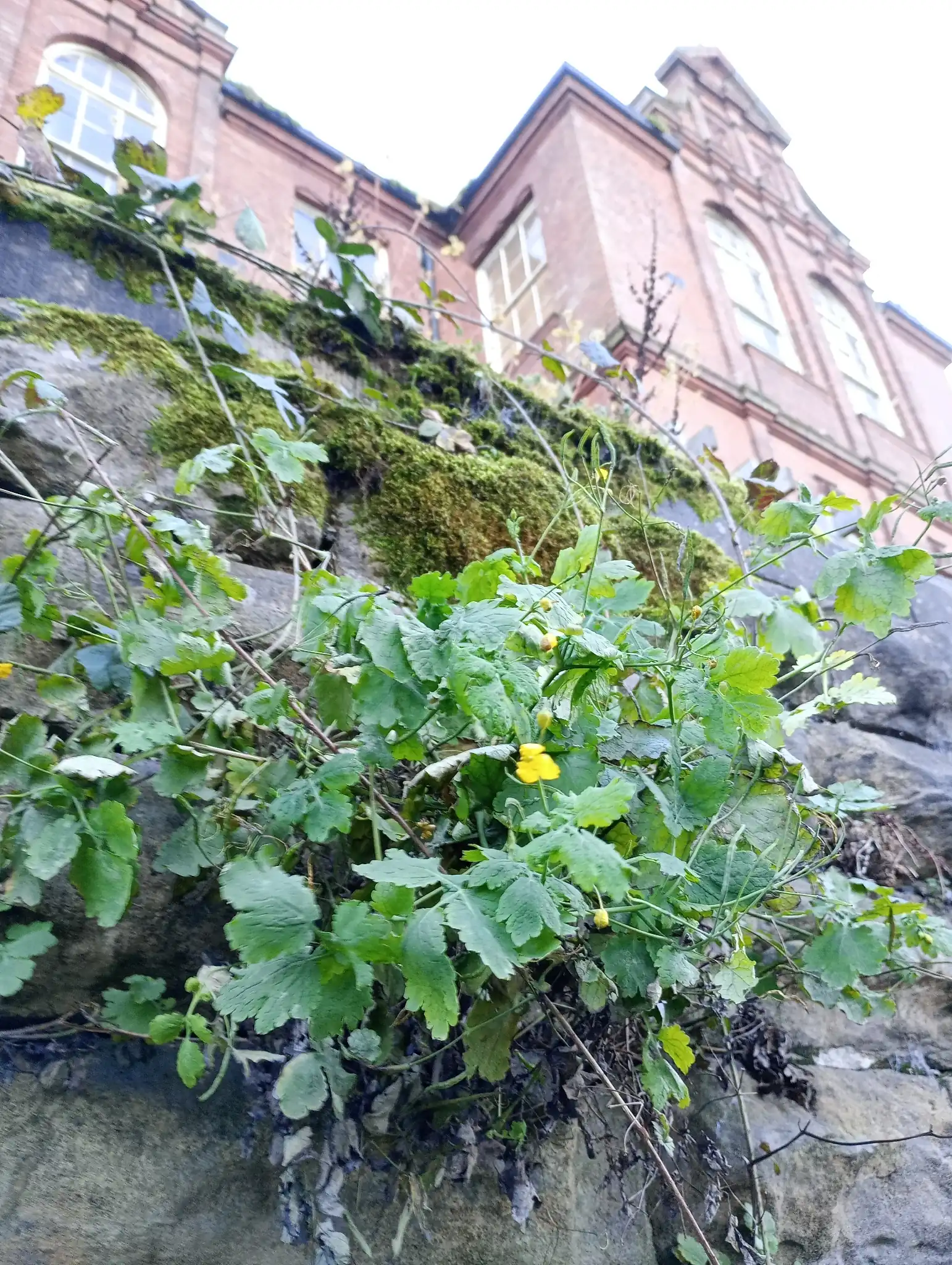
Chelidonium majus is an erect, brittle herbaceous perennial or biennial distinguished by its branching, ribbed stems that exude a bright yellow-to-orange latex sap when broken. The deeply pinnately divided compound leaves feature five to nine lobed leaflets with a glaucous, blue-green tone on their undersides.
This species produces small, bright yellow four-petaled flowers in loose umbellate clusters from spring through summer. The seeds bear fleshy structures called elaiosomes that actively recruit ants to disperse them throughout the garden.
Uses & Benefits:
Essentials
At a Glance
Plant Type
Perennial
Height
47"
Width
20"
Light
Partial Sun, Shade
Zones
4, 5, 6, 7, 8
Water
Consistently moist
Humidity
Moderate
Lifespan
Short-lived perennial or biennial
Native To
Europe, Western Asia, and Northwest Africa
Toxicity
High-severity toxicity; contains toxic isoquinoline alkaloids
Bloom period
Spring – Summer
In flower about 6 months of the year
Planting
How to Grow
- Select a site in partial to full shade with moist, well-drained soil of any texture.
- Sow fresh seeds directly into the soil or plant root divisions in early spring.
- Maintain consistent soil moisture, as plants can enter premature dormancy during dry spells.
- Cut back the foliage and spent stems post-bloom to control aggressive self-seeding.
Pro Tip
Shear off the spent flowering stems immediately after blooming and before the seed pods split open to prevent an aggressive, ant-mediated population explosion.
Keep It Thriving
Care Guide
Do
- Wear heavy gloves when handling the plant to protect skin from the toxic, irritating sap.
- Deadhead spent blooms immediately to prevent unwanted seed dispersal.
- Grow in shaded, damp woodland edges where soil remains naturally moist.
Don't
- Do not ingest any part of the plant, as all tissues contain toxic isoquinoline alkaloids.
- Do not over-fertilize, as this plant thrives and spreads rapidly even in poor soils.
- Do not plant near pastures or areas accessible to livestock and pets.
Seasonal Care Calendar
| Task | Jan | Feb | Mar | Apr | May | Jun | Jul | Aug | Sep | Oct | Nov | Dec |
|---|---|---|---|---|---|---|---|---|---|---|---|---|
| Pest Check | ||||||||||||
| Propagate | ||||||||||||
| Prune | ||||||||||||
| Spring Cleanup |
Watch Out For
Pests & Diseases
Common Pests
Common Diseases
In the Garden
Landscape Uses & Companions
Landscape Uses
Companion Plants
Multiply
Propagation Methods
Good to Know
Common Questions
Greater Celandine questions
What zones can Greater Celandine grow in?
Greater Celandine is hardy in USDA Zones 4–8. Inside that range it survives winter in the ground; outside it, grow it as an annual or a container plant you protect.
Is Greater Celandine deer resistant?
Yes — Greater Celandine is rated deer-resistant. Deer typically pass it over, though extreme hunger can override any plant's defenses.
When does Greater Celandine bloom?
Greater Celandine typically blooms in spring through summer. Exact timing shifts a week or two with your zone — Sow's bloom calendar maps it to your garden.
Does Greater Celandine need full sun?
Greater Celandine does best in part shade.
Keep exploring
Explore the genus
Hardy in your zone?
Grow Greater Celandine with confidence
See it in a design of your actual yard, get zone-matched care reminders, and track it season by season in your garden journal.