The Story
Plant Bio
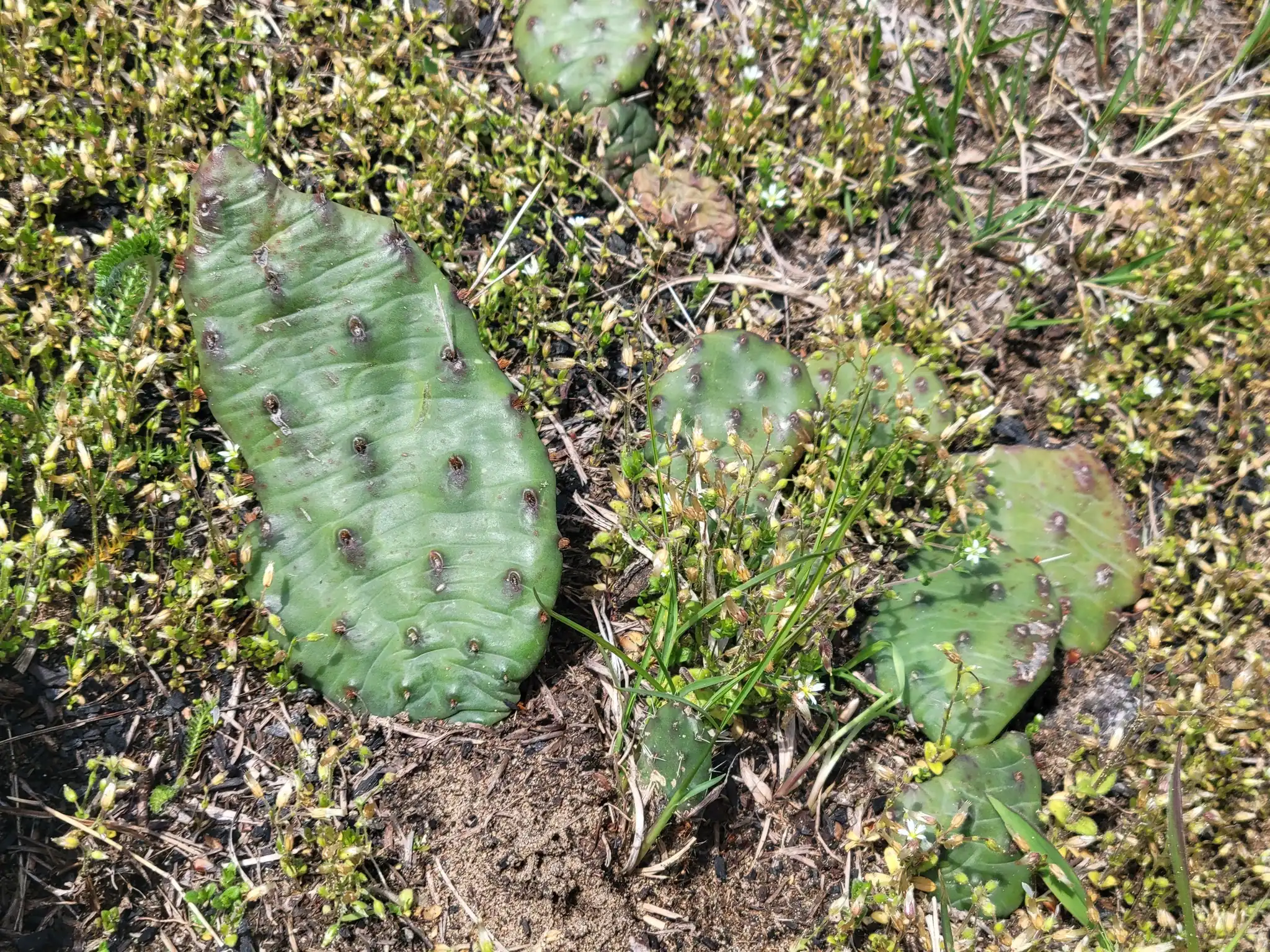
Opuntia humifusa is a low-growing, spreading cactus native to a wide range of eastern and central North America. It consists of flattened, green stem segments called pads or cladodes, which are armed with sharp spines and tiny, irritating bristles called glochids.
This species is remarkably cold-hardy for a cactus, surviving in zones as cold as 4. It produces large, showy, bright yellow flowers in early summer, followed by edible, reddish-purple fruits known as tunas.
Uses & Benefits:
Essentials
At a Glance
Plant Type
Cactus Succulent
Height
12"
Width
36"
Light
Full Sun
Zones
4, 5, 6, 7, 8, 9
Water
Very low
Humidity
Low
Lifespan
Very long-lived perennial
Native To
Eastern and Central North America
Toxicity
Pads and fruit are edible, but spines/glochids are hazardous
Bloom period
Late spring – Early summer
In flower about 2 months of the year
Planting
How to Grow
- Select a location in full sun with sandy or gravelly soil.
- Ensure the site has perfect drainage, especially in winter.
- Lay a single pad flat on the soil surface or plant it one-third deep.
- Do not water for the first few weeks to prevent rot.
- Roots will form from the areoles touching the soil.
- Water only sparingly during the hottest, driest parts of summer.
Pro Tip
Handle with thick leather gloves and tongs to avoid contact with the nearly invisible, irritating glochids.
Keep It Thriving
Care Guide
Do
- Provide as much sun as possible.
- Use tongs and gloves when handling.
- Plant in very well-drained, sandy or gravelly soil.
- Allow pads to shrivel and lie flat in winter; this is normal.
Don't
- Don't plant in heavy clay or wet soil.
- Don't water in winter.
- Avoid planting near high-traffic areas due to the spines.
- Don't fertilize.
Seasonal Care Calendar
| Task | Jan | Feb | Mar | Apr | May | Jun | Jul | Aug | Sep | Oct | Nov | Dec |
|---|---|---|---|---|---|---|---|---|---|---|---|---|
| Harvest | ||||||||||||
| Plant | ||||||||||||
| Prune |
Watch Out For
Pests & Diseases
Common Pests
Common Diseases
In the Garden
Landscape Uses & Companions
Landscape Uses
Multiply
Propagation Methods
Good to Know
Common Questions
Prickly Pear Cactus questions
What zones can Prickly Pear Cactus grow in?
Prickly Pear Cactus is hardy in USDA Zones 4–9. Inside that range it survives winter in the ground; outside it, grow it as an annual or a container plant you protect.
Is Prickly Pear Cactus deer resistant?
Yes — Prickly Pear Cactus is rated deer-resistant. Deer typically pass it over, though extreme hunger can override any plant's defenses.
When does Prickly Pear Cactus bloom?
Prickly Pear Cactus typically blooms in late spring through early summer. Exact timing shifts a week or two with your zone — Sow's bloom calendar maps it to your garden.
Does Prickly Pear Cactus need full sun?
Prickly Pear Cactus does best in full sun (6+ hours).
Is Prickly Pear Cactus drought tolerant?
Yes — once established (usually after the first full season), Prickly Pear Cactus handles dry spells with minimal watering. Water deeply its first year to build the root system that makes that possible.
More Opuntia to compare
Keep exploring
Explore the genus
Grow Prickly Pear Cactus with confidence
See it in a design of your actual yard, get zone-matched care reminders, and track it season by season in your garden journal.