The Story
Plant Bio
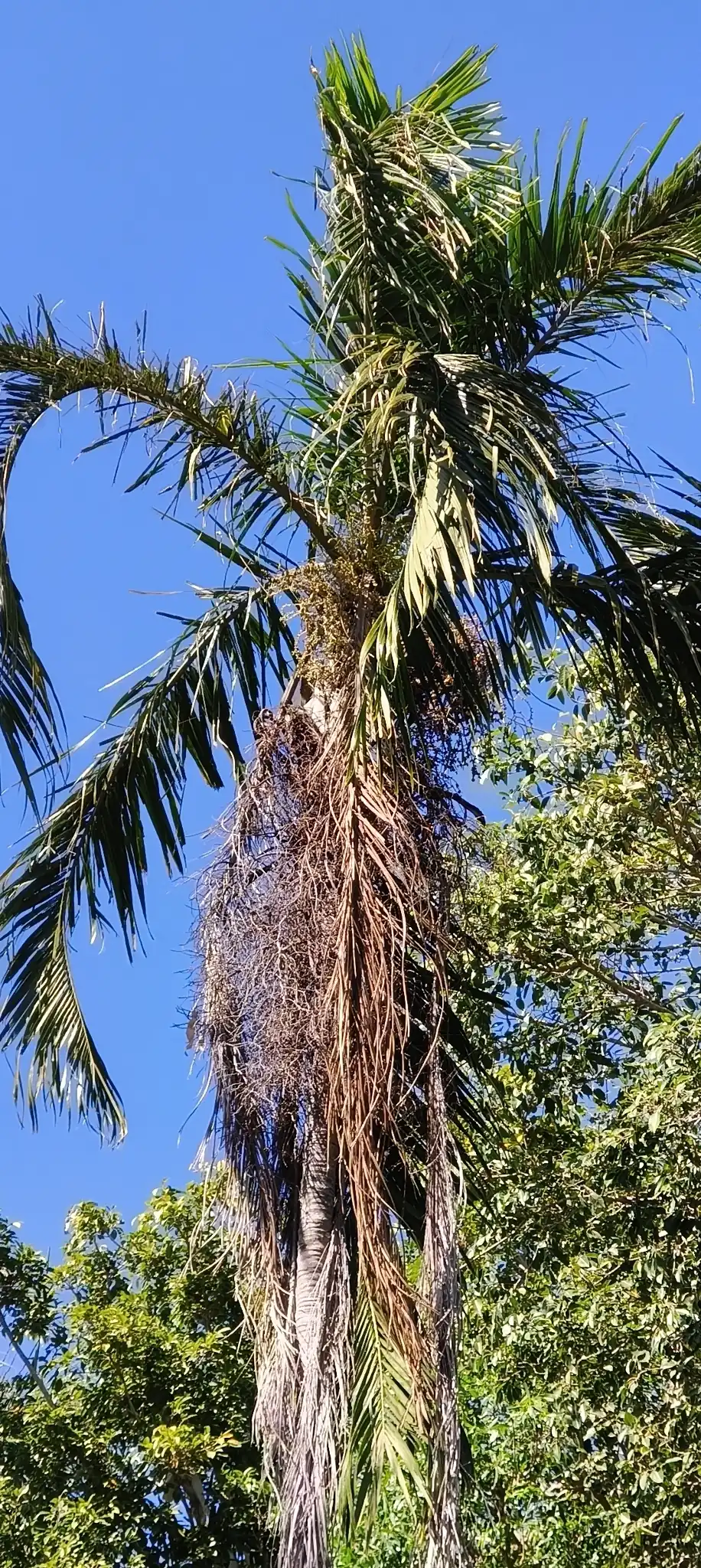
Carpentaria acuminata is a solitary, fast-growing vertical palm native to northern Australia, characterized by a slender grey trunk marked with widely spaced ring scars and topped by a smooth green crownshaft. The arching, deep green pinnate fronds reach up to thirteen feet in length, creating a graceful, open canopy.
This species is highly valued in warm climates for its rapid growth rate and self-cleaning habit, dropping spent fronds cleanly without requiring manual pruning. In late spring, heavily branched, pendulous inflorescences emerge below the crownshaft, eventually producing clusters of bright red fruits.
Uses & Benefits:
Essentials
At a Glance
Plant Type
Tropical
Height
590"
Width
118"
Light
Full Sun, Partial Sun
Zones
10
Water
High
Humidity
High
Lifespan
Long-lived
Native To
Northern Australia
Toxicity
Skin irritant (fruit pulp)
Bloom period
Spring – Fall
In flower about 9 months of the year
Planting
How to Grow
- Select a planting site in full sun to partial shade with rich, moist, well-draining soil.
- Dig a hole twice the width of the root ball, taking care not to disturb the sensitive root system during transplanting.
- Apply a thick layer of organic mulch around the base to retain moisture and mimic the forest floor.
- Water deeply and regularly to maintain consistent soil moisture, especially during dry spells.
Pro Tip
Avoid planting this tropical species in regions that experience temperatures below freezing, as cold weather causes the trunk to split and exposes the palm to fatal fungal decay.
Keep It Thriving
Care Guide
Do
- Water regularly to maintain consistent soil moisture.
- Apply a balanced, slow-release palm fertilizer with micronutrients during the warm growing season.
- Wear gloves when handling the bright red fruits to avoid skin irritation from calcium oxalate crystals.
Don't
- Do not plant in areas prone to frost or temperatures below freezing.
- Do not manually prune green fronds or cut into the live trunk tissue.
- Do not allow the soil to dry out completely for extended periods.
Seasonal Care Calendar
| Task | Jan | Feb | Mar | Apr | May | Jun | Jul | Aug | Sep | Oct | Nov | Dec |
|---|---|---|---|---|---|---|---|---|---|---|---|---|
| Fertilize | ||||||||||||
| Mulch | ||||||||||||
| Pest Check | ||||||||||||
| Winter Prep |
Watch Out For
Pests & Diseases
Common Pests
Common Diseases
In the Garden
Landscape Uses & Companions
Landscape Uses
Companion Plants
Multiply
Propagation Methods
Good to Know
Common Questions
Carpentaria palm questions
What zones can Carpentaria palm grow in?
Carpentaria palm is hardy in USDA Zone 10. Inside that range it survives winter in the ground; outside it, grow it as an annual or a container plant you protect.
When does Carpentaria palm bloom?
Carpentaria palm typically blooms in spring through fall. Exact timing shifts a week or two with your zone — Sow's bloom calendar maps it to your garden.
Does Carpentaria palm need full sun?
Carpentaria palm does best in full sun to part shade. In hot climates, afternoon shade keeps blooms fresher longer.
Keep exploring
Explore the genus
Hardy in your zone?
Grow Carpentaria palm with confidence
See it in a design of your actual yard, get zone-matched care reminders, and track it season by season in your garden journal.