The Story
Plant Bio
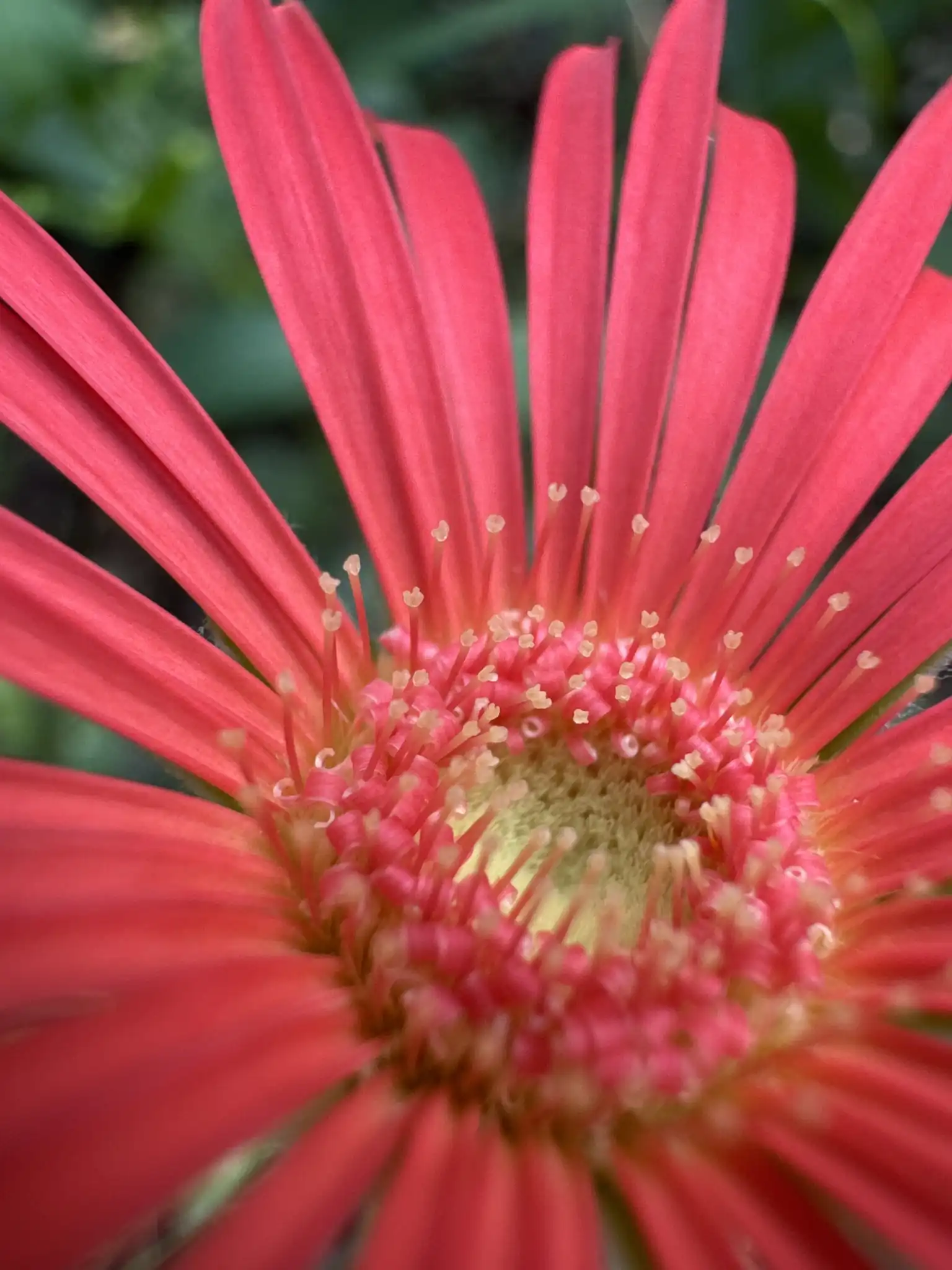
Gerbera jamesonii is a stemless, clump-forming perennial native to the grasslands of South Africa, producing a basal rosette of deeply lobed, dark green leaves with fine silky hairs on their undersides. Solitary, unbranched flowering scapes rise above the foliage to bear large, daisy-like flower heads featuring a central disc surrounded by colorful ray florets.
While wild populations produce red, orange, or yellow ray flowers with bronze-yellow discs, cultivated selections expand the palette to include white, pink, cream, and pastel shades. The slender, spoon-shaped leaves grow up to 20 inches long, emerging as fresh green rosettes from a central crown that remains highly sensitive to burial and excess moisture.
Uses & Benefits:
Essentials
At a Glance
Plant Type
Perennial
Height
24"
Width
18"
Light
Full Sun, Partial Sun
Zones
8, 9, 10
Water
Medium
Humidity
Moderate
Lifespan
Perennial
Native To
South Africa
Toxicity
Non-toxic to humans and pets
Bloom period
Summer – Fall
In flower about 6 months of the year
Planting
How to Grow
- Select a planting site with full sun to partial shade and exceptionally well-drained, organically rich, neutral to slightly acidic soil.
- Dig a hole and position the plant so the central crown sits slightly above the surrounding soil level to prevent water accumulation.
- Water thoroughly at the base of the plant, keeping the foliage dry to minimize the risk of fungal leaf diseases.
- Apply a light layer of mulch around the plant, keeping it clear of the central crown to maintain air circulation.
Pro Tip
Plant the central crown slightly above the soil line; burying the crown traps moisture against the stem base, leading to rapid and fatal crown rot.
Keep It Thriving
Care Guide
Do
- Deadhead spent flower stems regularly by cutting them back to the basal rosette.
- Water at the soil level to keep the foliage and crown dry.
- Provide excellent sub-soil drainage or plant in raised beds to prevent waterlogging.
Don't
- Do not bury the central crown when planting or mulching.
- Do not overwater or allow the soil to remain waterlogged.
- Do not prune or cut into the old, leafless central wood.
Seasonal Care Calendar
| Task | Jan | Feb | Mar | Apr | May | Jun | Jul | Aug | Sep | Oct | Nov | Dec |
|---|---|---|---|---|---|---|---|---|---|---|---|---|
| Deadhead | ||||||||||||
| Divide | ||||||||||||
| Fertilize | ||||||||||||
| Pest Check | ||||||||||||
| Winter Prep |
Watch Out For
Pests & Diseases
Common Pests
Common Diseases
In the Garden
Landscape Uses & Companions
Landscape Uses
Companion Plants
Multiply
Propagation Methods
Good to Know
Common Questions
Gerbera Daisy questions
What zones can Gerbera Daisy grow in?
Gerbera Daisy is hardy in USDA Zones 8–10. Inside that range it survives winter in the ground; outside it, grow it as an annual or a container plant you protect.
Is Gerbera Daisy deer resistant?
Not reliably. Deer may browse Gerbera Daisy, especially tender spring growth — plan on repellents or fencing where pressure is high.
When does Gerbera Daisy bloom?
Gerbera Daisy typically blooms in summer through fall. Exact timing shifts a week or two with your zone — Sow's bloom calendar maps it to your garden.
Does Gerbera Daisy need full sun?
Gerbera Daisy does best in full sun to part shade. In hot climates, afternoon shade keeps blooms fresher longer.
Is Gerbera Daisy drought tolerant?
Yes — once established (usually after the first full season), Gerbera Daisy handles dry spells with minimal watering. Water deeply its first year to build the root system that makes that possible.
Keep exploring
Explore the genus
Hardy in your zone?
Grow Gerbera Daisy with confidence
See it in a design of your actual yard, get zone-matched care reminders, and track it season by season in your garden journal.