The Story
Plant Bio
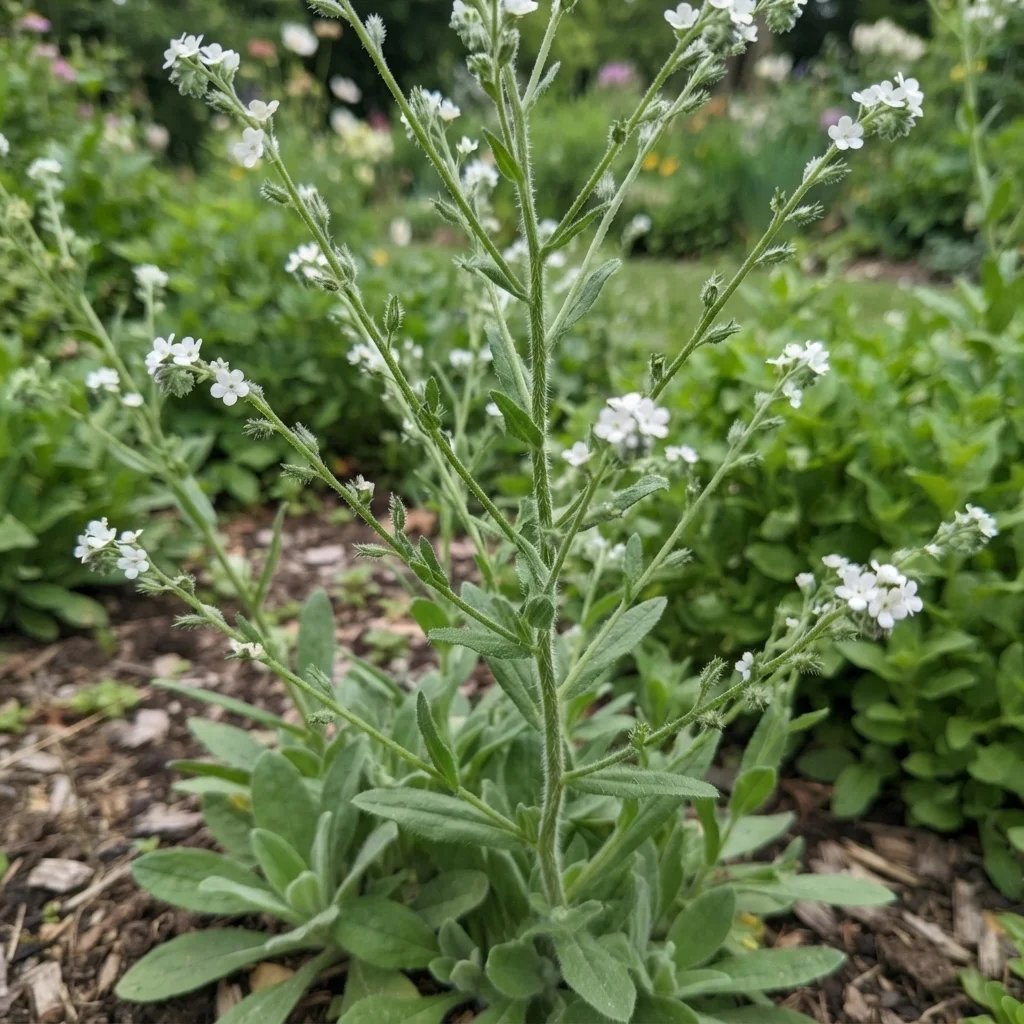
Hackelia virginiana, commonly known as Virginia stickseed, is an erect biennial wildflower native to eastern and central North American woodlands. First-year plants form a low basal rosette of broad, fuzzy leaves, while the second year produces a tall, lanky flowering stem with coarse white hairs and tiny white to pale blue flowers.
The species is distinguished by its terminal racemes that mature into highly adhesive, hook-tipped bur-like nutlets designed to cling tightly to passing animals and clothing. These barbed seeds provide an exceptionally efficient method of dispersal but can make the plant a nuisance in high-traffic trail areas.
Uses & Benefits:
Essentials
At a Glance
Plant Type
Perennial
Height
60"
Width
24"
Light
Partial Sun, Shade
Zones
4, 5, 6, 7, 8
Water
Medium
Humidity
Medium
Lifespan
Biennial
Native To
North America
Toxicity
Skin Irritant
Bloom period
Summer – Fall
In flower about 6 months of the year
Planting
How to Grow
- Sow seeds directly outdoors in autumn onto a prepared bed of moist, well-drained loam in partial to full shade.
- Allow the seeds to undergo natural winter cold stratification in the soil seed bank for spring germination.
- Identify and protect the first-year basal rosettes, which feature broad, fuzzy, cordate-ovate leaves.
- Provide minimal intervention in the second year as the tall, lanky flowering stems emerge and bloom.
Pro Tip
To prevent aggressive self-sowing and the nuisance of sticky burs, cut down or pull the entire plant before the flowers mature into viable seeds.
Keep It Thriving
Care Guide
Do
- Remove plants entirely before seed heads mature if you wish to limit self-sowing.
- Wear gloves when handling the foliage to avoid skin irritation from the coarse, stiff hairs.
- Plant in neutral to alkaline, organic-rich soils under a deciduous tree canopy.
Don't
- Do not apply supplemental fertilizers, as this plant thrives in naturally fertile woodland soils.
- Do not plant near pathways or dog runs where the sticky burs can easily latch onto clothing or fur.
- Do not prune active flowering stems back into old, leafless wood.
Seasonal Care Calendar
| Task | Jan | Feb | Mar | Apr | May | Jun | Jul | Aug | Sep | Oct | Nov | Dec |
|---|---|---|---|---|---|---|---|---|---|---|---|---|
| Pest Check | ||||||||||||
| Propagate | ||||||||||||
| Prune | ||||||||||||
| Spring Cleanup |
Watch Out For
Pests & Diseases
Common Pests
Common Diseases
In the Garden
Landscape Uses & Companions
Landscape Uses
Companion Plants
Multiply
Propagation Methods
Good to Know
Common Questions
Virginia Stickseed questions
What zones can Virginia Stickseed grow in?
Virginia Stickseed is hardy in USDA Zones 4–8. Inside that range it survives winter in the ground; outside it, grow it as an annual or a container plant you protect.
Is Virginia Stickseed deer resistant?
Yes — Virginia Stickseed is rated deer-resistant. Deer typically pass it over, though extreme hunger can override any plant's defenses.
When does Virginia Stickseed bloom?
Virginia Stickseed typically blooms in summer through fall. Exact timing shifts a week or two with your zone — Sow's bloom calendar maps it to your garden.
Does Virginia Stickseed need full sun?
Virginia Stickseed does best in part shade.
Is Virginia Stickseed drought tolerant?
Yes — once established (usually after the first full season), Virginia Stickseed handles dry spells with minimal watering. Water deeply its first year to build the root system that makes that possible.
Keep exploring
Explore the genus
Hardy in your zone?
Grow Virginia Stickseed with confidence
See it in a design of your actual yard, get zone-matched care reminders, and track it season by season in your garden journal.