The Story
Plant Bio
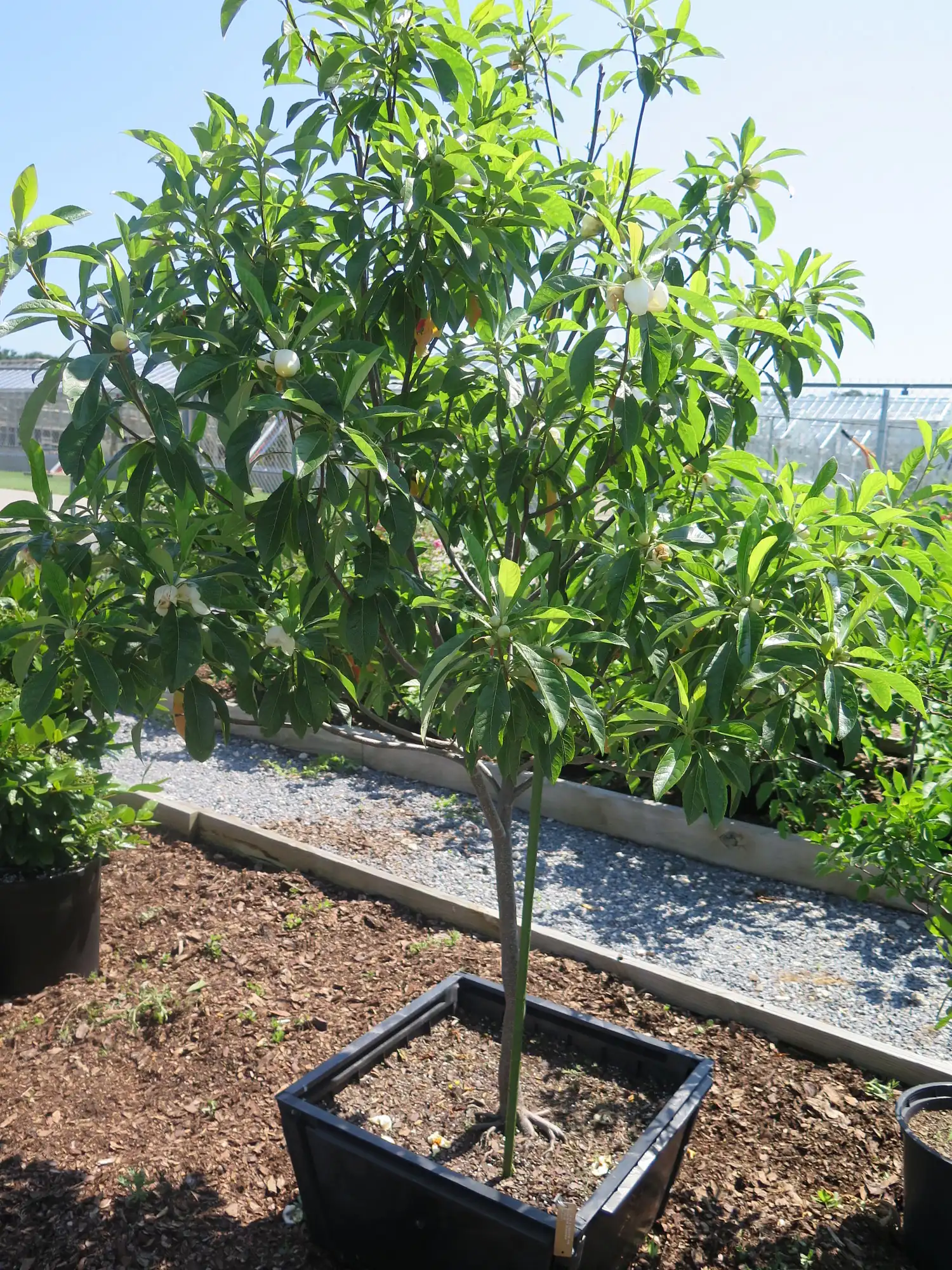
A small deciduous tree or large shrub in the tea family, Franklinia is famous for being extinct in the wild. It features beautiful, fragrant white flowers in late summer and brilliant fall color.
This species is monotypic, meaning it is the only one in its genus. Its rarity and exacting cultural requirements make it a prized specimen for dedicated gardeners.
Uses & Benefits:
Essentials
At a Glance
Plant Type
Tree
Height
240"
Width
180"
Light
Full Sun, Partial Sun
Zones
5, 6, 7, 8
Water
Medium
Humidity
Prefers moderate humidity
Lifespan
Medium, often short-lived in cultivation
Native To
Georgia, USA (extinct in wild)
Toxicity
Not known to be toxic
Bloom period
Mid-summer – Early fall
In flower about 3 months of the year
Planting
How to Grow
- Select a site with morning sun and afternoon shade.
- Amend soil heavily with organic matter to ensure acidity.
- Dig a hole twice as wide as the root ball.
- Ensure the root flare is at or slightly above soil level.
- Water consistently, especially during dry spells.
- Apply a 2-3 inch layer of acidic mulch.
Pro Tip
Ensure impeccable drainage and acidic soil; this tree will not tolerate 'wet feet' or alkaline conditions.
Keep It Thriving
Care Guide
Do
- Provide consistent moisture, never allowing soil to dry out completely.
- Use acidic mulches like pine needles or shredded bark.
- Test soil pH and amend if necessary to keep it below 6.5.
- Protect from harsh afternoon sun in southern climates.
Don't
- Do not plant in heavy clay or poorly drained soil.
- Avoid planting in alkaline soils.
- Do not allow the root zone to become waterlogged.
- Avoid transplanting once established, as it resents root disturbance.
Seasonal Care Calendar
| Task | Jan | Feb | Mar | Apr | May | Jun | Jul | Aug | Sep | Oct | Nov | Dec |
|---|---|---|---|---|---|---|---|---|---|---|---|---|
| Fertilize | ||||||||||||
| Mulch | ||||||||||||
| Pest Check | ||||||||||||
| Plant |
Watch Out For
Pests & Diseases
Common Pests
Common Diseases
In the Garden
Landscape Uses & Companions
Landscape Uses
Multiply
Propagation Methods
Good to Know
Common Questions
Franklin Tree questions
What zones can Franklin Tree grow in?
Franklin Tree is hardy in USDA Zones 5–8. Inside that range it survives winter in the ground; outside it, grow it as an annual or a container plant you protect.
Is Franklin Tree deer resistant?
Yes — Franklin Tree is rated deer-resistant. Deer typically pass it over, though extreme hunger can override any plant's defenses.
When does Franklin Tree bloom?
Franklin Tree typically blooms in mid-summer through early fall. Exact timing shifts a week or two with your zone — Sow's bloom calendar maps it to your garden.
Does Franklin Tree need full sun?
Franklin Tree does best in full sun to part shade. In hot climates, afternoon shade keeps blooms fresher longer.
Keep exploring
Explore the genus
Hardy in your zone?
Grow Franklin Tree with confidence
See it in a design of your actual yard, get zone-matched care reminders, and track it season by season in your garden journal.