1 named cultivar
The Story
Plant Bio
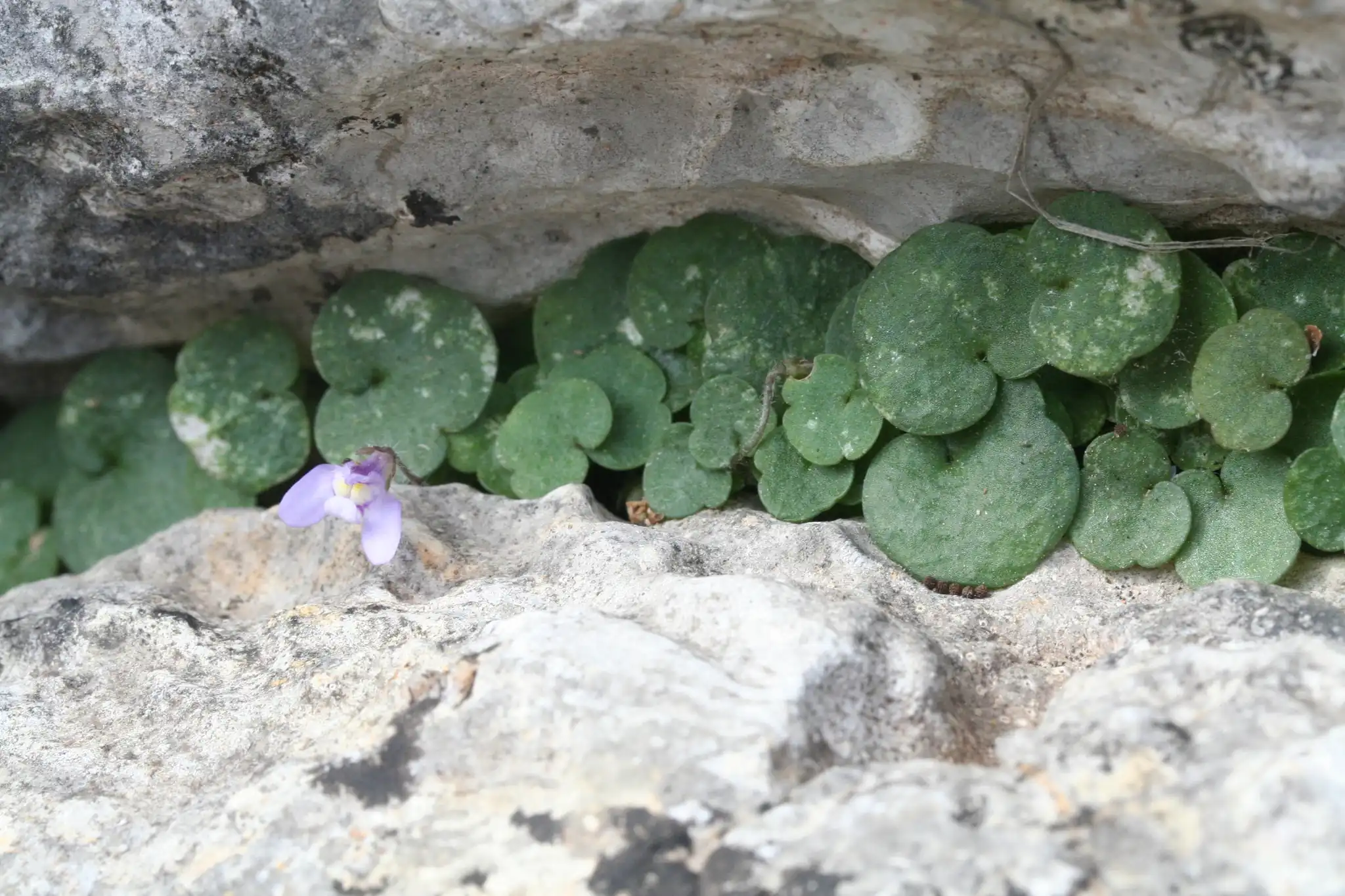
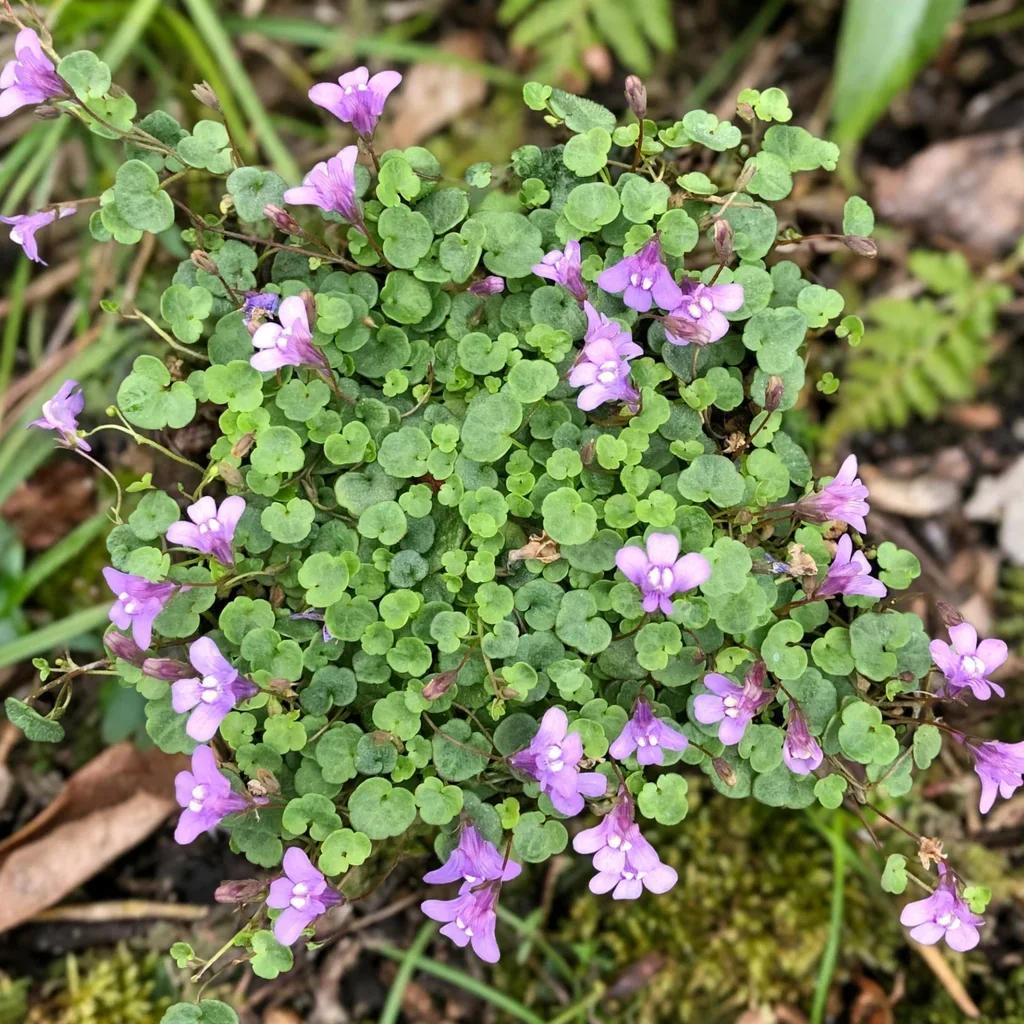
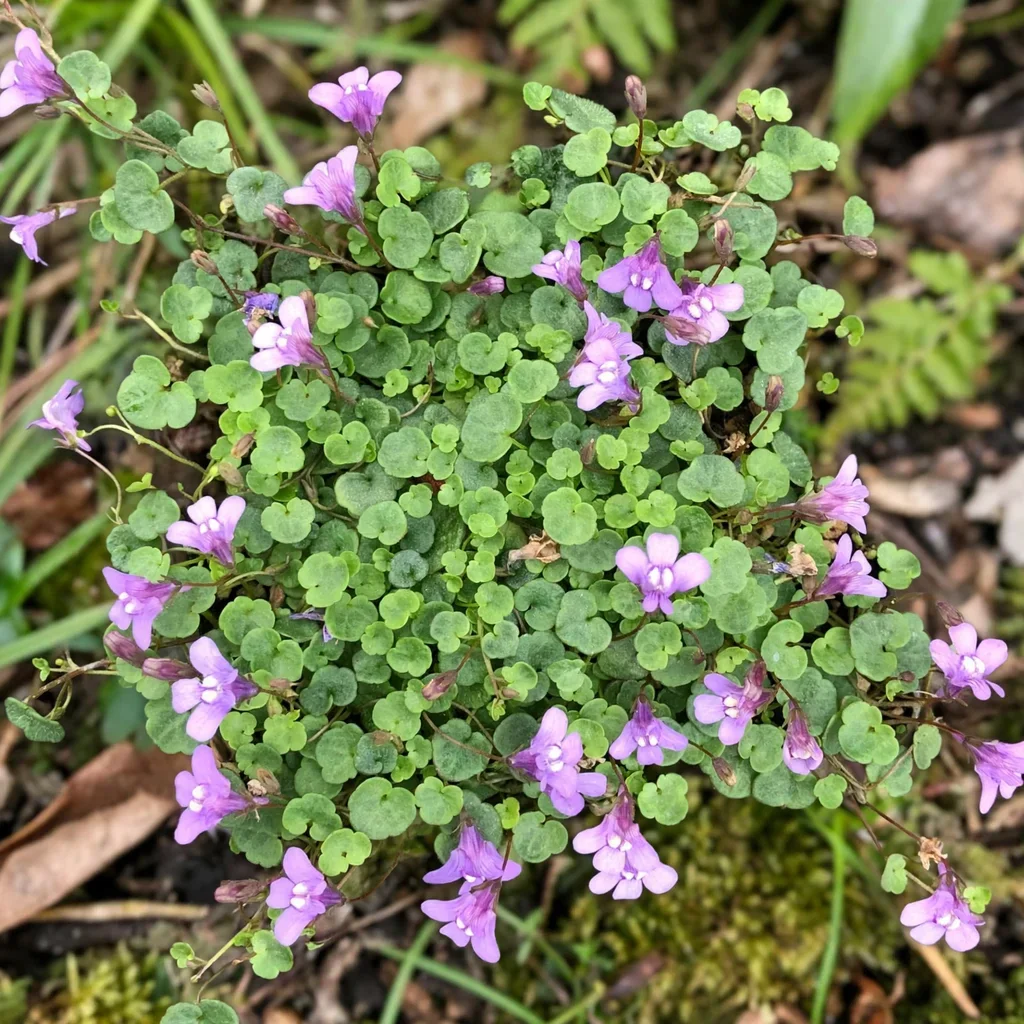
Cymbalaria aequitriloba is an extremely low creeping perennial from southern Europe, forming a dense mat barely three inches high and spreading six to eighteen inches. The tiny leaves are mostly three-lobed and medium green, carried on thread-fine trailing stems. Small lilac-blue flowers with yellow throats open through June and July.
It is small enough to be used where nothing else fits, threading into wall fissures and between paving where the mat is only a finger thick. Winter hardiness is the real limit rather than heat or shade: it comes from a Mediterranean climate and is unreliable much below zone 6, so a sheltered wall matters more than rich soil.
Uses & Benefits:
Essentials
At a Glance
Plant Type
Groundcover
Height
2"
Width
12"
Light
Partial Sun, Shade
Zones
6, 7, 8, 9, 10
Water
Medium
Humidity
Average
Lifespan
Perennial
Native To
Southern Europe
Toxicity
Non-toxic
Planting
How to Grow
- Plant in spring in part to full shade.
- Choose average, medium-moisture, well-drained soil.
- Press small divisions into wall fissures or paving joints.
- Keep the mat moist while it knits together.
- Site it where winter drainage is sharp.
- Pull it back from any smaller neighbours each spring.
Pro Tip
Push divisions into a damp wall crevice rather than planting them on top; it roots from the stems and colonises the fissure from inside.
Keep It Thriving
Care Guide
Do
- Grow it in part to full shade 🌳
- Use it in wall fissures and paving joints 🧱
- Keep the mat evenly moist 💧
- Give it sharp winter drainage 🪨
Don't
- Expect it to survive hard winters below zone 6 ❌
- Plant it in full sun ❌
- Let it creep over smaller alpines ❌
Seasonal Care Calendar
| Task | Jan | Feb | Mar | Apr | May | Jun | Jul | Aug | Sep | Oct | Nov | Dec |
|---|---|---|---|---|---|---|---|---|---|---|---|---|
| Divide |
Watch Out For
Pests & Diseases
Common Pests
Common Diseases
In the Garden
Landscape Uses & Companions
Landscape Uses
Companion Plants
Multiply
Propagation Methods
Good to Know
Common Questions
Corsican Toadflax questions
What zones can Corsican Toadflax grow in?
Corsican Toadflax is hardy in USDA Zones 6–10. Inside that range it survives winter in the ground; outside it, grow it as an annual or a container plant you protect.
Is Corsican Toadflax deer resistant?
Not reliably. Deer may browse Corsican Toadflax, especially tender spring growth — plan on repellents or fencing where pressure is high.
When does Corsican Toadflax bloom?
Corsican Toadflax typically blooms in early to midsummer through late spring. Exact timing shifts a week or two with your zone — Sow's bloom calendar maps it to your garden.
Does Corsican Toadflax need full sun?
Corsican Toadflax does best in part shade.
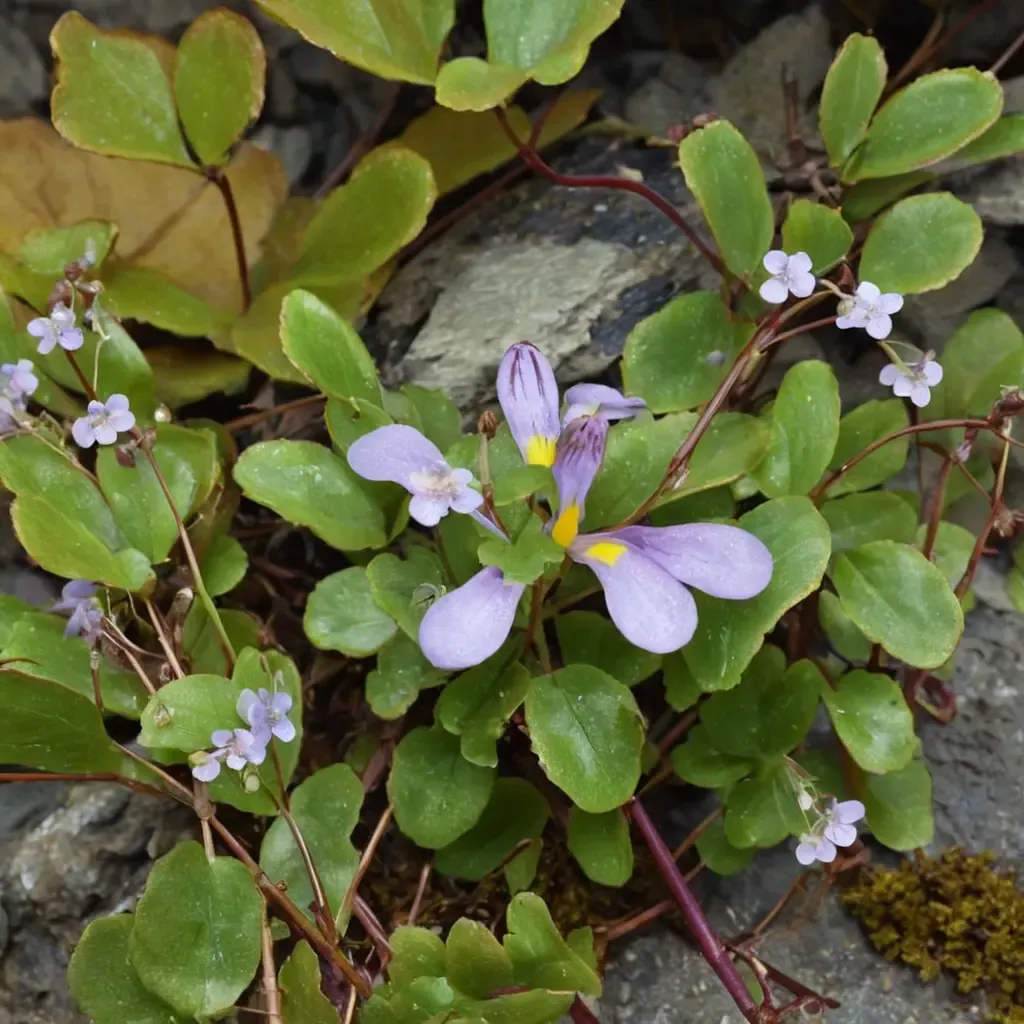
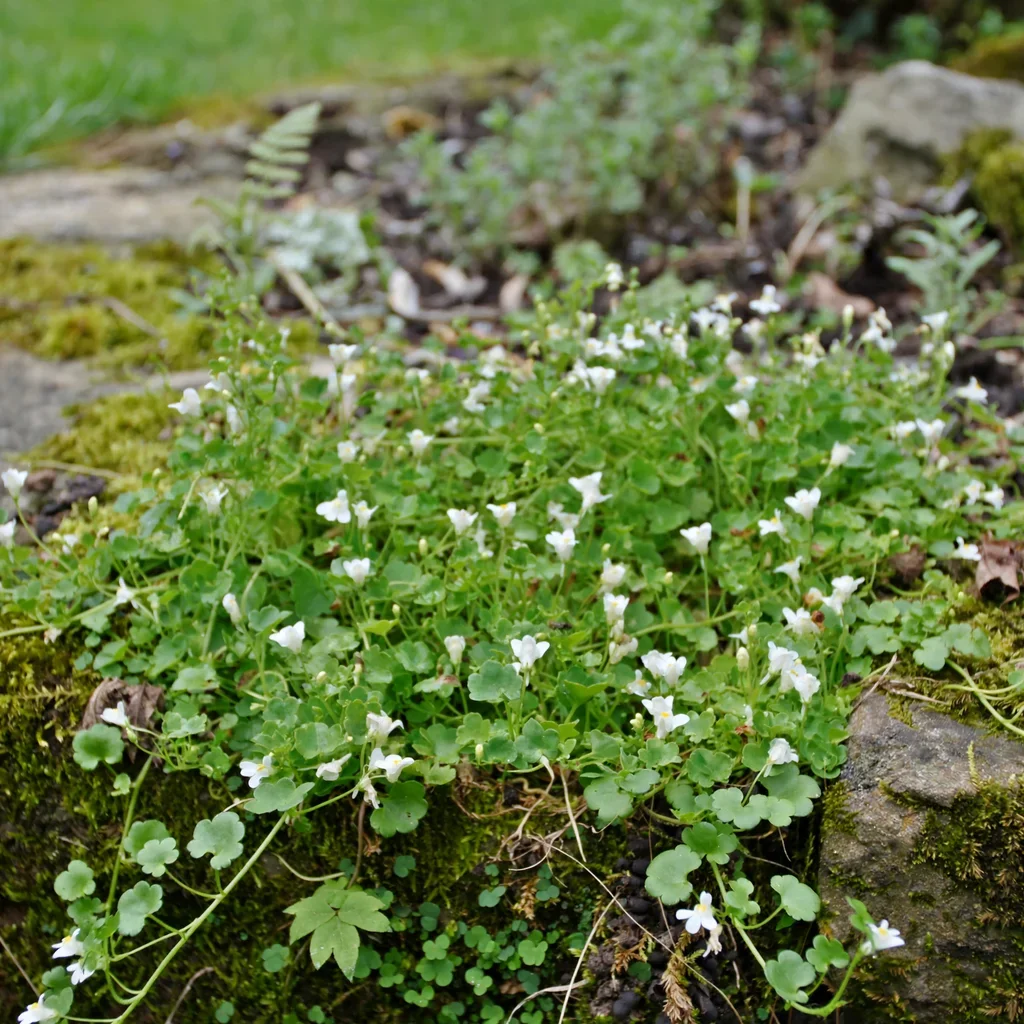
More Cymbalaria to compare
Keep exploring
Explore the genus
Hardy in your zone?
Grow Corsican Toadflax with confidence
See it in a design of your actual yard, get zone-matched care reminders, and track it season by season in your garden journal.