The Story
Plant Bio
Fallopia convolvulus is a twining, herbaceous summer annual vine native to temperate Eurasia that has naturalized widely across North America. The branching stems trail along the ground or climb up to thirty-nine inches by wrapping around nearby supports.
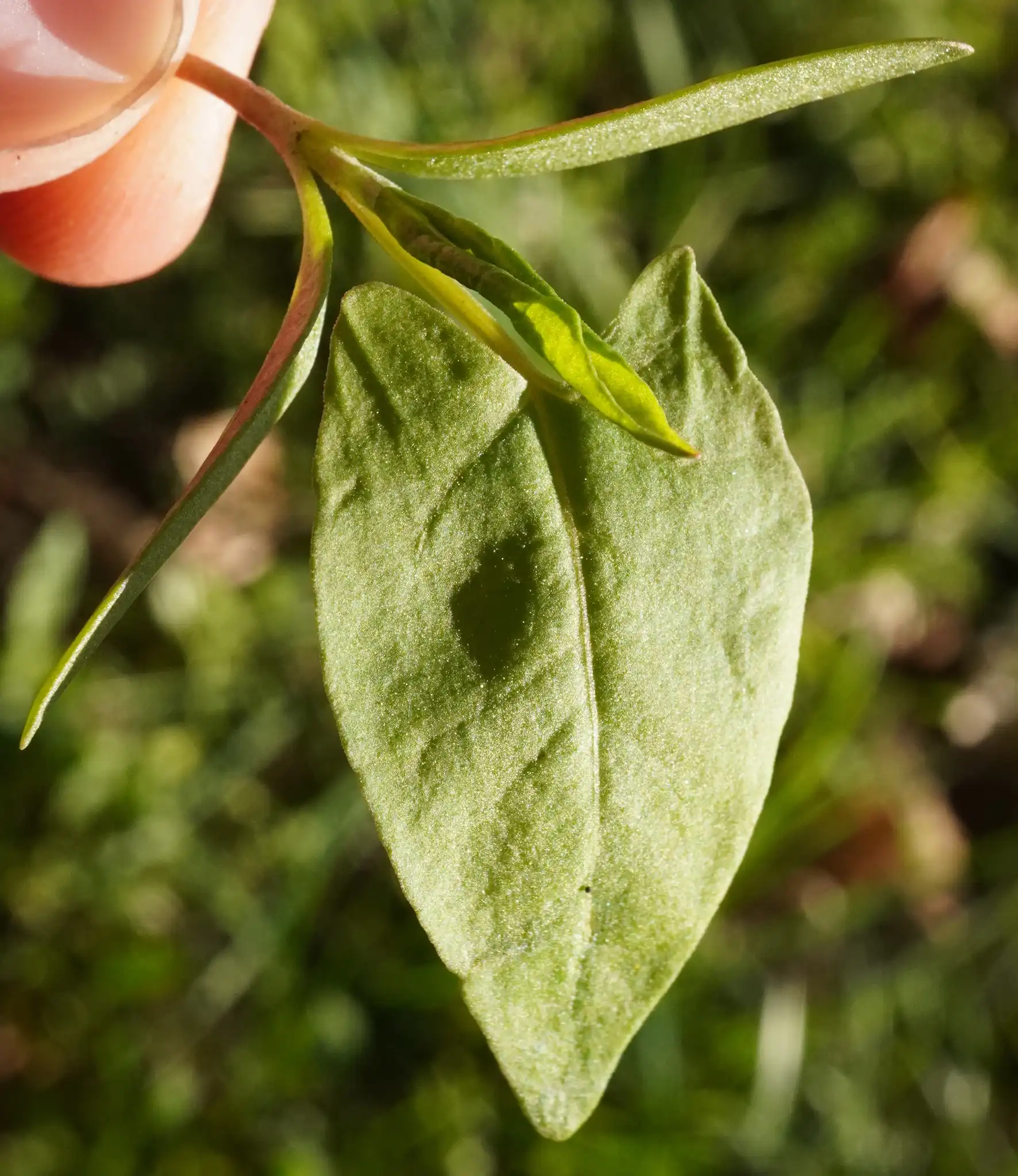
This species is distinguished by its alternate, arrow-shaped leaves with pointed tips and a distinctive membranous sheath surrounding the stem at the base of each leaf stalk. Inconspicuous clusters of small, greenish-white flowers emerge from the leaf axils from summer through fall.
Uses & Benefits:
Essentials
At a Glance
Plant Type
Vine
Height
39"
Width
39"
Light
Full Sun, Partial Sun
Zones
4, 5, 6, 7, 8, 9
Water
Low to Moderate
Humidity
Unknown
Lifespan
Annual
Native To
Eurasia
Toxicity
Toxic to livestock if seeds are ingested
Bloom period
Summer – Fall
In flower about 6 months of the year
Planting
How to Grow
- Identify seedlings in early spring by their heart-shaped leaves and the papery sheath at the leaf base.
- Manually pull or hoe young plants before they begin to twine and climb surrounding vegetation.
- Avoid applying fertilizers to the area, as nutrient enrichment encourages rapid growth and seed production.
- Dispose of pulled plants immediately to prevent any developing seeds from maturing and entering the soil seed bank.
Pro Tip
Unlike perennial bindweeds that spread via deep creeping root systems, this species is a strict annual that reproduces solely by seed, making early physical removal before flowering the most effective control method.
Keep It Thriving
Care Guide
Do
- Pull plants manually before they flower and set seed.
- Monitor cultivated fields and garden beds for emerging seedlings in late spring.
- Clean garden tools and footwear to avoid spreading dormant seeds to uninfested areas.
Don't
- Do not allow the plant to set seed, as seeds can remain dormant and viable in the soil for several years.
- Do not add mature plants with seed heads to compost piles.
- Do not apply nitrogen fertilizers, which stimulate aggressive weed growth.
Seasonal Care Calendar
| Task | Jan | Feb | Mar | Apr | May | Jun | Jul | Aug | Sep | Oct | Nov | Dec |
|---|---|---|---|---|---|---|---|---|---|---|---|---|
| Pest Check | ||||||||||||
| Prune | ||||||||||||
| Spring Cleanup | ||||||||||||
| Winter Prep |
Watch Out For
Pests & Diseases
Common Pests
Common Diseases
In the Garden
Landscape Uses & Companions
Landscape Uses
Multiply
Propagation Methods
Good to Know
Common Questions
Black bindweed questions
What zones can Black bindweed grow in?
Black bindweed is hardy in USDA Zones 4–9. Inside that range it survives winter in the ground; outside it, grow it as an annual or a container plant you protect.
When does Black bindweed bloom?
Black bindweed typically blooms in summer through fall. Exact timing shifts a week or two with your zone — Sow's bloom calendar maps it to your garden.
Does Black bindweed need full sun?
Black bindweed does best in full sun to part shade. In hot climates, afternoon shade keeps blooms fresher longer.
Is Black bindweed drought tolerant?
Yes — once established (usually after the first full season), Black bindweed handles dry spells with minimal watering. Water deeply its first year to build the root system that makes that possible.
Keep exploring
Explore the genus
Grow Black bindweed with confidence
See it in a design of your actual yard, get zone-matched care reminders, and track it season by season in your garden journal.