The Story
Plant Bio
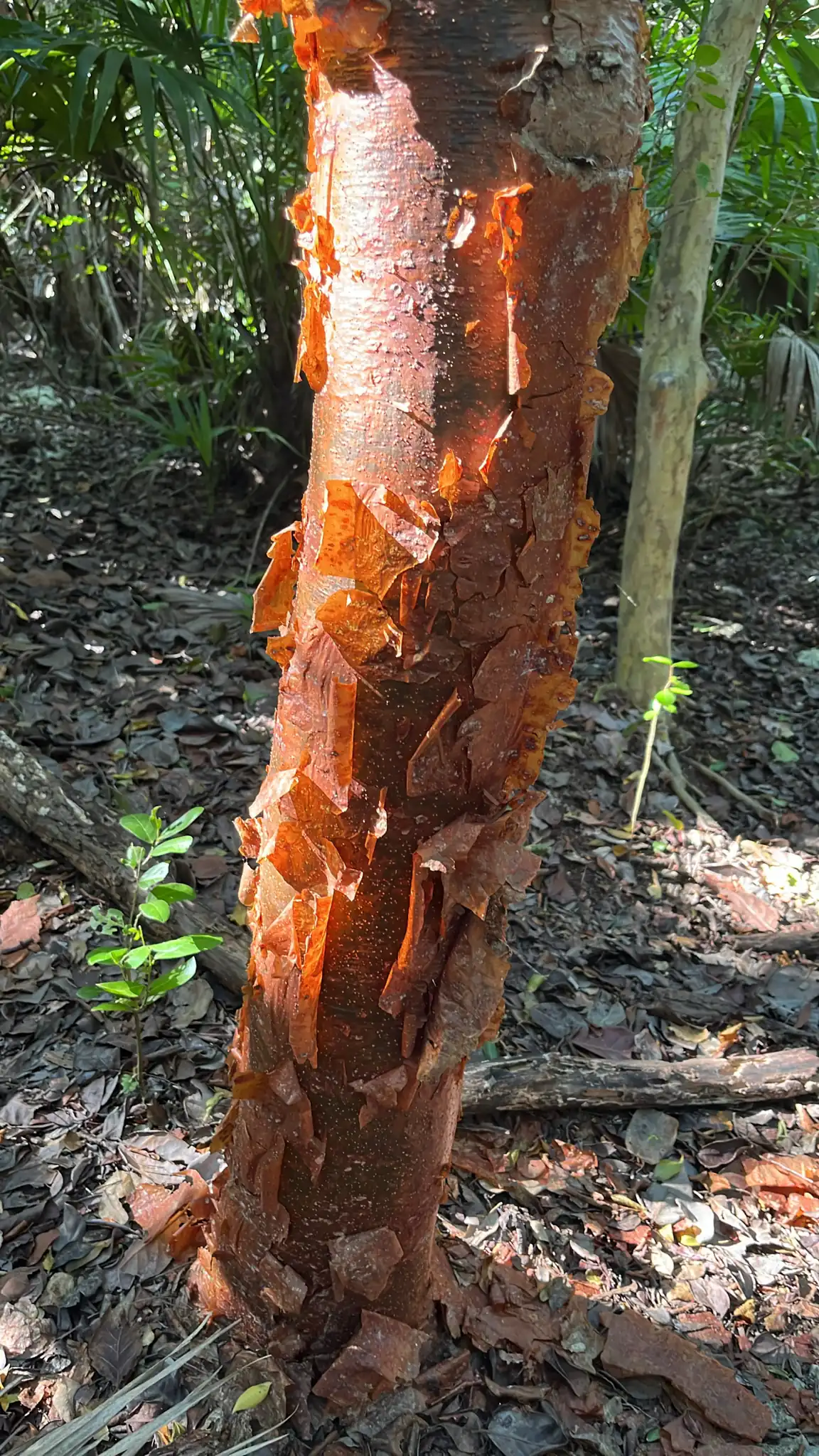
Bursera simaruba is a fast-growing, semi-evergreen to deciduous tree native to the Neotropics, including South Florida and the Caribbean. It develops a spreading, rounded crown of massive, crooked branches and is characterized by smooth, lustrous, coppery-red bark that exfoliates in thin, papery strips.
The alternate, odd-pinnately compound leaves turn yellow and drop during the dry or cool season before new growth emerges. In late winter to spring, the tree produces small, inconspicuous, pale green to creamy-white flowers borne in spike-like panicles at the branch tips.
Uses & Benefits:
Essentials
At a Glance
Plant Type
Tree
Height
600"
Width
600"
Light
Full Sun, Partial Sun
Zones
10
Water
Low
Humidity
High
Lifespan
Long
Native To
North America, Central America, South America, Caribbean
Toxicity
Skin Irritant
Bloom period
Late winter – Spring
In flower about 4 months of the year
Planting
How to Grow
- Select a planting site in full sun with excellent drainage, as the tree does not tolerate waterlogged soils.
- Dig a hole twice the width of the root ball and set the tree at the same depth it was growing in the container.
- Water deeply to establish the root system, then reduce frequency once the tree is established.
- Prune structural limbs early in the tree's life to clear pathways and prevent low-hanging branches from obstructing ground traffic.
Pro Tip
Avoid propagating this tree by sticking massive limbs directly into the ground; while they root easily to form living fences, they fail to develop a true taproot, severely compromising long-term wind resistance.
Keep It Thriving
Care Guide
Do
- Ensure sharp soil drainage to prevent root rot and fungal issues.
- Prune young trees early to establish a strong branch structure and clear pathways.
- Provide full sun exposure to promote healthy canopy development.
Don't
- Do not plant close to sidewalks or driveways, as mature surface roots can heave pavement.
- Do not over-fertilize, as established trees require minimal feeding.
- Do not allow the soil to remain waterlogged or consistently wet.
Seasonal Care Calendar
| Task | Jan | Feb | Mar | Apr | May | Jun | Jul | Aug | Sep | Oct | Nov | Dec |
|---|---|---|---|---|---|---|---|---|---|---|---|---|
| Pest Check | ||||||||||||
| Propagate | ||||||||||||
| Prune | ||||||||||||
| Spring Cleanup |
Watch Out For
Pests & Diseases
Common Pests
Common Diseases
In the Garden
Landscape Uses & Companions
Landscape Uses
Companion Plants
Multiply
Propagation Methods
Good to Know
Common Questions
Gumbo-limbo questions
What zones can Gumbo-limbo grow in?
Gumbo-limbo is hardy in USDA Zone 10. Inside that range it survives winter in the ground; outside it, grow it as an annual or a container plant you protect.
When does Gumbo-limbo bloom?
Gumbo-limbo typically blooms in late winter through spring. Exact timing shifts a week or two with your zone — Sow's bloom calendar maps it to your garden.
Does Gumbo-limbo need full sun?
Gumbo-limbo does best in full sun to part shade. In hot climates, afternoon shade keeps blooms fresher longer.
Is Gumbo-limbo drought tolerant?
Yes — once established (usually after the first full season), Gumbo-limbo handles dry spells with minimal watering. Water deeply its first year to build the root system that makes that possible.
Keep exploring
Explore the genus
Hardy in your zone?
Grow Gumbo-limbo with confidence
See it in a design of your actual yard, get zone-matched care reminders, and track it season by season in your garden journal.