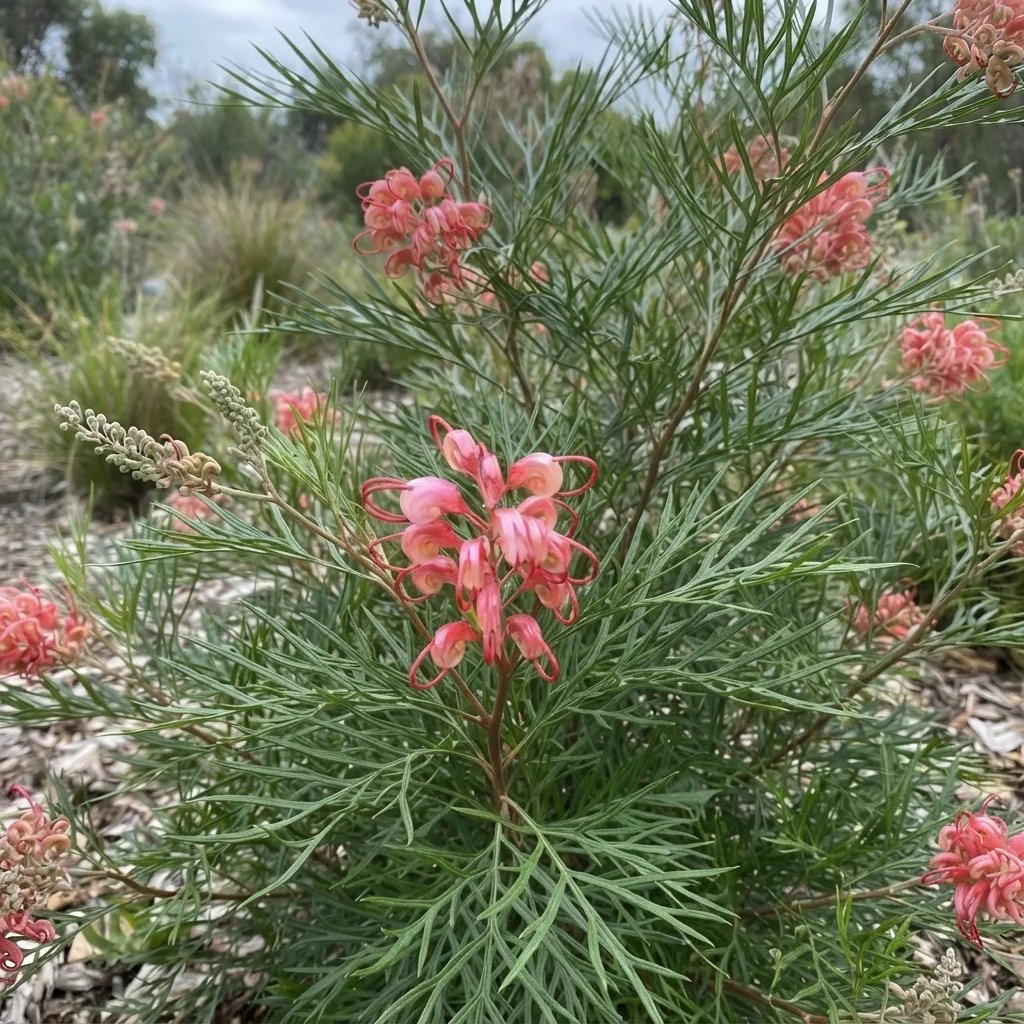
Garden hybrid
This is a garden hybrid, bred from more than one wild species, so it has no single species page of its own.
16 other cultivars
 ‘Moonlight’Moonlight Grevillea
 ‘Robyn Gordon’Robyn Gordon Grevillea
 ‘Honey Gem’Honey Gem Grevillea
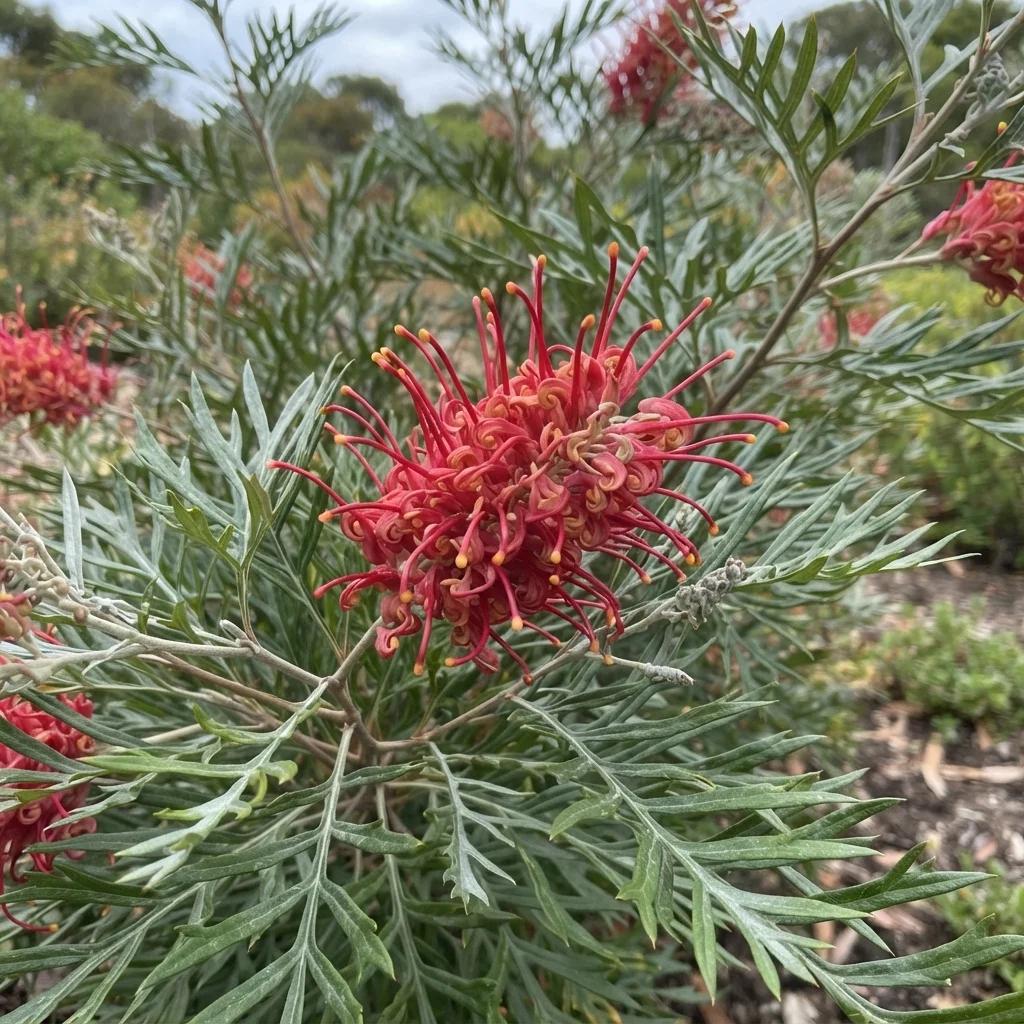 ‘Superb’Superb Grevillea
 ‘Ned Kelly’Ned Kelly Grevillea
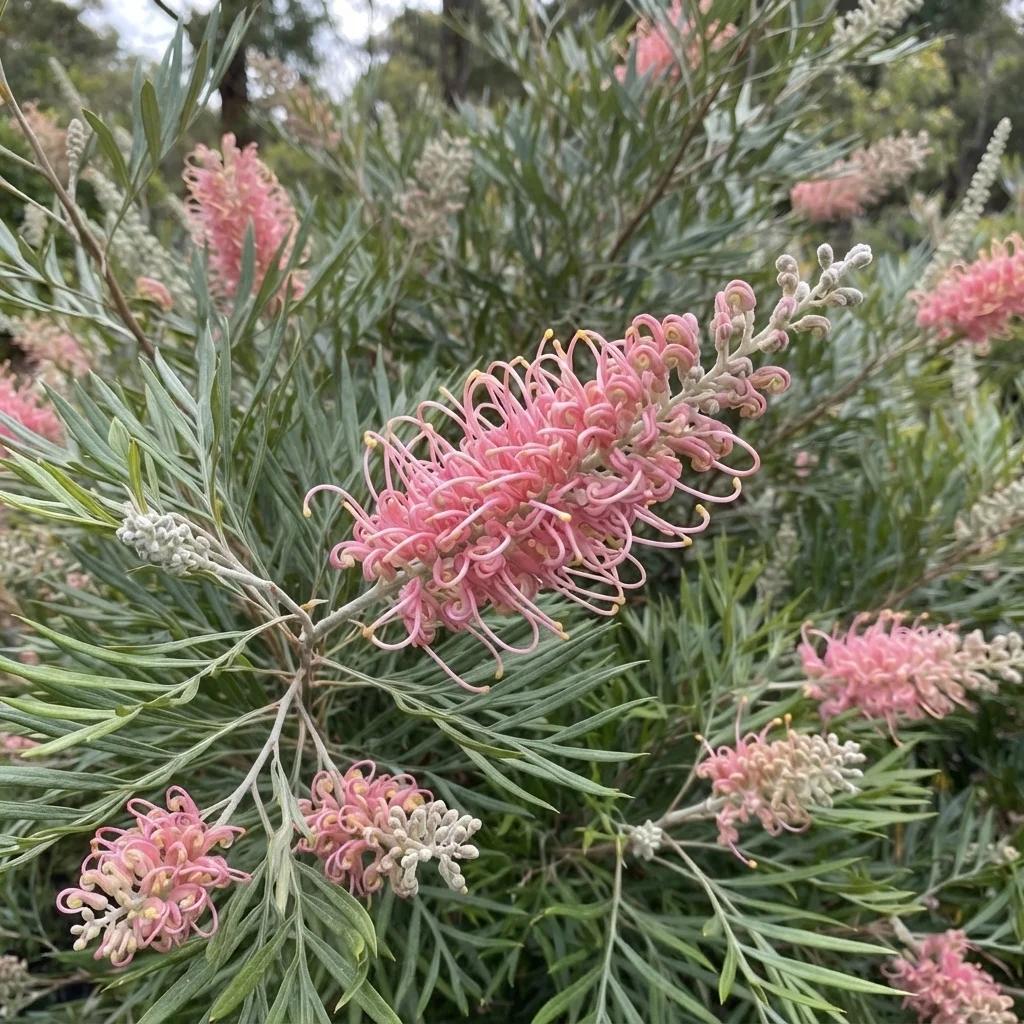 ‘Misty Pink’Misty Pink Grevillea
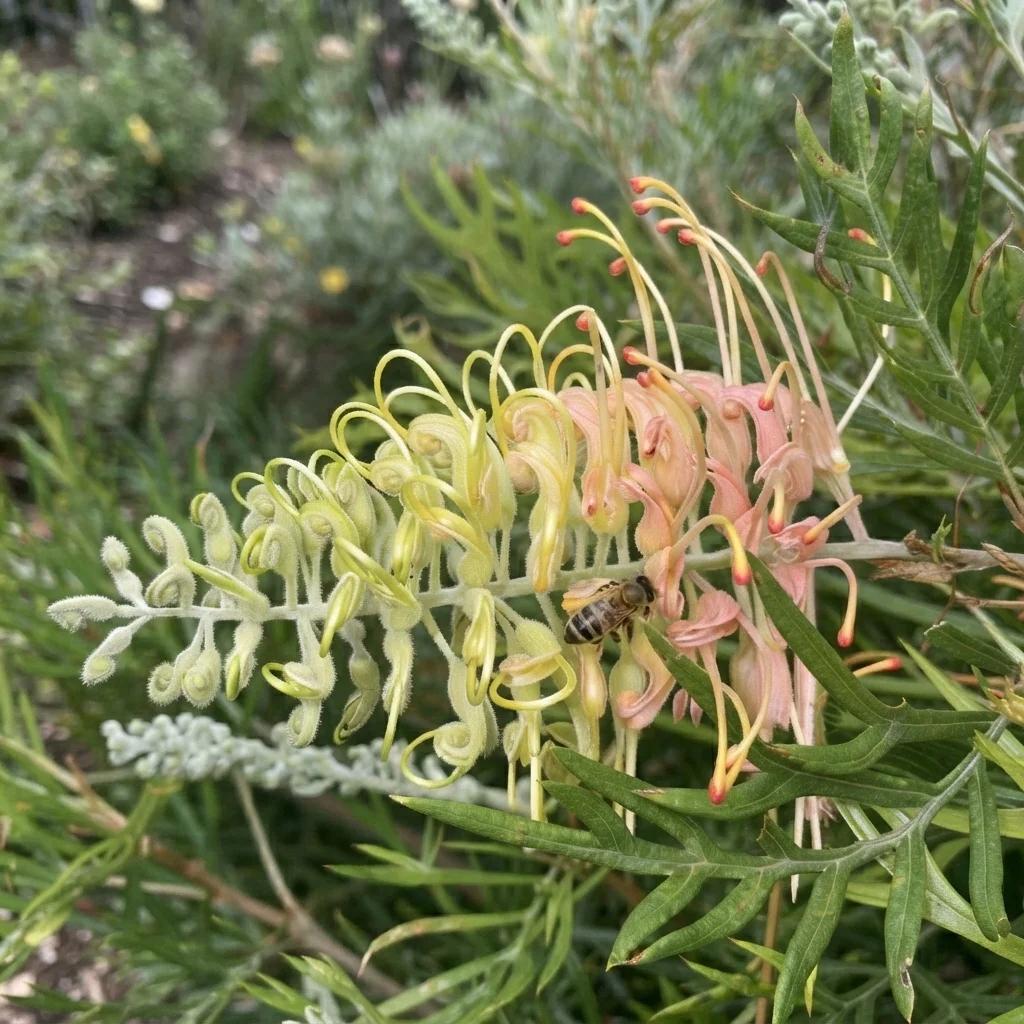 ‘Peaches and Cream’Peaches and Cream Grevillea
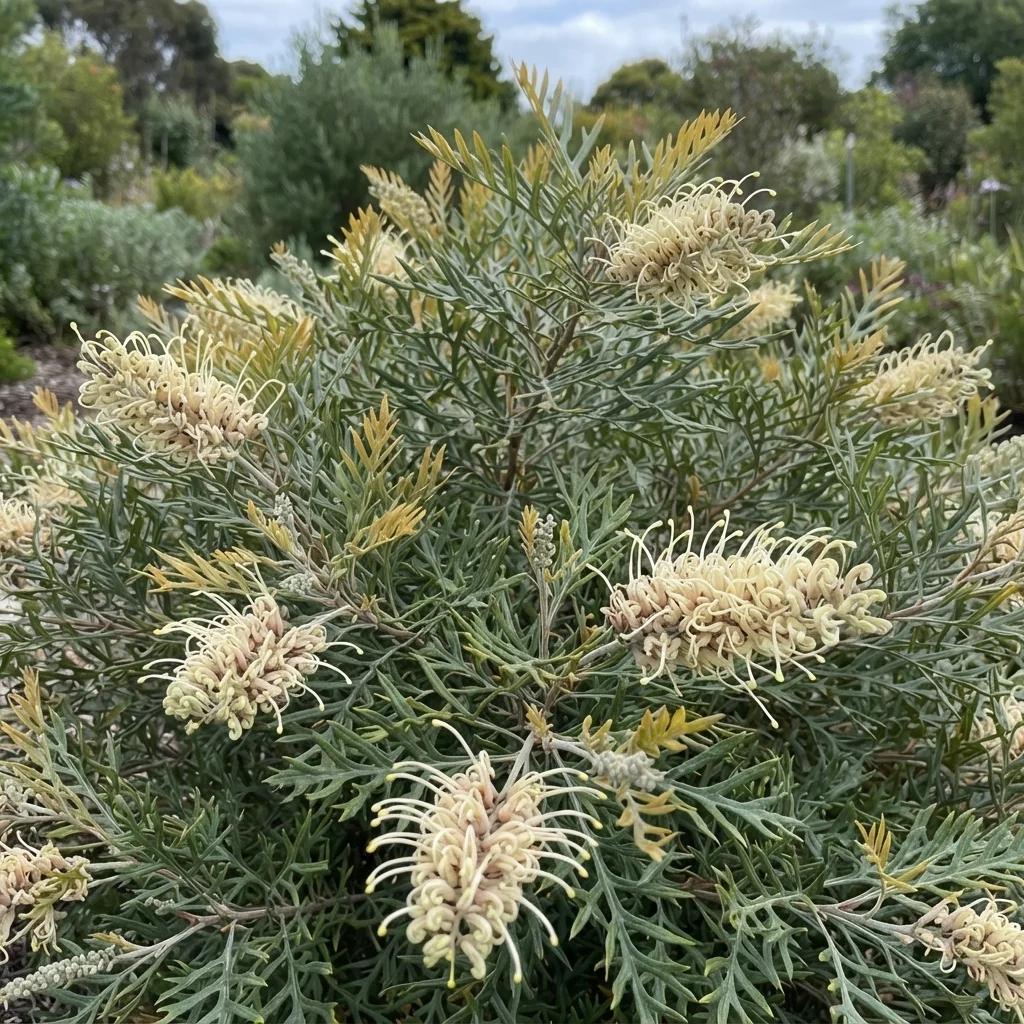 ‘Strawberry Blonde’Strawberry Blonde Grevillea
 ‘Bronze Rambler’Bronze Rambler Grevillea
 ‘Fireworks’Fireworks Grevillea
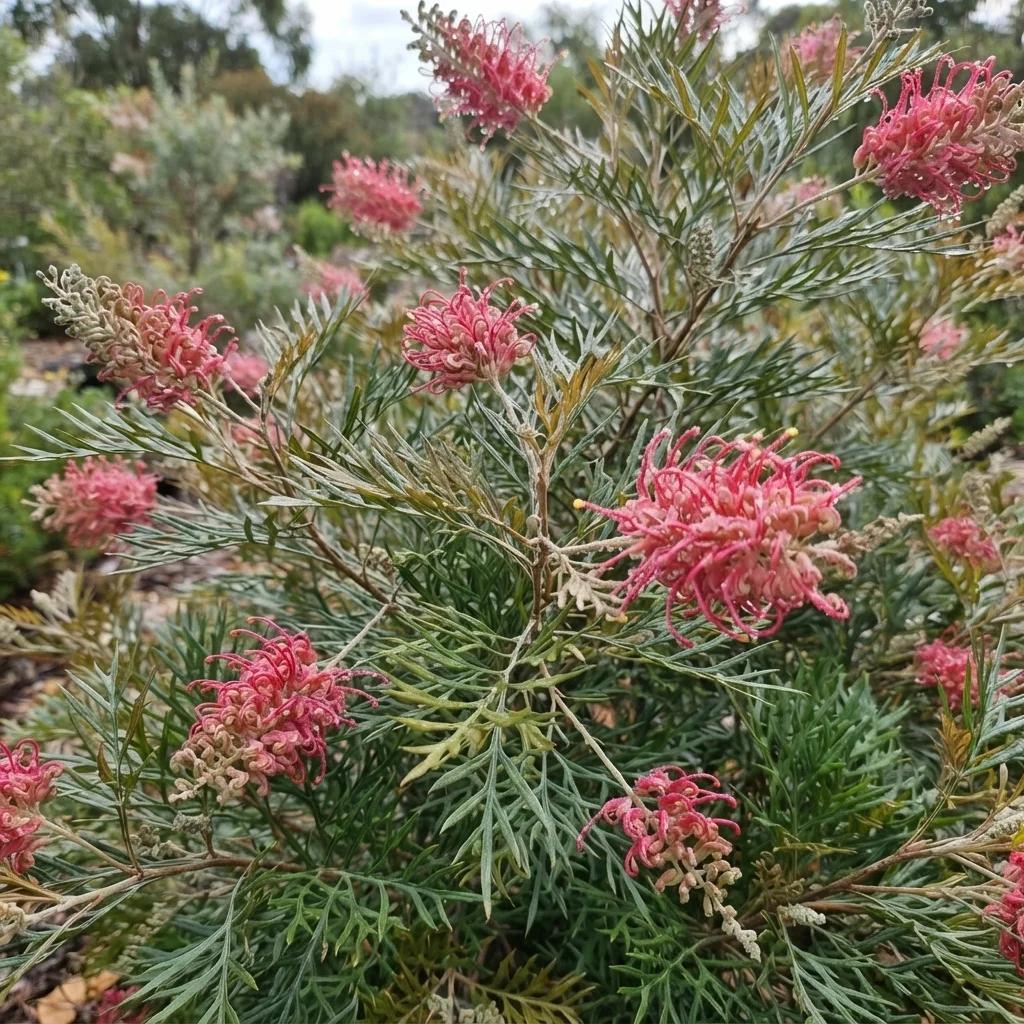 ‘Sylvia’Sylvia Grevillea
 ‘New Blood’New Blood Grevillea
 ‘Scarlet Sprite’Scarlet Sprite Grevillea
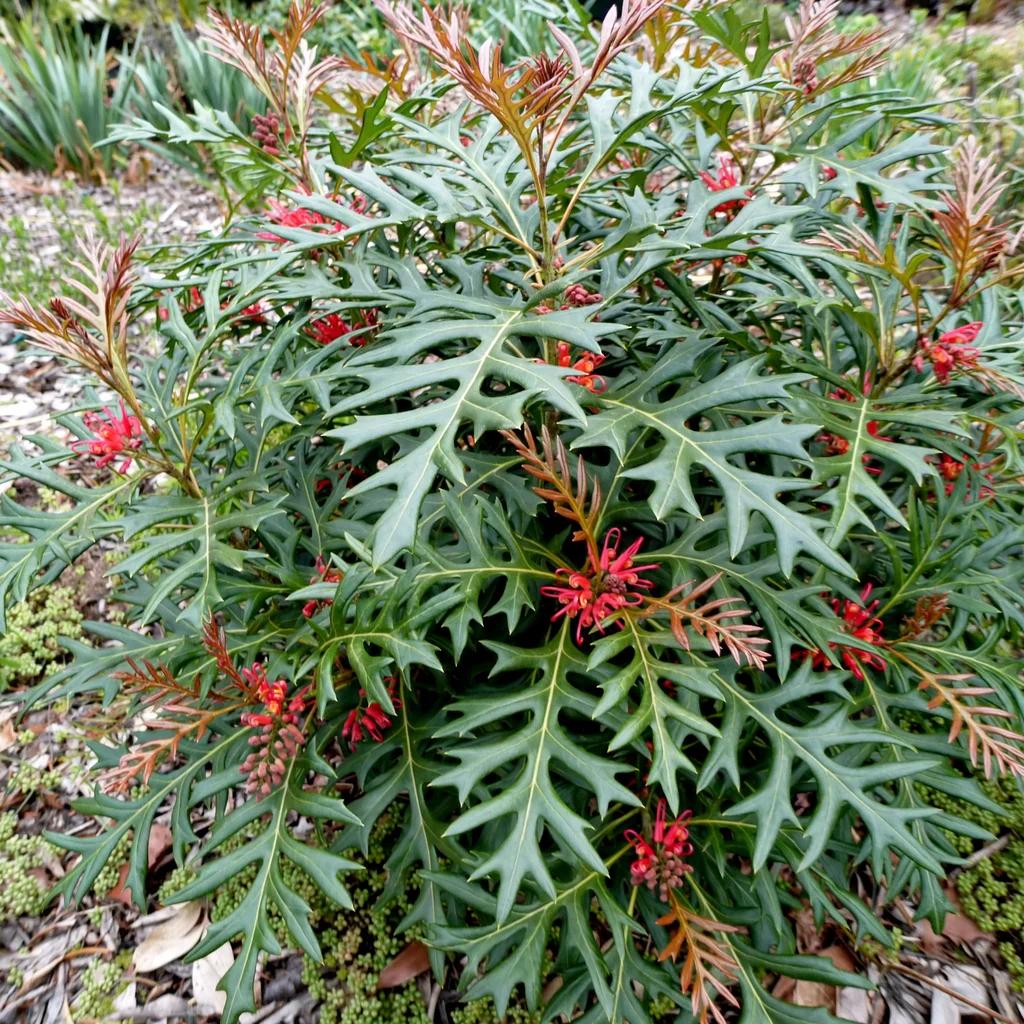 ‘Poorinda Royal Mantle’Royal Mantle Grevillea
 ‘Elegance’Elegance Grevillea
 ‘Coconut Ice’Coconut Ice Grevillea
The Story
Plant Bio
Grevillea is a genus of evergreen shrubs and trees native to Australia, characterized by their distinctive petal-less flowers that form dense, spider-like clusters. These plants thrive in nutrient-poor, highly drained soils and are highly sensitive to phosphorus.
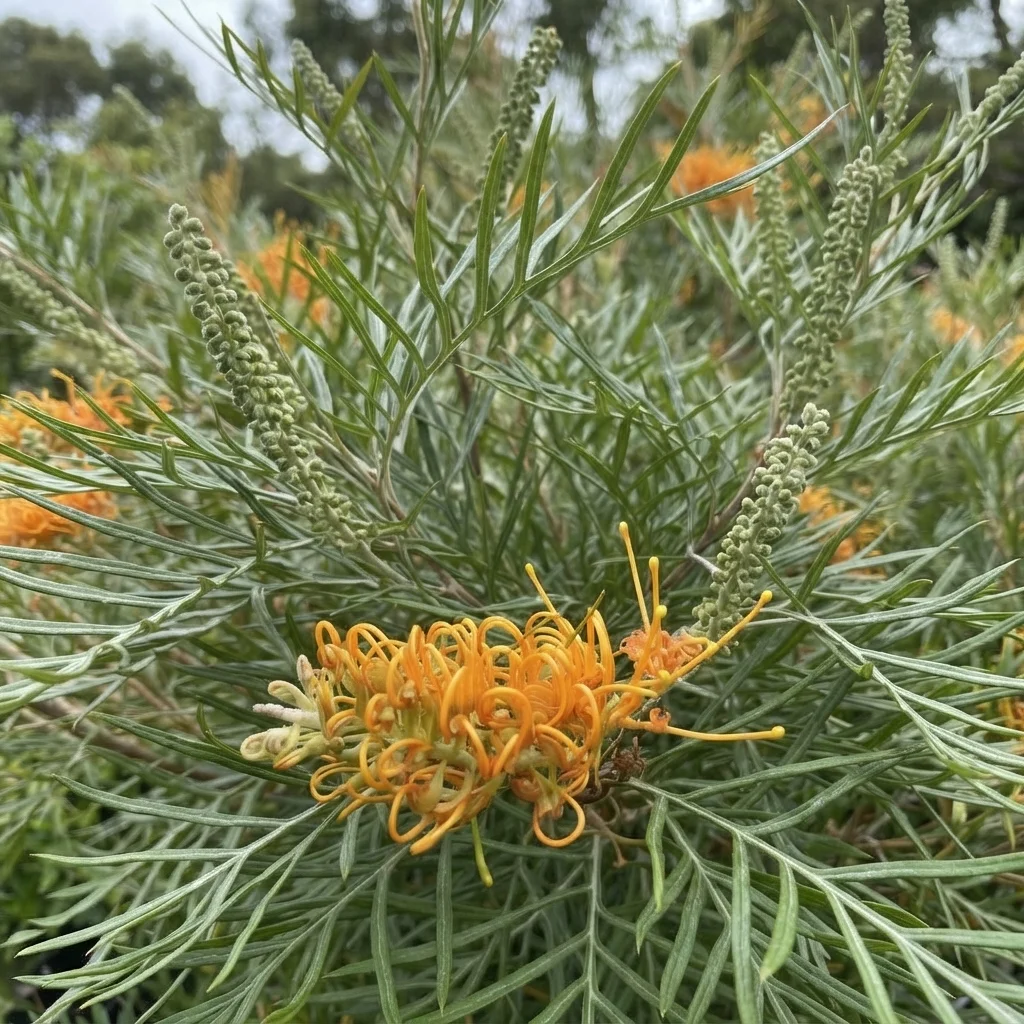
'Long John' is an upright, open hybrid shrub reaching eight to fifteen feet tall, featuring finely divided, needle-like leaves that emerge bright green before maturing to dark green. The large, terminal flower clusters display a mix of deep pink, coral, and orange tones from late winter through spring.
Uses & Benefits:
Bred from more than one wild species, so it has no species page of its own.
Essentials
At a Glance
Plant Type
Shrub
Height
144"
Width
120"
Light
Full Sun
Zones
9, 10
Water
Low
Humidity
Moderate
Lifespan
Perennial
Native To
Australia
Toxicity
Skin Irritant
Bloom period
Late winter – Spring
In flower about 4 months of the year
Planting
How to Grow
- Select a planting site in full sun with highly draining soil, avoiding heavy clay or low-lying areas where water collects.
- Dig a hole twice as wide as the root ball but no deeper, and backfill without adding organic amendments or standard fertilizers.
- Water deeply to settle the soil, then establish a strict watering schedule that allows the soil to dry completely between waterings.
- Apply a thick layer of organic mulch around the base to suppress weeds and conserve moisture, keeping the mulch clear of the main stem.
Pro Tip
Prune lightly immediately after the spring flowering flush to maintain a dense habit; cutting back into old, leafless wood prevents the plant from reshooting.
Keep It Thriving
Care Guide
Do
- Plant in a location with exceptional drainage and full sun exposure.
- Use only low-phosphorus or native-formulated fertilizers if feeding is necessary.
- Tip-prune regularly after flowering to encourage a bushier growth habit.
Don't
- Do not plant in heavy clay or poorly drained soils where standing water occurs.
- Do not apply general-purpose garden fertilizers containing high levels of phosphorus.
- Do not cut back severely into old, bare wood, as it will fail to reshoot.
Seasonal Care Calendar
| Task | Jan | Feb | Mar | Apr | May | Jun | Jul | Aug | Sep | Oct | Nov | Dec |
|---|---|---|---|---|---|---|---|---|---|---|---|---|
| Fertilize | ||||||||||||
| Mulch | ||||||||||||
| Pest Check | ||||||||||||
| Prune |
Watch Out For
Pests & Diseases
Common Pests
Common Diseases
In the Garden
Landscape Uses & Companions
Landscape Uses
Multiply
Propagation Methods
Good to Know
Common Questions
Long John Grevillea questions
What zones can Long John Grevillea grow in?
Long John Grevillea is hardy in USDA Zones 9–10. Inside that range it survives winter in the ground; outside it, grow it as an annual or a container plant you protect.
Is Long John Grevillea deer resistant?
Yes — Long John Grevillea is rated deer-resistant. Deer typically pass it over, though extreme hunger can override any plant's defenses.
When does Long John Grevillea bloom?
Long John Grevillea typically blooms in late winter through spring. Exact timing shifts a week or two with your zone — Sow's bloom calendar maps it to your garden.
Does Long John Grevillea need full sun?
Long John Grevillea does best in full sun (6+ hours).
Is Long John Grevillea drought tolerant?
Yes — once established (usually after the first full season), Long John Grevillea handles dry spells with minimal watering. Water deeply its first year to build the root system that makes that possible.
More Grevillea to compare
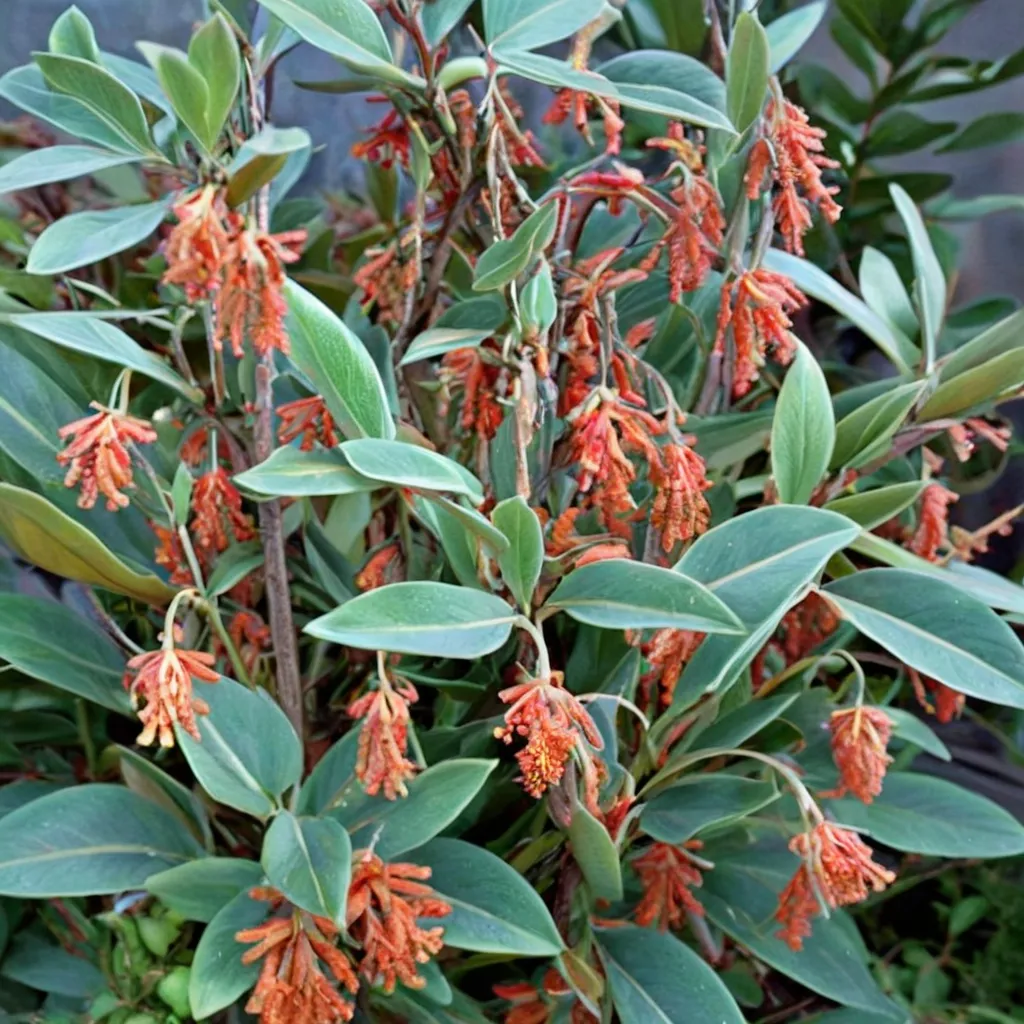
Murray Queen Grevillea
Grevillea victoriae 'Murray Queen'
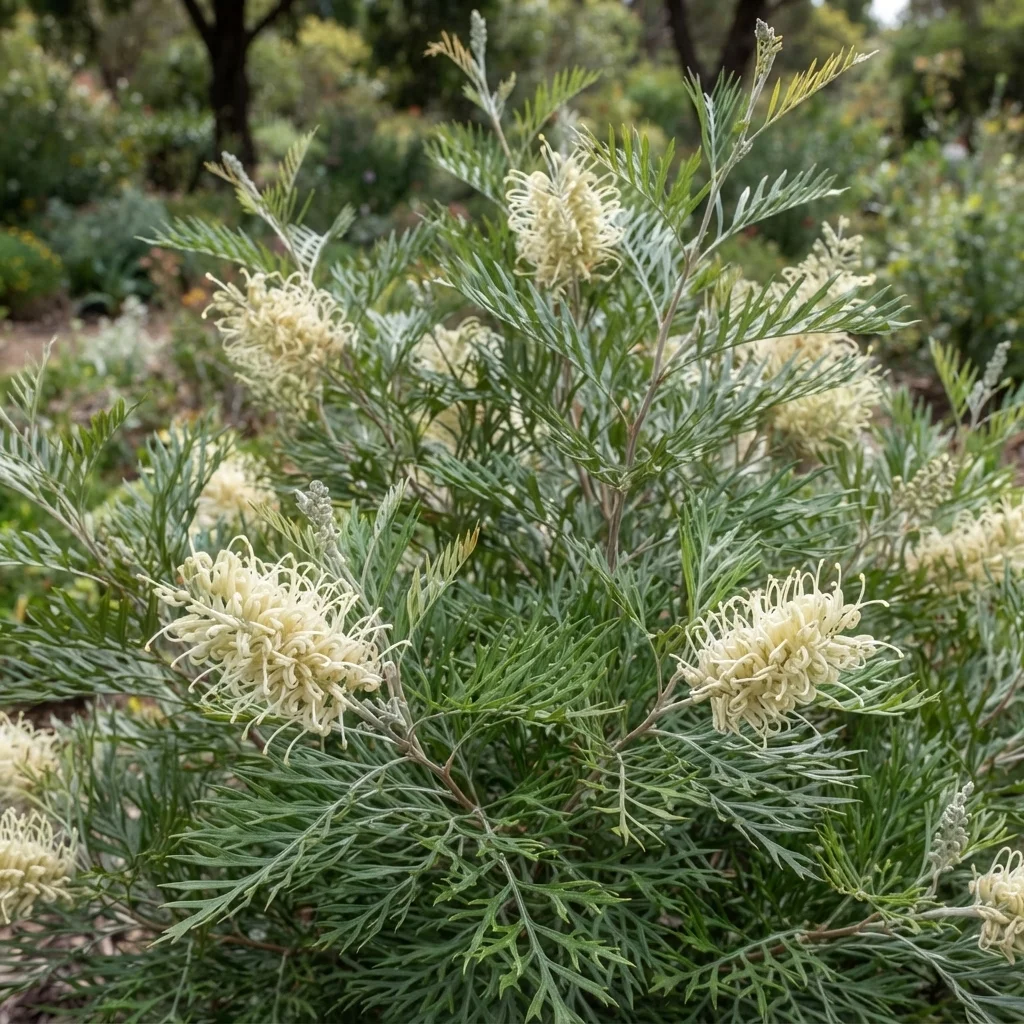
Moonlight Grevillea
Grevillea x hybrida 'Moonlight'
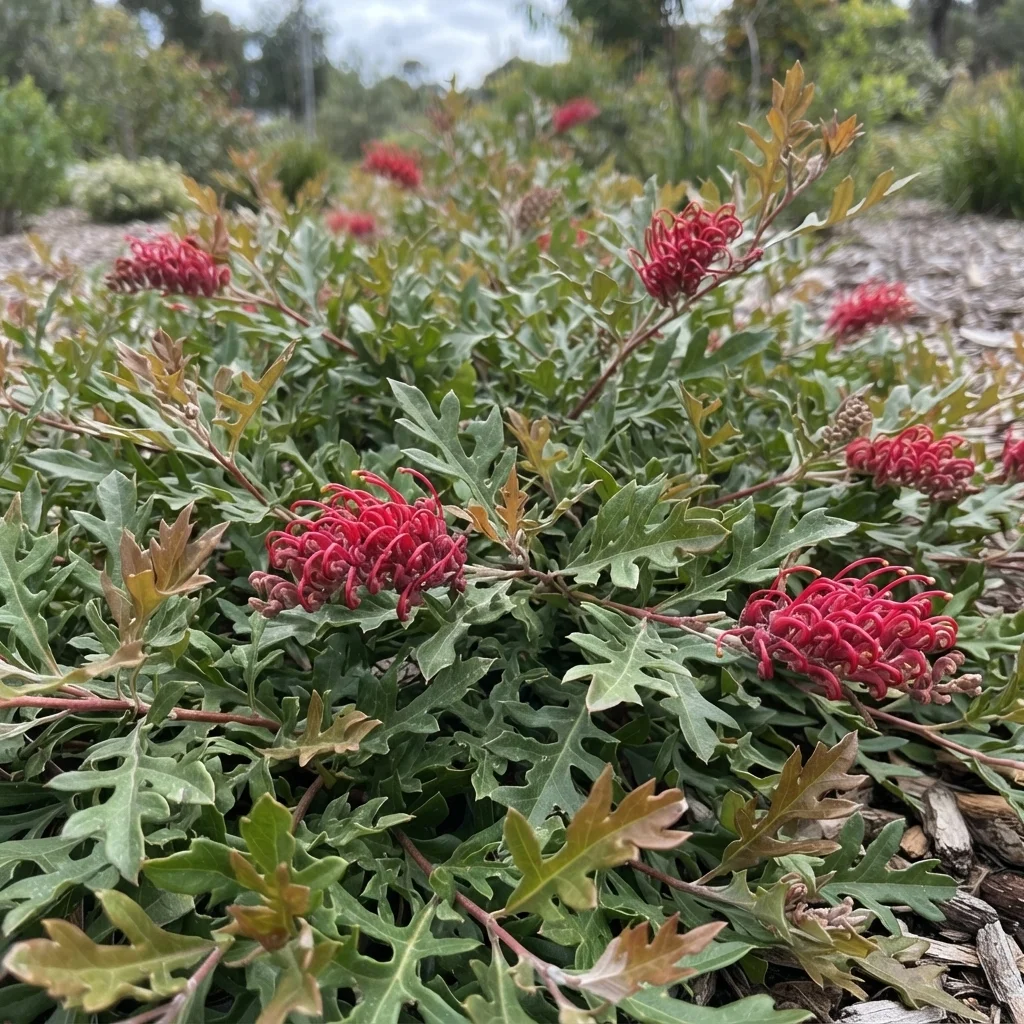
Prostrate Grevillea
Grevillea × gaudichaudii 'Gaudi Chaudi'
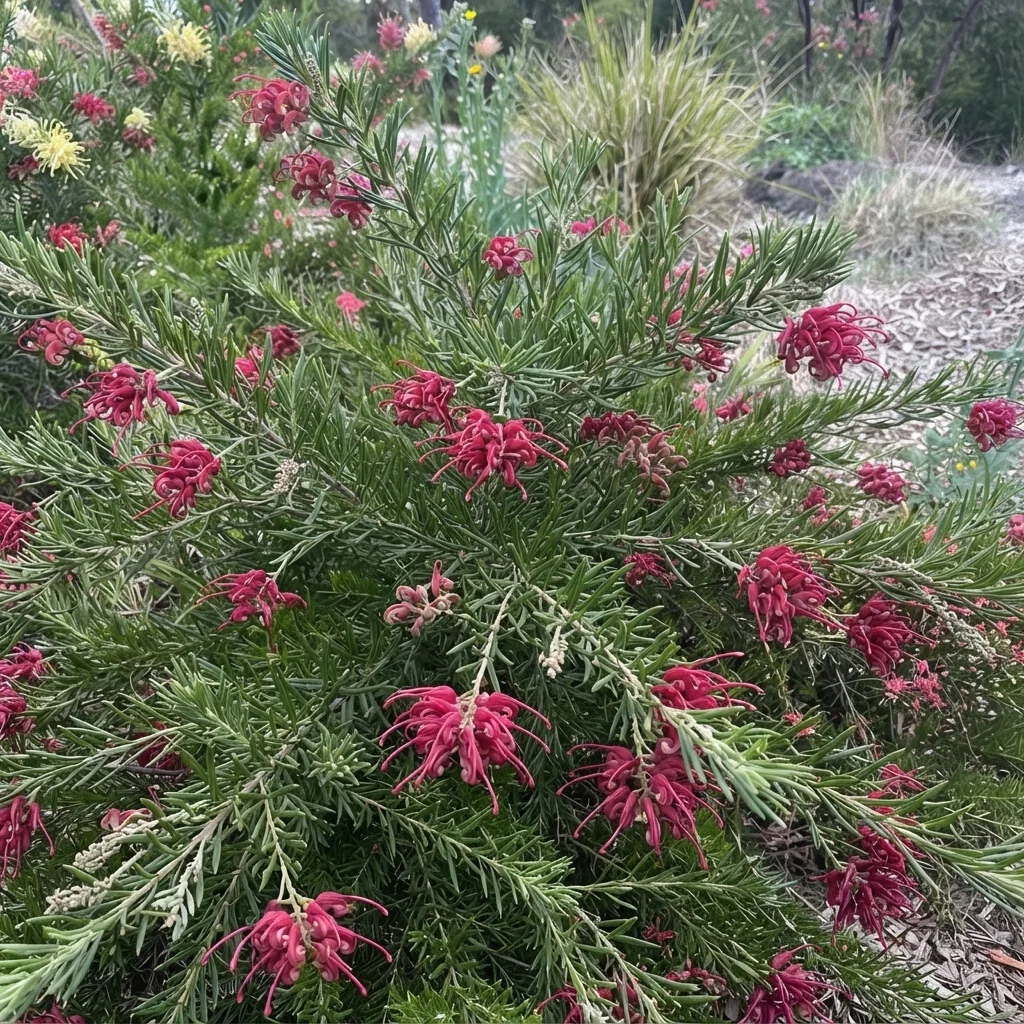
Rosemary Grevillea
Grevillea rosmarinifolia
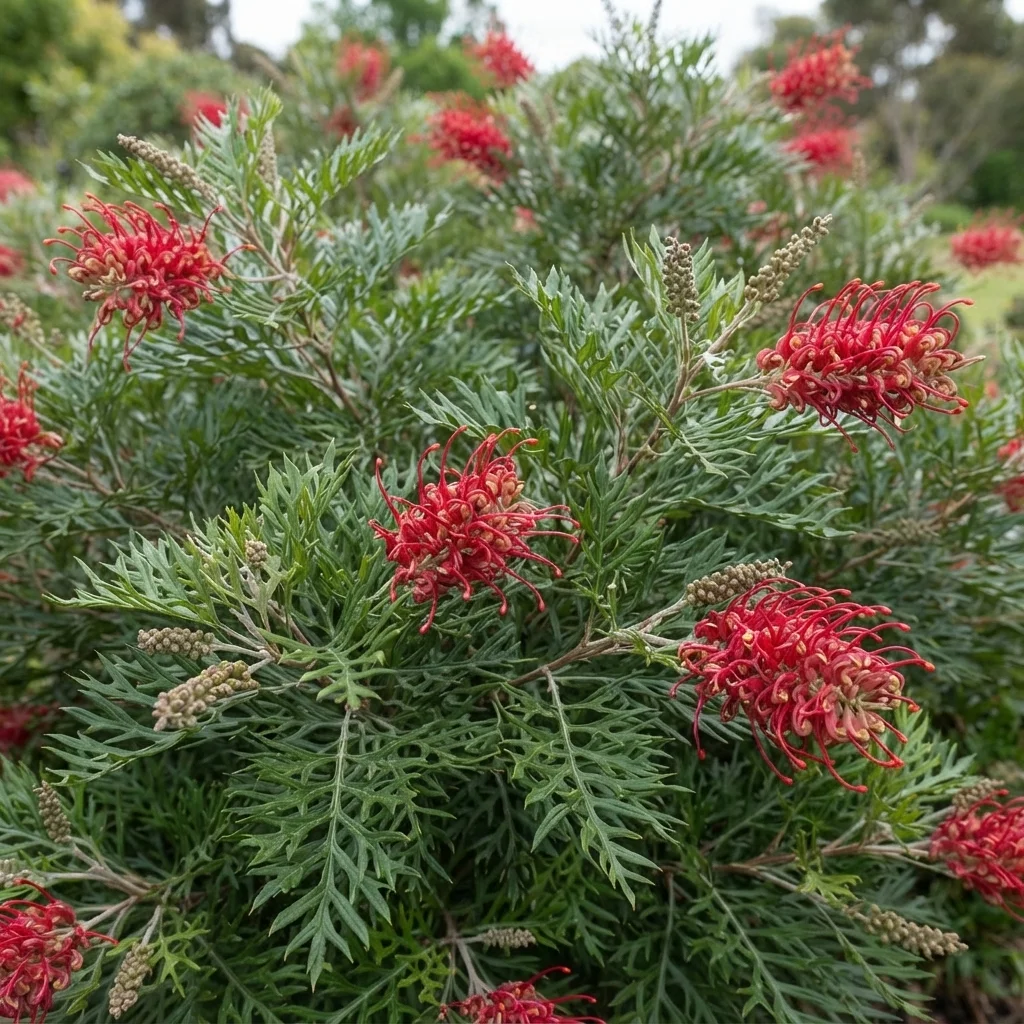
Robyn Gordon Grevillea
Grevillea x hybrida 'Robyn Gordon'
Honey Gem Grevillea
Grevillea x hybrida 'Honey Gem'
Keep exploring
Explore the genus
Hardy in your zone?
Grow Long John Grevillea with confidence
See it in a design of your actual yard, get zone-matched care reminders, and track it season by season in your garden journal.