The Story
Plant Bio
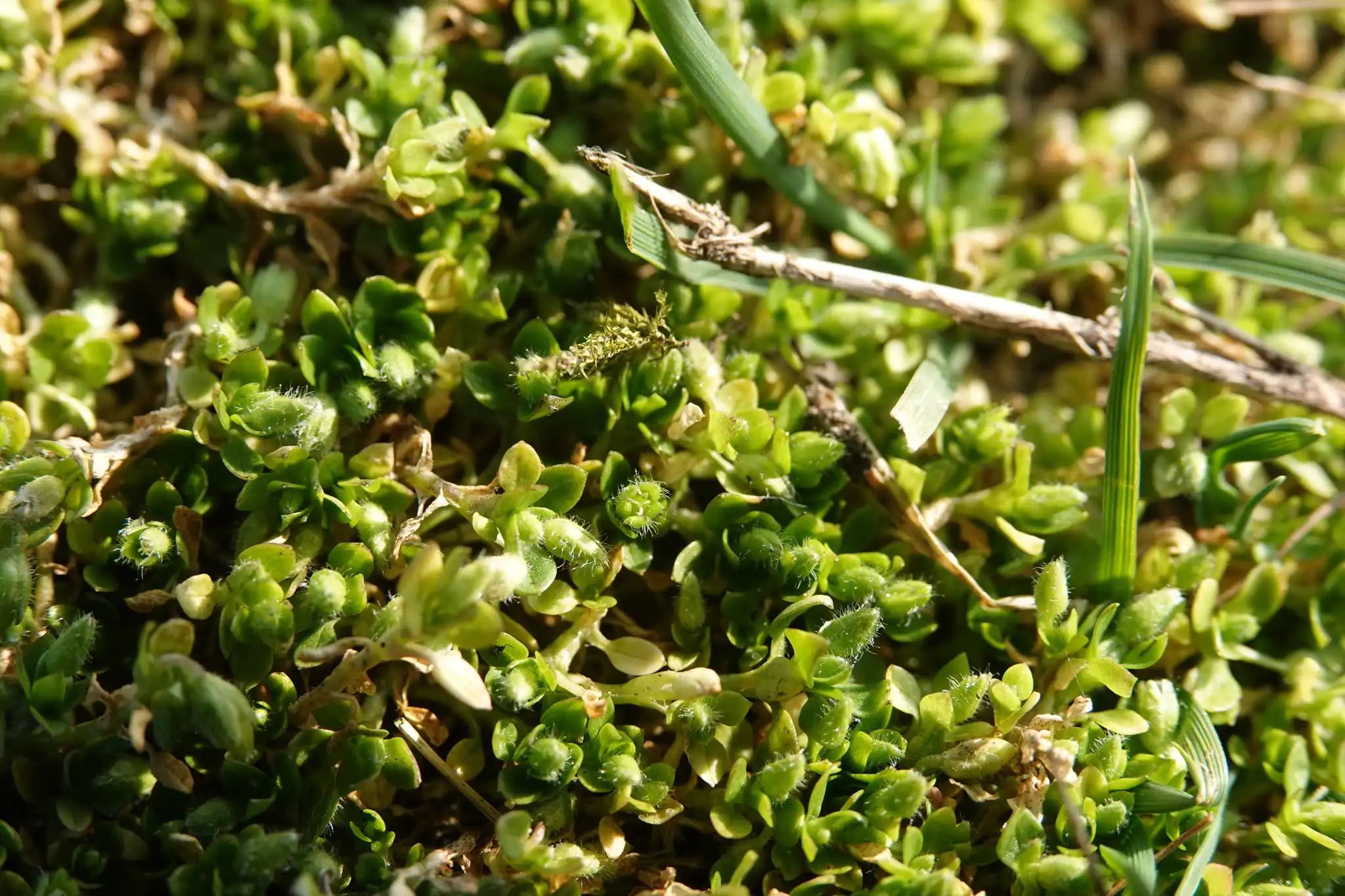
Stellaria apetala, commonly known as lesser chickweed, is a low-growing, weak-stemmed winter annual that forms prostrate mats in sandy or disturbed soils. The light green stems are distinguished by a single line of fine hairs running along their length, supporting small, smooth-margined leaves.
This species is characterized by its minute, inconspicuous white flowers that frequently lack petals entirely, with the remaining reproductive parts enclosed by narrow sepals. It thrives in dry, nutrient-poor coastal or waste ground where other vegetation struggles to establish.
Uses & Benefits:
Essentials
At a Glance
Plant Type
Annual
Height
12"
Width
16"
Light
Full Sun, Partial Sun
Zones
4, 5, 6, 7, 8, 9
Water
Low to Moderate
Humidity
Low to Moderate
Lifespan
Annual
Native To
Europe, North Africa, Asia
Toxicity
Non-toxic
Bloom period
Winter – Spring
In flower about 6 months of the year
Planting
How to Grow
- Identify the plant by its single line of stem hairs and tiny, petal-less flowers to distinguish it from common chickweed.
- Hand-pull the weak, prostrate stems from loose, sandy soil when the ground is damp to ensure the entire root system is removed.
- Sever the shallow roots of larger infestations using a sharp hoe just below the soil surface during dry weather.
- Dispose of the pulled plants immediately rather than composting them to prevent any developing seeds from dispersing.
Pro Tip
To manage this species as an unwanted garden weed, hand-pull or hoe the shallow-rooted mats in early spring before the seed capsules mature and split.
Keep It Thriving
Care Guide
Do
- Pull plants early in the spring before they can set and scatter seed.
- Ensure garden beds have excellent drainage to discourage this moisture-sensitive weed from establishing.
- Use thick layers of organic mulch to suppress seed germination in disturbed soils.
Don't
- Do not apply fertilizer, as this opportunistic plant easily outcompetes desirable species in nutrient-rich soils.
- Do not allow the plant to remain in damp, poorly drained areas where it can harbor root rot pathogens.
- Do not compost mature plants that have already developed seed capsules.
Seasonal Care Calendar
| Task | Jan | Feb | Mar | Apr | May | Jun | Jul | Aug | Sep | Oct | Nov | Dec |
|---|---|---|---|---|---|---|---|---|---|---|---|---|
| Mulch | ||||||||||||
| Pest Check | ||||||||||||
| Prune | ||||||||||||
| Spring Cleanup |
Watch Out For
Pests & Diseases
Common Pests
Common Diseases
In the Garden
Landscape Uses & Companions
Landscape Uses
Multiply
Propagation Methods
Good to Know
Common Questions
Lesser Chickweed questions
What zones can Lesser Chickweed grow in?
Lesser Chickweed is hardy in USDA Zones 4–9. Inside that range it survives winter in the ground; outside it, grow it as an annual or a container plant you protect.
Is Lesser Chickweed deer resistant?
Not reliably. Deer may browse Lesser Chickweed, especially tender spring growth — plan on repellents or fencing where pressure is high.
When does Lesser Chickweed bloom?
Lesser Chickweed typically blooms in winter through spring. Exact timing shifts a week or two with your zone — Sow's bloom calendar maps it to your garden.
Does Lesser Chickweed need full sun?
Lesser Chickweed does best in full sun to part shade. In hot climates, afternoon shade keeps blooms fresher longer.
Is Lesser Chickweed drought tolerant?
Yes — once established (usually after the first full season), Lesser Chickweed handles dry spells with minimal watering. Water deeply its first year to build the root system that makes that possible.
More Stellaria to compare
Keep exploring
Explore the genus
Grow Lesser Chickweed with confidence
See it in a design of your actual yard, get zone-matched care reminders, and track it season by season in your garden journal.