The Story
Plant Bio
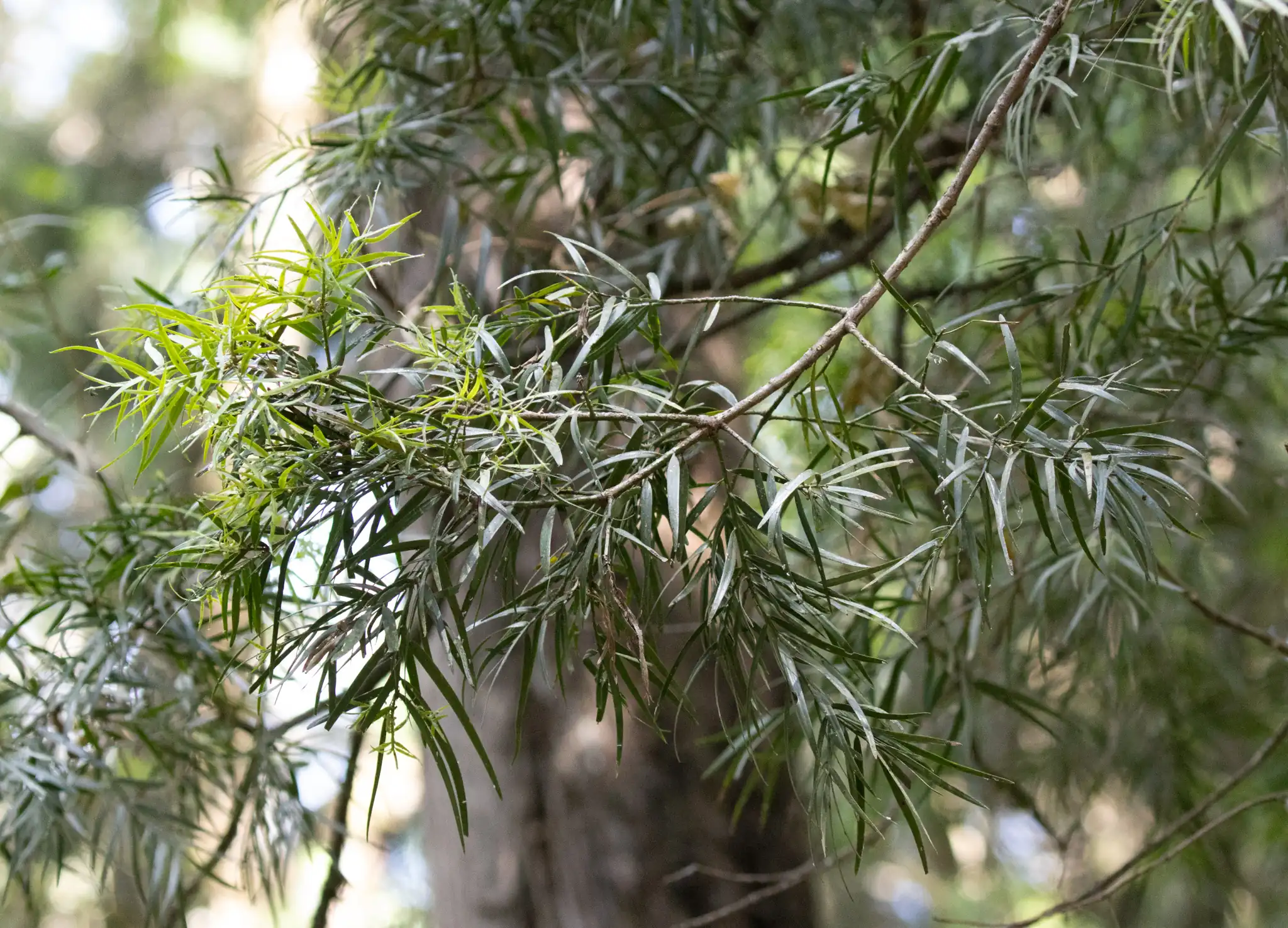
Afrocarpus gracilior, commonly known as the fern pine, is a large, dense evergreen conifer native to the montane rainforests of East Africa. It develops a broad, upright crown with graceful, pendulous branches covered in fine-textured, needle-like foliage.
The narrow, soft leaves emerge in a bright lime-green hue before maturing to a deep, dark green. Female trees produce solitary, rounded seeds enclosed in fleshy, yellow-to-purple outer coats that ripen after inconspicuous spring cones.
Uses & Benefits:
Essentials
At a Glance
Plant Type
Tree
Height
1560"
Width
1320"
Light
Full Sun, Partial Sun
Zones
9, 10
Water
Moderate
Humidity
Moderate
Lifespan
Long-lived
Native To
Eastern tropical Africa
Toxicity
Mildly toxic if ingested
Bloom period
Spring
In flower about 3 months of the year
Planting
How to Grow
- Plant in a location that receives full sun to partial shade, providing afternoon shade in regions with intensely hot summers.
- Ensure the soil is deep, rich in organic matter, and highly permeable to prevent waterlogging around the root system.
- Water regularly during the first few growing seasons to maintain consistent soil moisture and establish a deep root system.
- Apply a balanced, slow-release fertilizer in early spring to support active growth if the foliage appears pale or sluggish.
Pro Tip
Never prune back into old, completely leafless brown wood, as these inner branches lack active dormant buds and will fail to re-sprout.
Keep It Thriving
Care Guide
Do
- Water consistently to maintain even soil moisture, especially during dry spells.
- Prune regularly during the active growing season to maintain a tight hedge or formal screen.
- Provide excellent drainage to protect the root system from fungal pathogens.
Don't
- Do not allow the soil to remain waterlogged or sit in stagnant water.
- Do not cut back into bare, leafless inner wood when shearing or shaping.
- Do not let young trees dry out completely, as they are intolerant of severe drought.
Seasonal Care Calendar
| Task | Jan | Feb | Mar | Apr | May | Jun | Jul | Aug | Sep | Oct | Nov | Dec |
|---|---|---|---|---|---|---|---|---|---|---|---|---|
| Fertilize | ||||||||||||
| Mulch | ||||||||||||
| Pest Check | ||||||||||||
| Prune |
Watch Out For
Pests & Diseases
Common Pests
Common Diseases
In the Garden
Landscape Uses & Companions
Landscape Uses
Companion Plants
Multiply
Propagation Methods
Good to Know
Common Questions
Fern Pine questions
What zones can Fern Pine grow in?
Fern Pine is hardy in USDA Zones 9–10. Inside that range it survives winter in the ground; outside it, grow it as an annual or a container plant you protect.
Is Fern Pine deer resistant?
Not reliably. Deer may browse Fern Pine, especially tender spring growth — plan on repellents or fencing where pressure is high.
When does Fern Pine bloom?
Fern Pine typically blooms in spring through spring. Exact timing shifts a week or two with your zone — Sow's bloom calendar maps it to your garden.
Does Fern Pine need full sun?
Fern Pine does best in full sun to part shade. In hot climates, afternoon shade keeps blooms fresher longer.
Keep exploring
Explore the genus
Hardy in your zone?
Grow Fern Pine with confidence
See it in a design of your actual yard, get zone-matched care reminders, and track it season by season in your garden journal.