The Story
Plant Bio
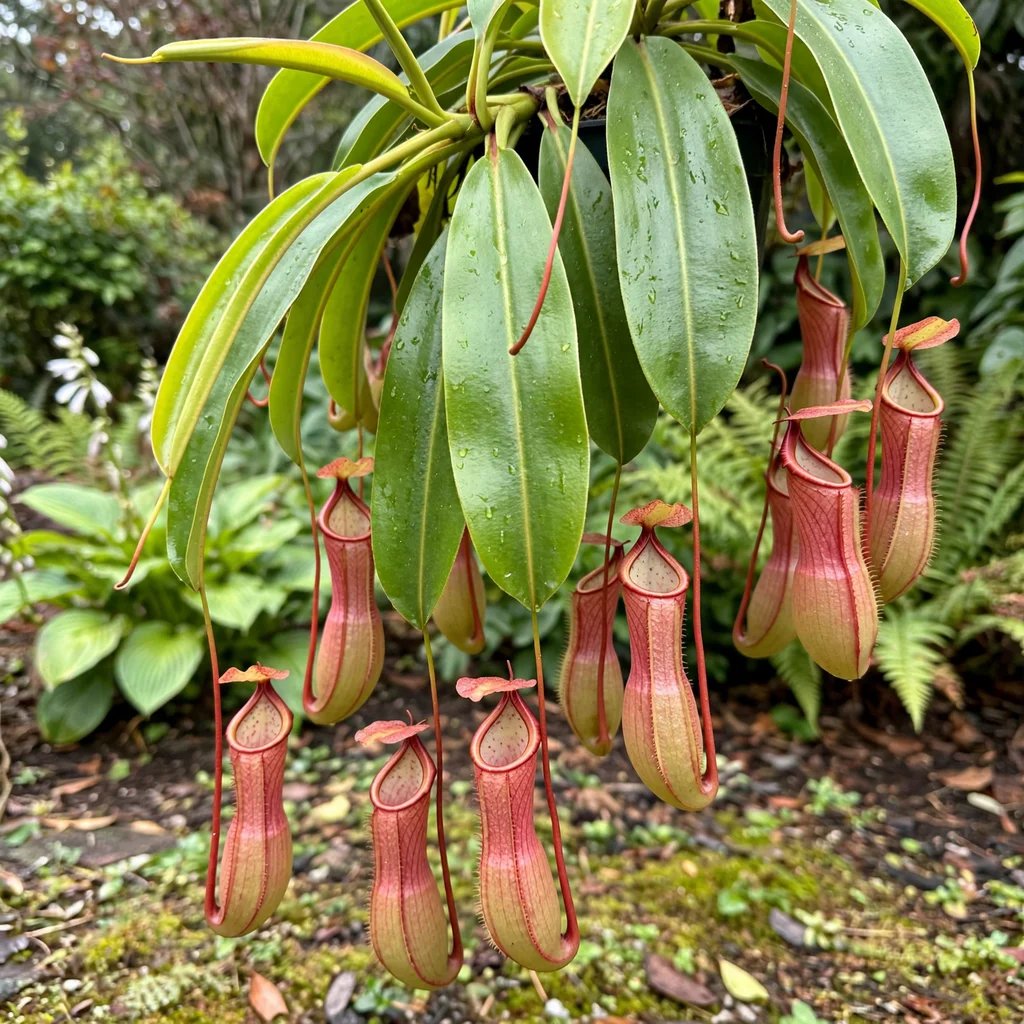
Nepenthes x ventrata is a vining, semi-woody tropical hybrid that climbs or trails using modified leaves ending in tendrils and fluid-filled, insect-trapping pitchers. The alternate, leathery green leaves feature prominent midribs, producing new growth that emerges in a bright light green to yellowish-green hue.
This naturally occurring or artificial hybrid combines the vigor of its parent species, resulting in an adaptable plant frequently misidentified as Nepenthes alata in commercial trade. The distinctive, hanging pitchers serve as specialized pitfall traps, luring and digesting small insects to supplement nutrients in low-fertility environments.
Uses & Benefits:
Essentials
At a Glance
Plant Type
Tropical
Height
40"
Width
24"
Light
Partial Sun, Shade
Water
High
Humidity
High (60%-80%+)
Lifespan
Perennial
Native To
Philippines (Parent species)
Toxicity
Non-toxic
Bloom period
Spring – Summer
In flower about 6 months of the year
Planting
How to Grow
- Plant in a highly porous, acidic medium consisting of long-fiber sphagnum moss mixed with perlite or orchid bark.
- Position the container in bright indirect light or partial morning sun, shielding the foliage from harsh, direct midday sun.
- Keep the potting medium consistently damp with distilled water or rainwater, ensuring the container drains completely to prevent stagnant waterlogging.
- Maintain high relative humidity between 60% and 80% to prevent the developing pitchers from withering prematurely.
Pro Tip
Always irrigate with pure rainwater, reverse osmosis, or distilled water containing under 50 ppm total dissolved solids, as tap water minerals rapidly cause fatal root burn.
Keep It Thriving
Care Guide
Do
- Water exclusively with pure rainwater, distilled water, or reverse osmosis water.
- Keep the growing medium evenly moist at all times.
- Provide bright, filtered light to encourage robust pitcher coloration.
Don't
- Do not use standard tap water or mineral-rich well water.
- Do not apply standard chemical fertilizers to the potting medium or roots.
- Do not allow the plant to experience temperatures below 50°F (10°C).
Seasonal Care Calendar
| Task | Jan | Feb | Mar | Apr | May | Jun | Jul | Aug | Sep | Oct | Nov | Dec |
|---|---|---|---|---|---|---|---|---|---|---|---|---|
| Fertilize | ||||||||||||
| Pest Check | ||||||||||||
| Prune | ||||||||||||
| Winter Prep |
Watch Out For
Pests & Diseases
Common Pests
Common Diseases
In the Garden
Landscape Uses & Companions
Landscape Uses
Companion Plants
Multiply
Propagation Methods
Good to Know
Common Questions
Ventrata Pitcher Plant questions
When does Ventrata Pitcher Plant bloom?
Ventrata Pitcher Plant typically blooms in spring through summer. Exact timing shifts a week or two with your zone — Sow's bloom calendar maps it to your garden.
Does Ventrata Pitcher Plant need full sun?
Ventrata Pitcher Plant does best in part shade.
Keep exploring
Explore the genus
Grow Ventrata Pitcher Plant with confidence
See it in a design of your actual yard, get zone-matched care reminders, and track it season by season in your garden journal.