The Story
Plant Bio
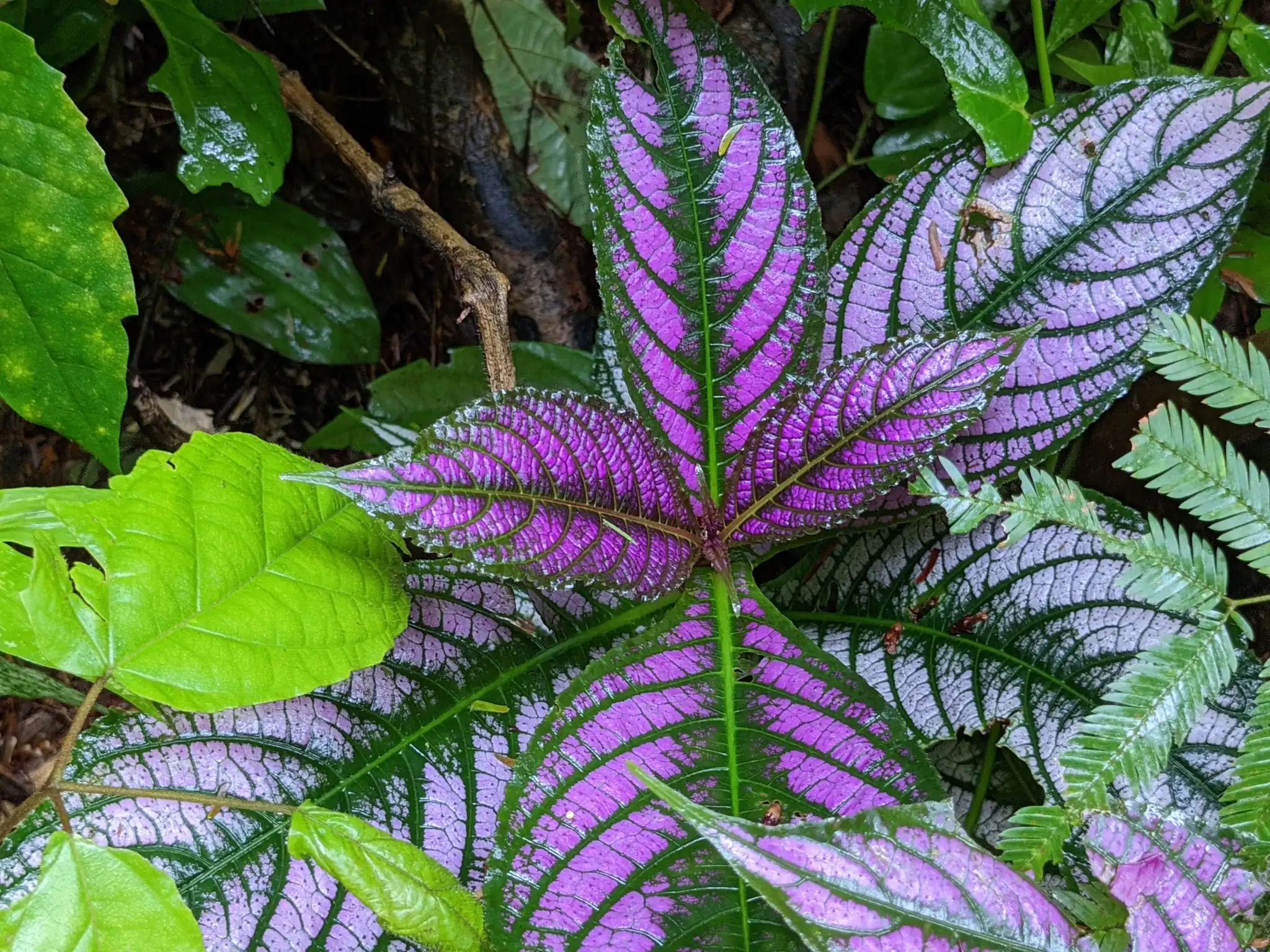
Strobilanthes auriculata is an upright, clumping evergreen subshrub native to the damp understories of Myanmar. The species is characterized by opposite, lanceolate leaves with distinctive ear-like auricles at the base that clasp the stem.
The variety dyeriana, commonly known as Persian shield, is distinguished by its highly ornamental foliage featuring a metallic, iridescent violet and silver sheen on the upper leaf surfaces. The undersides of the leaves present a contrasting solid purple-maroon color.
Uses & Benefits:
Essentials
At a Glance
Plant Type
Tropical
Height
36"
Width
24"
Light
Partial Sun, Shade
Zones
10
Water
High
Humidity
High
Lifespan
Perennial (grown as annual)
Native To
Myanmar
Toxicity
Non-toxic
Bloom period
Winter – Spring
In flower about 6 months of the year
Planting
How to Grow
- Select a planting site that receives dappled sunlight or partial shade, avoiding direct afternoon sun which scorches the foliage.
- Prepare the soil by incorporating organic matter to create a rich, well-draining medium with a neutral to slightly acidic pH.
- Set the plant at the same depth as its nursery container and water thoroughly to settle the soil around the roots.
- Maintain consistent moisture by watering whenever the top inch of soil feels dry, ensuring the ground remains damp but never waterlogged.
Pro Tip
Pinch out the growing tips regularly during the spring and summer to prevent leggy growth and maintain a dense, bushy form. Avoid cutting back into old, completely leafless woody stems, as they lack active nodes and will fail to reshoot.
Keep It Thriving
Care Guide
Do
- Pinch back the growing tips regularly during spring and summer to encourage a bushy, compact habit.
- Apply a balanced liquid fertilizer monthly during the active growing season to maintain vibrant foliage coloration.
- Wear gloves when pruning to protect sensitive skin from potential irritation caused by the plant's sap.
- Bring container-grown plants indoors before the first autumn frost to overwinter them in a bright, humid room.
Don't
- Do not plant in full, direct sunlight, as intense rays will bleach the metallic colors and scorch the leaves.
- Do not allow the soil to dry out completely, as the foliage wilts rapidly and may suffer permanent damage.
- Do not cut back into old, completely bare woody stems during spring pruning, as they will not regenerate new growth.
- Do not overwater or allow the plant to sit in standing water, which triggers root rot.
Seasonal Care Calendar
| Task | Jan | Feb | Mar | Apr | May | Jun | Jul | Aug | Sep | Oct | Nov | Dec |
|---|---|---|---|---|---|---|---|---|---|---|---|---|
| Fertilize | ||||||||||||
| Pinch | ||||||||||||
| Propagate | ||||||||||||
| Prune | ||||||||||||
| Winter Prep |
Watch Out For
Pests & Diseases
Common Pests
Common Diseases
In the Garden
Landscape Uses & Companions
Landscape Uses
Multiply
Propagation Methods
Good to Know
Common Questions
Persian Shield questions
What zones can Persian Shield grow in?
Persian Shield is hardy in USDA Zone 10. Inside that range it survives winter in the ground; outside it, grow it as an annual or a container plant you protect.
Is Persian Shield deer resistant?
Not reliably. Deer may browse Persian Shield, especially tender spring growth — plan on repellents or fencing where pressure is high.
When does Persian Shield bloom?
Persian Shield typically blooms in winter through spring. Exact timing shifts a week or two with your zone — Sow's bloom calendar maps it to your garden.
Does Persian Shield need full sun?
Persian Shield does best in part shade.
More Strobilanthes to compare

Keep exploring
Explore the genus
Hardy in your zone?
Grow Persian Shield with confidence
See it in a design of your actual yard, get zone-matched care reminders, and track it season by season in your garden journal.