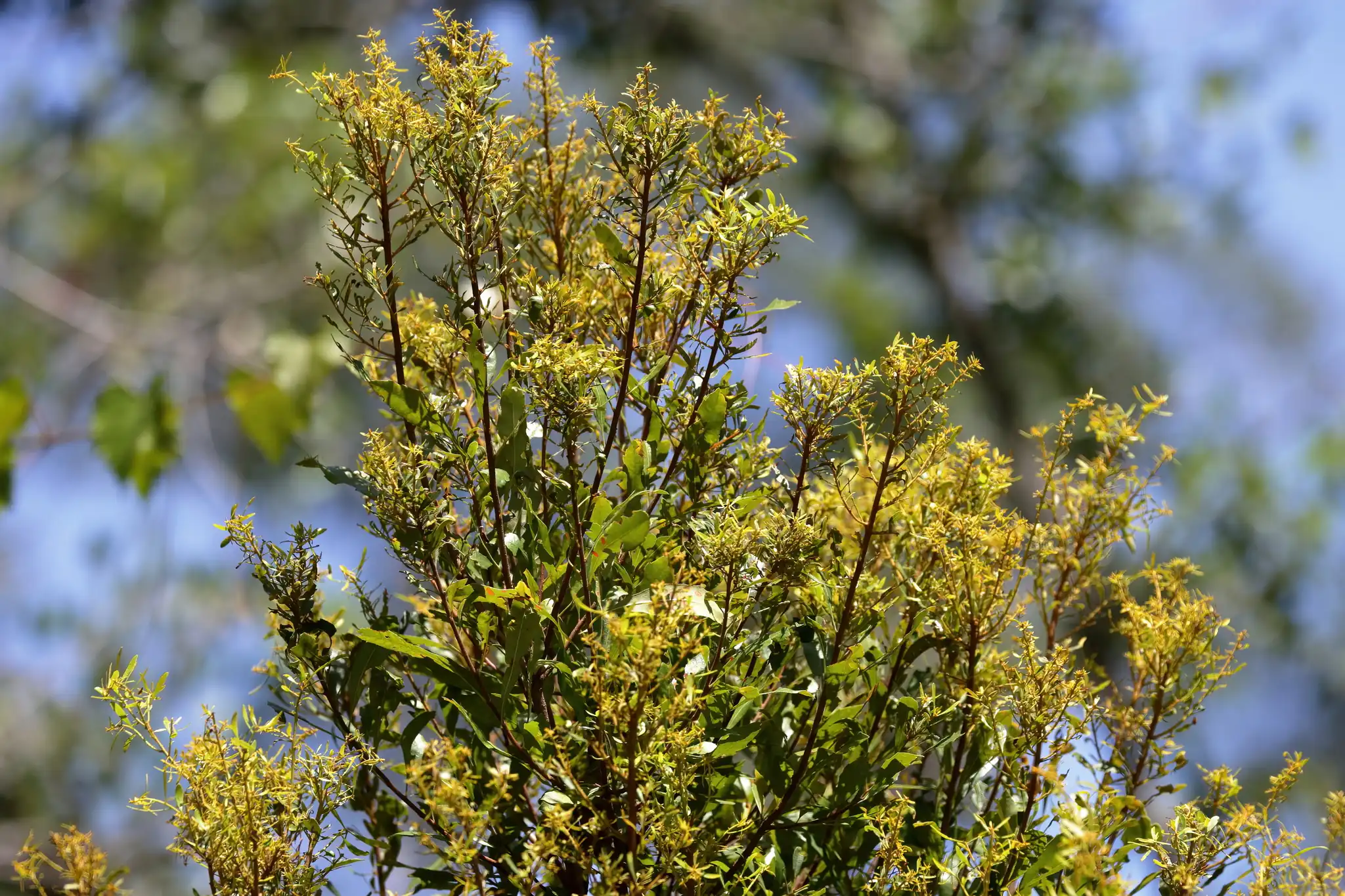

The Story
Plant Bio
Morella cerifera is a fast-growing, evergreen shrub or small tree native to North America. It is highly adaptable, tolerating a wide range of soil conditions, and features aromatic, olive-green foliage.
This plant is prized for its toughness, nitrogen-fixing abilities, and the waxy, grayish berries produced on female plants. These berries are a vital winter food source for birds and were historically used to make bayberry candles.
Uses & Benefits:
Essentials
At a Glance
Plant Type
Shrub
Height
180"
Width
180"
Light
Full Sun, Partial Sun
Zones
7, 8, 9, 10
Water
Low to moderate
Humidity
Adaptable
Lifespan
Long-lived shrub
Native To
Eastern and Southern North America
Toxicity
Berries are toxic if ingested in large quantities
Marketplace
Where to Buy
Shipping costs Year-round shipping Free shipping
Planting
How to Grow
- Select a site in full sun or part shade with any type of soil.
- Dig a hole two to three times wider than the root ball.
- Ensure the top of the root ball is level with the surrounding soil.
- Backfill the hole with the excavated soil.
- Water deeply to settle the soil and eliminate air pockets.
- Keep watered during the first year to establish a deep root system.
Pro Tip
Plant both male and female plants if you want the attractive, waxy berries for birds and winter interest.
Keep It Thriving
Care Guide
Do
- Water regularly during the first growing season.
- Prune as needed in late winter to maintain desired size and shape.
- Plant in groups to create an effective screen or hedge.
- Tolerate its tendency to sucker to form a natural thicket.
Don't
- Don't plant in heavily alkaline soils.
- Avoid excessive fertilization; it fixes its own nitrogen.
- Don't plant where its suckering habit will be a problem.
- Don't shear into a tight, formal shape, which spoils its natural form.
Seasonal Care Calendar
| Task | Jan | Feb | Mar | Apr | May | Jun | Jul | Aug | Sep | Oct | Nov | Dec |
|---|---|---|---|---|---|---|---|---|---|---|---|---|
| Mulch | ||||||||||||
| Plant | ||||||||||||
| Prune |
Watch Out For
Pests & Diseases
Common Pests
Common Diseases
In the Garden
Landscape Uses & Companions
Landscape Uses
Multiply
Propagation Methods
Good to Know
Common Questions
Wax Myrtle questions
What zones can Wax Myrtle grow in?
Wax Myrtle is hardy in USDA Zones 7–10. Inside that range it survives winter in the ground; outside it, grow it as an annual or a container plant you protect.
Is Wax Myrtle deer resistant?
Yes — Wax Myrtle is rated deer-resistant. Deer typically pass it over, though extreme hunger can override any plant's defenses.
When does Wax Myrtle bloom?
Wax Myrtle typically blooms in early spring through mid-spring. Exact timing shifts a week or two with your zone — Sow's bloom calendar maps it to your garden.
Does Wax Myrtle need full sun?
Wax Myrtle does best in full sun to part shade. In hot climates, afternoon shade keeps blooms fresher longer.
Is Wax Myrtle drought tolerant?
Yes — once established (usually after the first full season), Wax Myrtle handles dry spells with minimal watering. Water deeply its first year to build the root system that makes that possible.
More Morella to compare
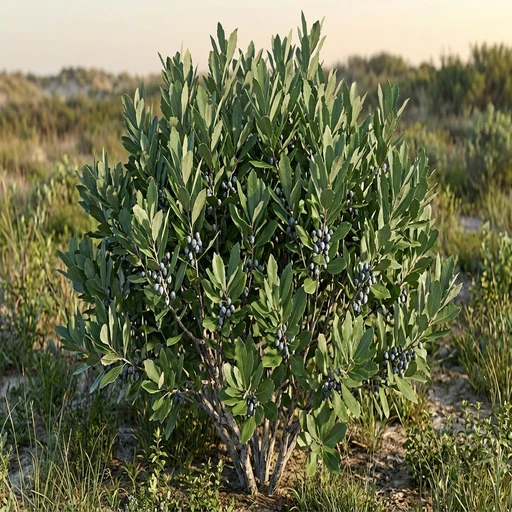
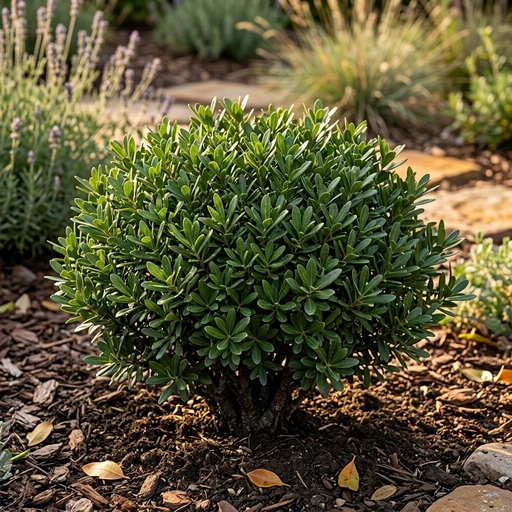
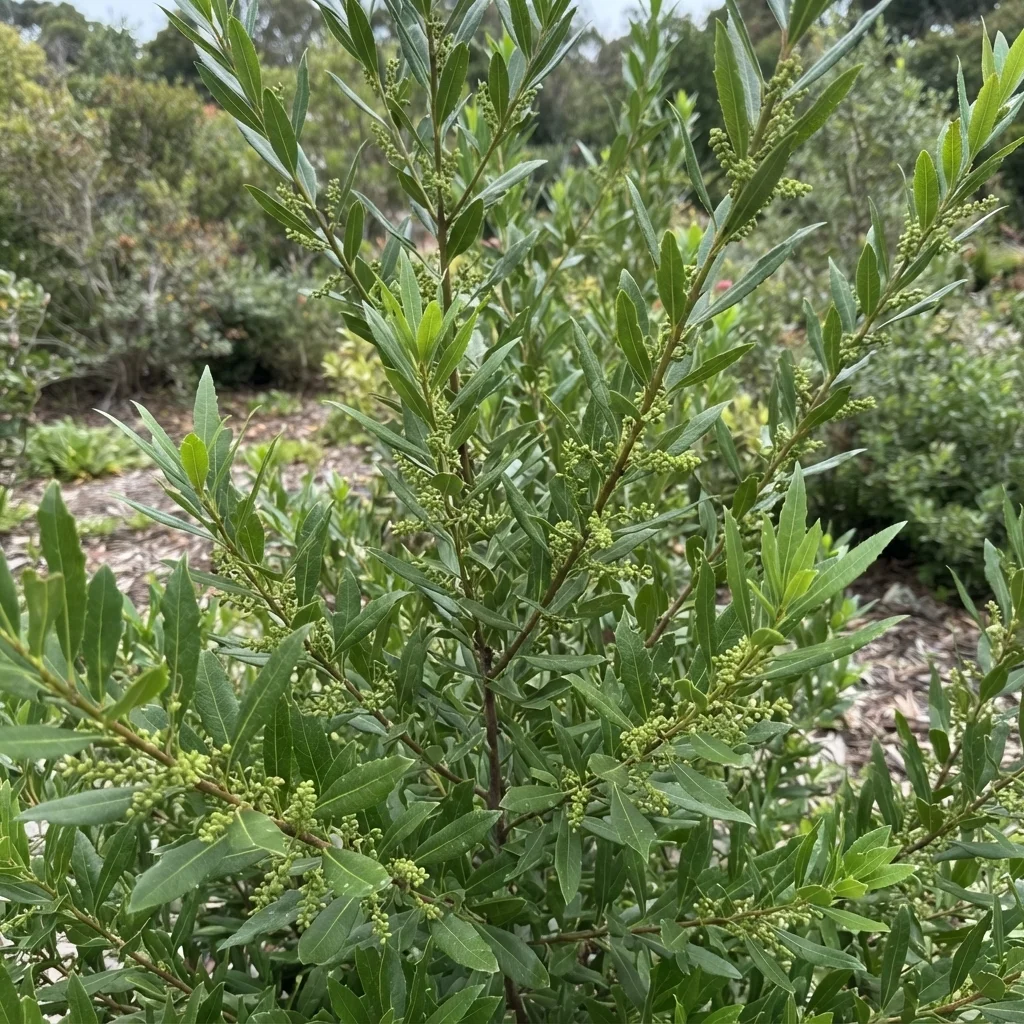
Keep exploring
Explore the genus
Hardy in your zone?
Grow Wax Myrtle with confidence
See it in a design of your actual yard, get zone-matched care reminders, and track it season by season in your garden journal.