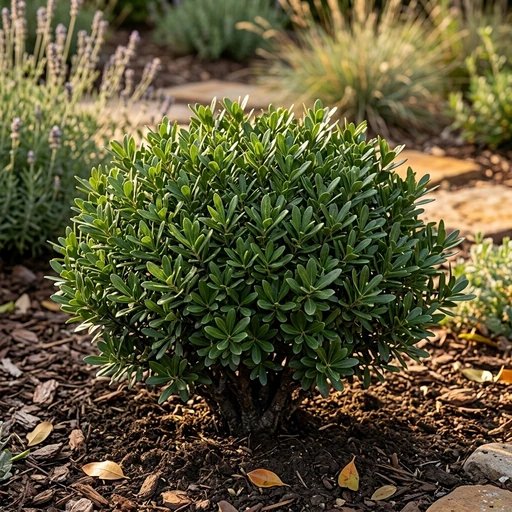
Species
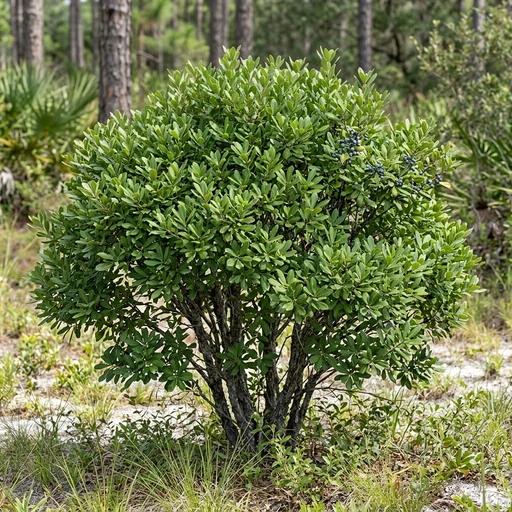 Morella ceriferaWax Myrtle
The Story
Plant Bio
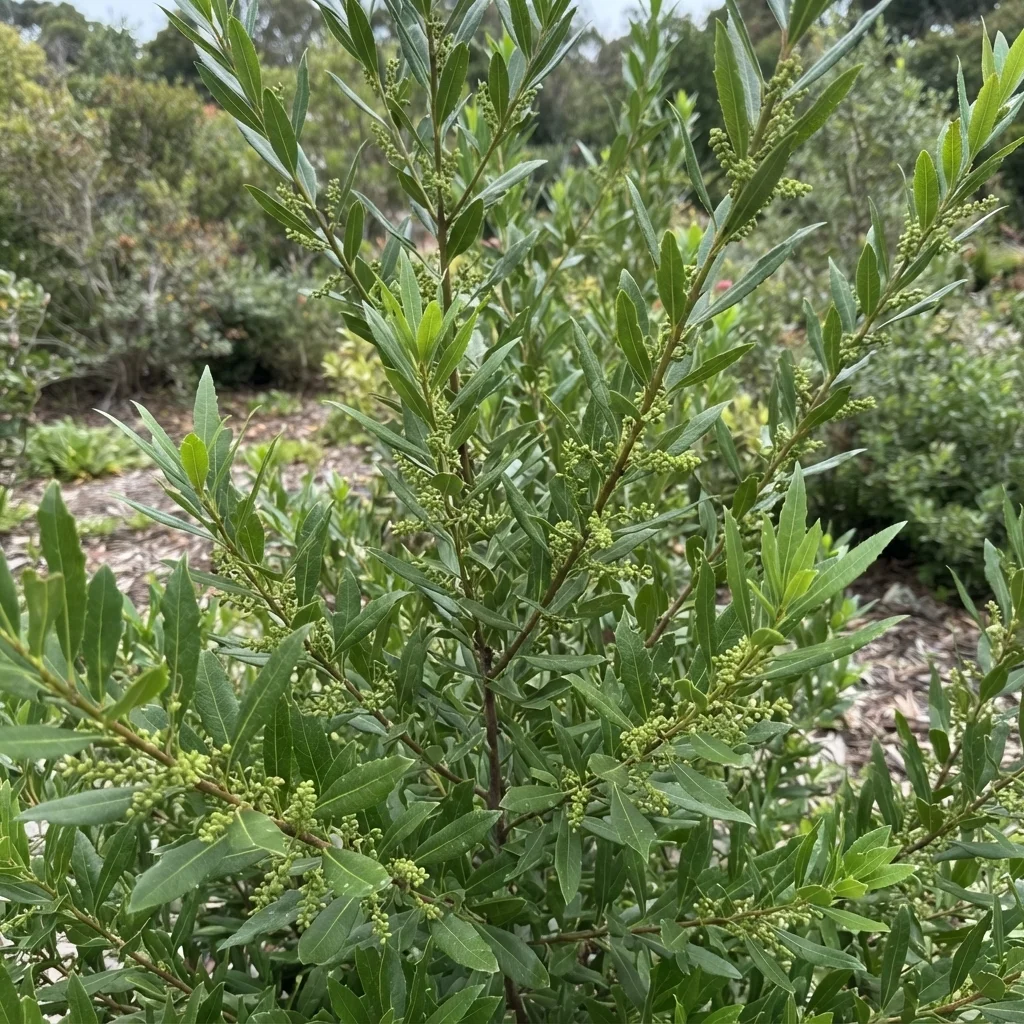
Morella cerifera (formerly Myrica cerifera), or Wax Myrtle, is a fast-growing, nitrogen-fixing native shrub or small tree. Its leaves are aromatic when crushed and it produces waxy, grayish-white berries on female plants.
'Don's Dwarf' is a compact, dwarf selection that maintains a dense, rounded habit without pruning. It is significantly smaller than the species, making it suitable for smaller gardens and foundation plantings.
Uses & Benefits:
Essentials
At a Glance
Plant Type
Shrub
Height
60"
Width
60"
Light
Full Sun, Partial Sun
Zones
7, 8, 9, 10
Water
Low to high
Humidity
Tolerates high humidity
Lifespan
Long-lived shrub
Native To
Eastern and Southern US
Toxicity
Non-toxic
Bloom period
Early spring – Mid-spring
In flower about 2 months of the year
Planting
How to Grow
- Choose a location in full sun or light shade.
- This plant adapts to almost any soil type, wet or dry.
- Dig a hole as deep and twice as wide as the root ball.
- Place the plant in the hole, ensuring it's at the same depth.
- Backfill with the original soil.
- Water well after planting to establish.
Pro Tip
Avoid fertilizing Wax Myrtles; as nitrogen-fixing plants, they create their own and excess fertilizer can harm them.
Keep It Thriving
Care Guide
Do
- Plant it and largely forget it; it's very low maintenance.
- Prune only as needed to shape in late winter.
- Crush a leaf occasionally to enjoy the bayberry scent.
- Plant both male and female plants if you want berries.
Don't
- Don't fertilize the plant.
- Don't plant in deep shade, which can lead to a sparse habit.
- Don't worry about poor soil; it thrives in it.
- Don't over-prune; its natural form is best.
Seasonal Care Calendar
| Task | Jan | Feb | Mar | Apr | May | Jun | Jul | Aug | Sep | Oct | Nov | Dec |
|---|---|---|---|---|---|---|---|---|---|---|---|---|
| Plant | ||||||||||||
| Prune |
In the Garden
Landscape Uses & Companions
Landscape Uses
Multiply
Propagation Methods
Good to Know
Common Questions
Don's Dwarf Wax Myrtle questions
What zones can Don's Dwarf Wax Myrtle grow in?
Don's Dwarf Wax Myrtle is hardy in USDA Zones 7–10. Inside that range it survives winter in the ground; outside it, grow it as an annual or a container plant you protect.
Is Don's Dwarf Wax Myrtle deer resistant?
Yes — Don's Dwarf Wax Myrtle is rated deer-resistant. Deer typically pass it over, though extreme hunger can override any plant's defenses.
When does Don's Dwarf Wax Myrtle bloom?
Don's Dwarf Wax Myrtle typically blooms in early spring through mid-spring. Exact timing shifts a week or two with your zone — Sow's bloom calendar maps it to your garden.
Does Don's Dwarf Wax Myrtle need full sun?
Don's Dwarf Wax Myrtle does best in full sun to part shade. In hot climates, afternoon shade keeps blooms fresher longer.
Is Don's Dwarf Wax Myrtle drought tolerant?
Yes — once established (usually after the first full season), Don's Dwarf Wax Myrtle handles dry spells with minimal watering. Water deeply its first year to build the root system that makes that possible.
More Morella to compare
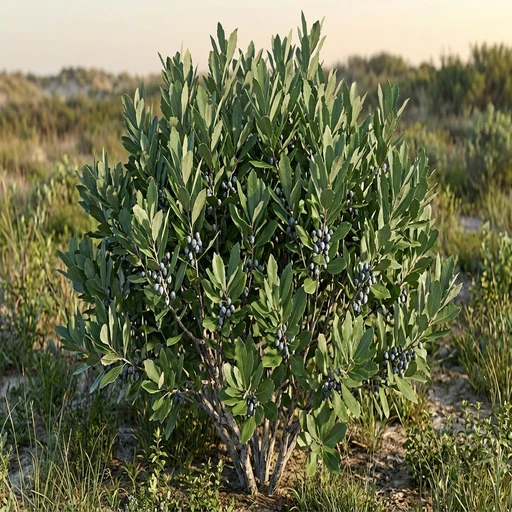
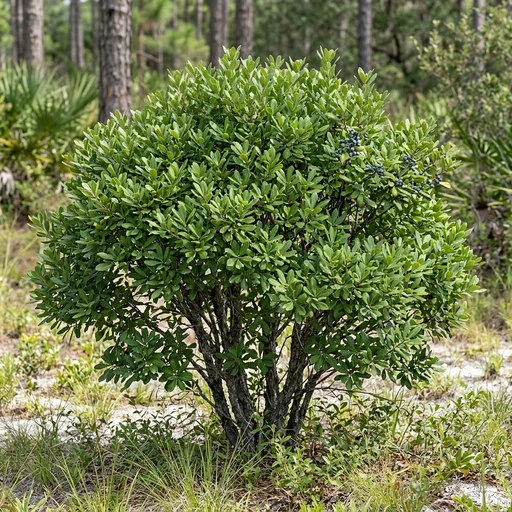
Keep exploring
Explore the genus
Hardy in your zone?
Grow Don's Dwarf Wax Myrtle with confidence
See it in a design of your actual yard, get zone-matched care reminders, and track it season by season in your garden journal.