The Story
Plant Bio
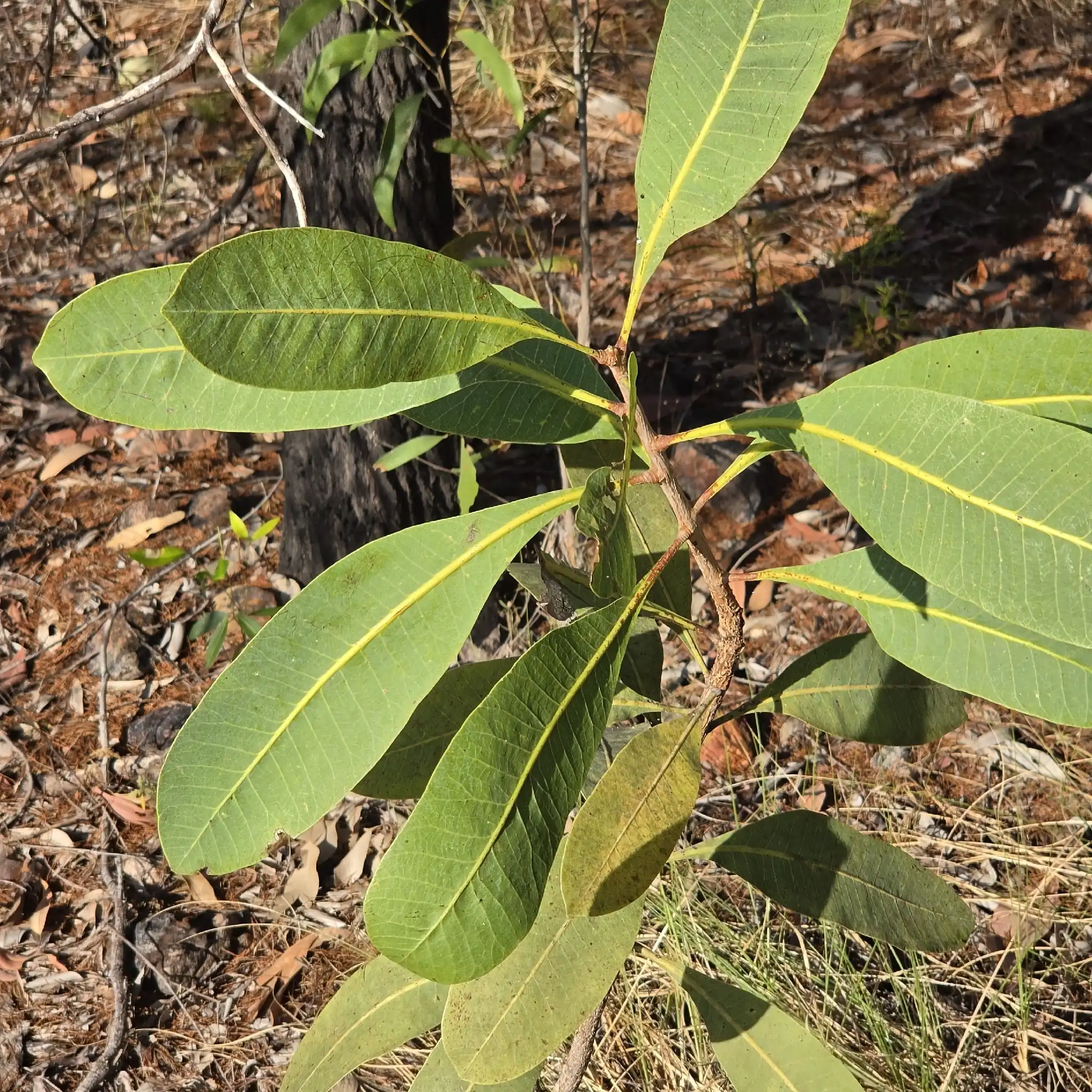
Buchanania obovata is a deciduous tropical understory tree native to northern Australia, characterized by an open, spreading crown and gnarled branches. The thick, leathery leaves are broadly oblong, while the small cream-colored flowers cluster in panicles before producing edible green drupes.
This species is highly drought-tolerant, shedding its foliage to survive extended dry seasons in its native monsoonal habitat. Contact with the sap or fruit rind can cause mild contact dermatitis in sensitive individuals due to its relationship to the mango and cashew family.
Uses & Benefits:
Essentials
At a Glance
Plant Type
Tree
Height
590"
Width
236"
Light
Full Sun, Partial Sun
Water
Low
Humidity
High
Lifespan
Unknown
Native To
Northern Australia
Toxicity
Skin Irritant
Bloom period
Autumn – Spring
In flower about 9 months of the year
Planting
How to Grow
- Select a planting site with full sun to partial shade and exceptionally sharp drainage, such as a sandy or rocky soil mix.
- Water regularly during the active summer growing season to establish the root system, allowing the soil to dry completely between waterings.
- Cease watering almost entirely during the winter dormancy period when the tree sheds its leaves.
- Apply a balanced fertilizer at a very low rate during the start of the active spring growth phase.
Pro Tip
Respect the natural dry-season dormancy by withholding water when the tree drops its leaves; overwatering during this period combined with poor drainage leads to root rot.
Keep It Thriving
Care Guide
Do
- Provide excellent drainage by planting in skeletal, sandy, or rocky soils.
- Allow the plant to go dry and drop its leaves during its natural winter dormancy.
- Protect the tree from any exposure to frost or cold temperatures below 50°F.
Don't
- Do not overwater during the deciduous dormant phase.
- Do not prune heavily into old, leafless wood, as regrowth is slow and patchy.
- Do not plant in heavy clay or poorly drained soils.
Seasonal Care Calendar
| Task | Jan | Feb | Mar | Apr | May | Jun | Jul | Aug | Sep | Oct | Nov | Dec |
|---|---|---|---|---|---|---|---|---|---|---|---|---|
| Fertilize | ||||||||||||
| Pest Check | ||||||||||||
| Prune | ||||||||||||
| Winter Prep |
Watch Out For
Pests & Diseases
Common Pests
Common Diseases
In the Garden
Landscape Uses & Companions
Landscape Uses
Multiply
Propagation Methods
Good to Know
Common Questions
Green Plum questions
When does Green Plum bloom?
Green Plum typically blooms in autumn through spring. Exact timing shifts a week or two with your zone — Sow's bloom calendar maps it to your garden.
Does Green Plum need full sun?
Green Plum does best in full sun to part shade. In hot climates, afternoon shade keeps blooms fresher longer.
Is Green Plum drought tolerant?
Yes — once established (usually after the first full season), Green Plum handles dry spells with minimal watering. Water deeply its first year to build the root system that makes that possible.
Keep exploring
Explore the genus
Grow Green Plum with confidence
See it in a design of your actual yard, get zone-matched care reminders, and track it season by season in your garden journal.