The Story
Plant Bio
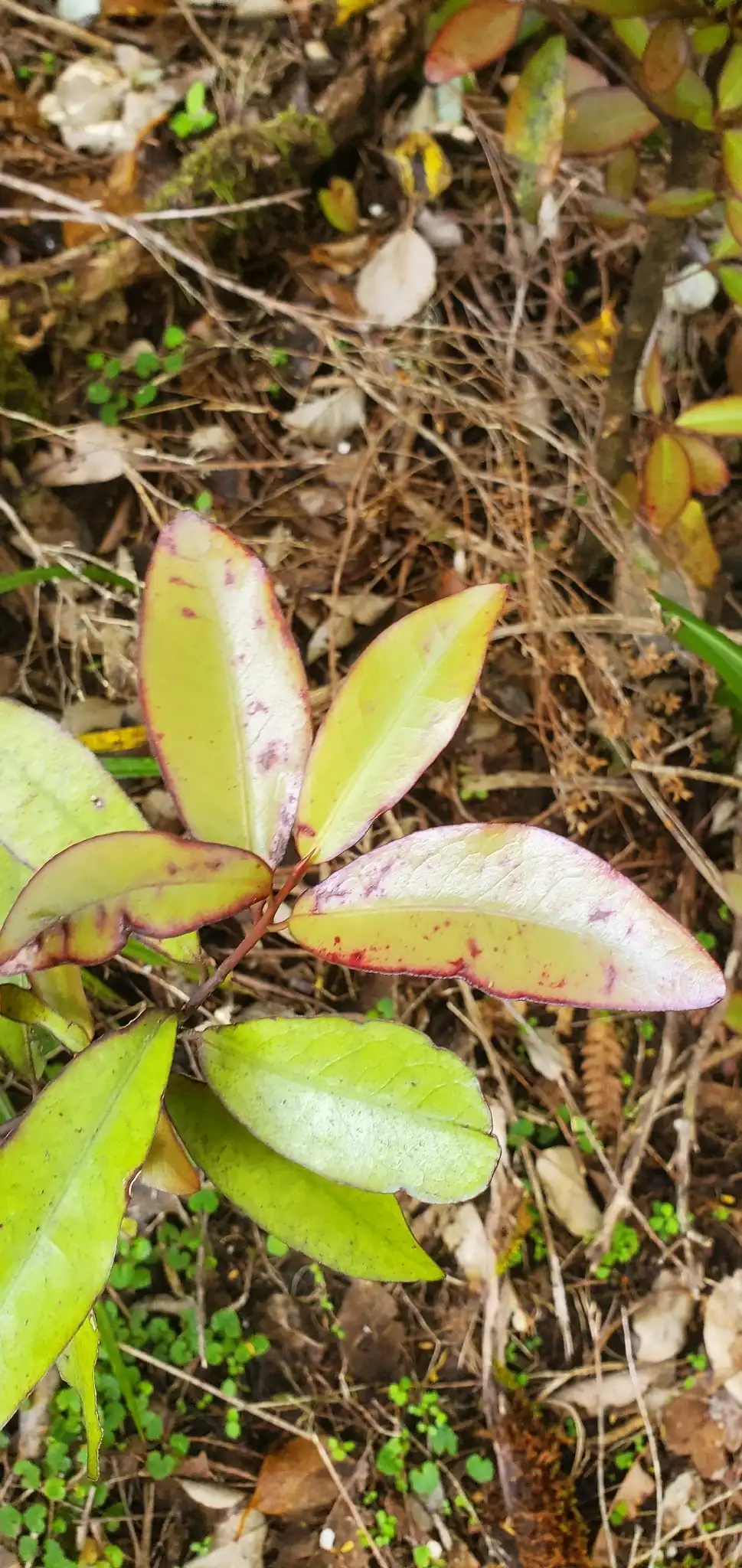
Pseudowintera colorata, the mountain horopito, is an erect, evergreen shrub native to New Zealand that reaches forty to ninety-eight inches in garden cultivation, with leathery, aromatic leaves heavily blotched in dark red, purple, and bronze. The small, greenish-yellow flowers are borne in axillary clusters from spring to early summer, though the primary display comes from the brilliant red of the emerging spring foliage.
The intense red foliar pigmentation is highly responsive to environmental conditions, deepening significantly when the plant is grown in full sun or exposed to cool winter temperatures. The leaves contain polygodial, a pungent compound that imparts a hot, peppery taste and serves as a natural deterrent to browsing herbivores.
Uses & Benefits:
Essentials
At a Glance
Plant Type
Shrub
Height
98"
Width
78"
Light
Full Sun, Partial Sun, Shade
Zones
7, 8, 9
Water
High
Humidity
Moderate to High
Lifespan
Perennial
Native To
New Zealand
Toxicity
Peppery burn if chewed; sap may irritate skin
Bloom period
Spring – Early summer
In flower about 4 months of the year
Planting
How to Grow
- Select a planting site in partial to full shade, or full sun if the soil remains consistently moist and cool.
- Incorporate organic matter to create a humus-rich, acidic to neutral soil structure with excellent drainage.
- Water regularly to maintain even soil moisture, as the plant has low drought tolerance and will die back during dry spells.
- Apply a balanced, slow-release fertilizer in early spring, avoiding high-nitrogen formulas that dull the foliage color.
Pro Tip
Prune strictly to shape or remove dead wood immediately after flowering; cutting back into old, leafless wood results in poor recovery and patchy regrowth.
Keep It Thriving
Care Guide
Do
- Keep the soil consistently moist but well-drained to prevent root rot.
- Provide shelter from direct, scorching coastal winds.
- Grow in full sun only if soil moisture can be reliably maintained to maximize red foliage color.
Don't
- Do not hard-prune back into old, leafless, dormant wood.
- Do not allow the soil to dry out completely during summer dry spells.
- Do not apply heavy, high-nitrogen fertilizers which ruin the intense leaf coloration.
- Do not let the plant sit in stagnant, waterlogged soil.
Seasonal Care Calendar
| Task | Jan | Feb | Mar | Apr | May | Jun | Jul | Aug | Sep | Oct | Nov | Dec |
|---|---|---|---|---|---|---|---|---|---|---|---|---|
| Fertilize | ||||||||||||
| Mulch | ||||||||||||
| Pest Check | ||||||||||||
| Prune |
Watch Out For
Pests & Diseases
Common Pests
Common Diseases
In the Garden
Landscape Uses & Companions
Landscape Uses
Multiply
Propagation Methods
Good to Know
Common Questions
Mountain Horopito questions
What zones can Mountain Horopito grow in?
Mountain Horopito is hardy in USDA Zones 7–9. Inside that range it survives winter in the ground; outside it, grow it as an annual or a container plant you protect.
Is Mountain Horopito deer resistant?
Yes — Mountain Horopito is rated deer-resistant. Deer typically pass it over, though extreme hunger can override any plant's defenses.
When does Mountain Horopito bloom?
Mountain Horopito typically blooms in spring through early summer. Exact timing shifts a week or two with your zone — Sow's bloom calendar maps it to your garden.
Does Mountain Horopito need full sun?
Mountain Horopito does best in full sun to part shade. In hot climates, afternoon shade keeps blooms fresher longer.
Keep exploring
Explore the genus
Hardy in your zone?
Grow Mountain Horopito with confidence
See it in a design of your actual yard, get zone-matched care reminders, and track it season by season in your garden journal.