The Story
Plant Bio
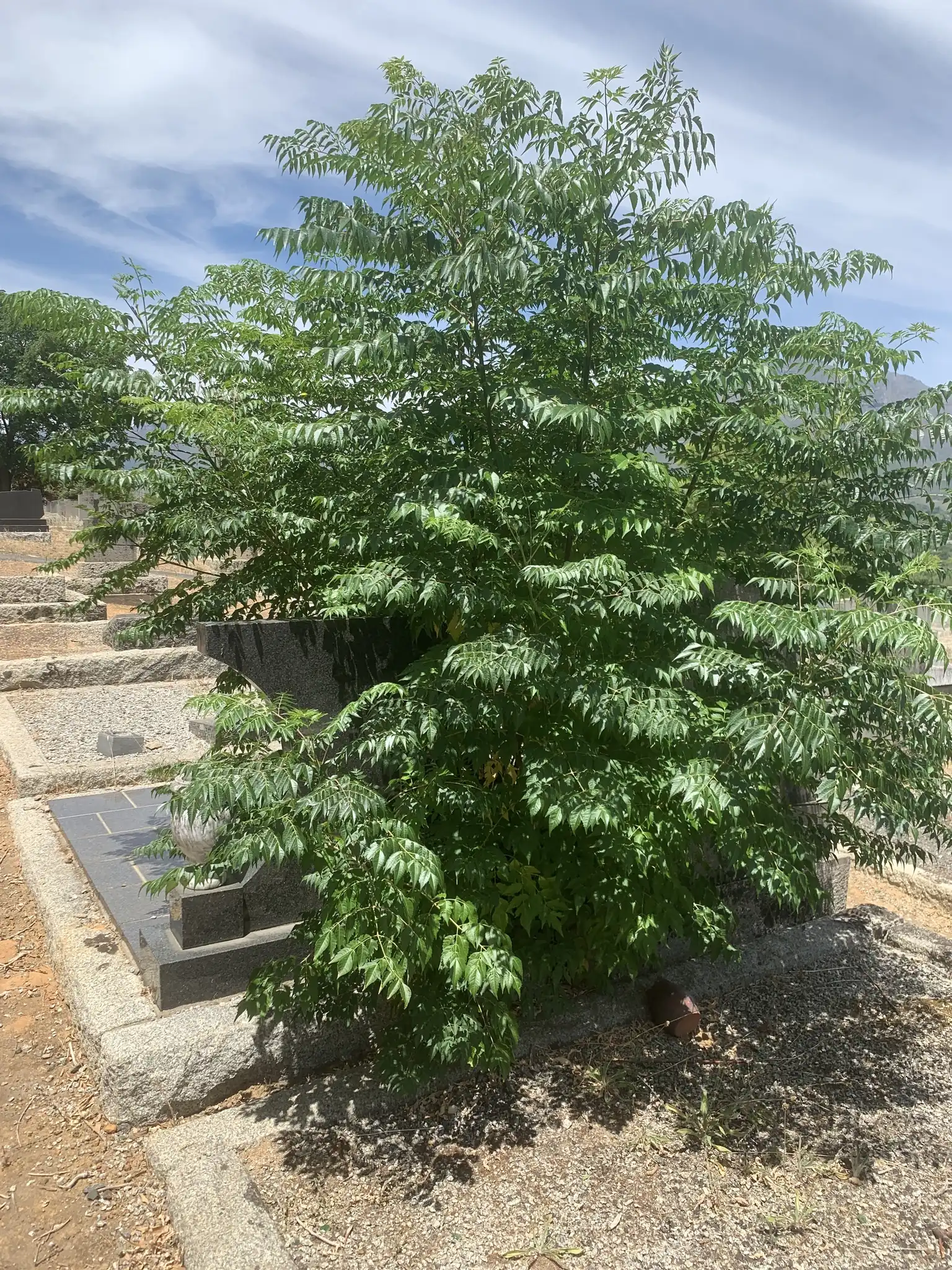
Melia azedarach is a fast-growing deciduous tree with a rounded, spreading crown of coarse, stiff branches and large, bipinnate compound leaves. In spring, it produces fragrant panicles of pale purple flowers with contrasting dark purple central staminal tubes.
The species is highly drought-tolerant once established and adapts to a wide range of soil types and pH levels. It produces abundant yellow berries that persist on the tree after leaf drop, though all parts of the plant are highly toxic if ingested.
Uses & Benefits:
Essentials
At a Glance
Plant Type
Tree
Height
472"
Width
276"
Light
Full Sun, Partial Sun
Zones
7, 8, 9, 10
Water
Low
Humidity
High
Lifespan
Moderate
Native To
Asia and Australia
Toxicity
Highly toxic to humans and pets
Bloom period
Spring – Early summer
In flower about 4 months of the year
Planting
How to Grow
- Plant in a location that receives full sun to partial shade with well-drained soil.
- Water regularly during the first growing season to establish a deep, resilient root system.
- Prune young trees sparingly in late winter to establish a strong central leader and remove competing branches.
- Rake and dispose of fallen fruit and leaves seasonally to prevent litter accumulation and accidental ingestion by pets.
Pro Tip
Avoid topping or over-pruning the canopy of young trees; this destroys the natural umbrella form and triggers a dense flush of weak, upright water-sprouts.
Keep It Thriving
Care Guide
Do
- Prune young trees during winter dormancy to establish a single trunk.
- Plant in well-drained soil to prevent root rot.
- Clean up fallen berries to avoid safety hazards for pets and livestock.
Don't
- Do not top or heavily pollard mature branches, which causes weak regrowth.
- Do not plant near walkways, gutters, or driveways where dropping fruit creates a slick mess.
- Do not apply heavy fertilizer, as established trees require minimal supplemental nutrients.
Seasonal Care Calendar
| Task | Jan | Feb | Mar | Apr | May | Jun | Jul | Aug | Sep | Oct | Nov | Dec |
|---|---|---|---|---|---|---|---|---|---|---|---|---|
| Pest Check | ||||||||||||
| Propagate | ||||||||||||
| Prune | ||||||||||||
| Spring Cleanup |
Watch Out For
Pests & Diseases
Common Pests
Common Diseases
In the Garden
Landscape Uses & Companions
Landscape Uses
Companion Plants
Multiply
Propagation Methods
Good to Know
Common Questions
Chinaberry questions
What zones can Chinaberry grow in?
Chinaberry is hardy in USDA Zones 7–10. Inside that range it survives winter in the ground; outside it, grow it as an annual or a container plant you protect.
Is Chinaberry deer resistant?
Yes — Chinaberry is rated deer-resistant. Deer typically pass it over, though extreme hunger can override any plant's defenses.
When does Chinaberry bloom?
Chinaberry typically blooms in spring through early summer. Exact timing shifts a week or two with your zone — Sow's bloom calendar maps it to your garden.
Does Chinaberry need full sun?
Chinaberry does best in full sun to part shade. In hot climates, afternoon shade keeps blooms fresher longer.
Is Chinaberry drought tolerant?
Yes — once established (usually after the first full season), Chinaberry handles dry spells with minimal watering. Water deeply its first year to build the root system that makes that possible.
Keep exploring
Explore the genus
Hardy in your zone?
Grow Chinaberry with confidence
See it in a design of your actual yard, get zone-matched care reminders, and track it season by season in your garden journal.