The Story
Plant Bio
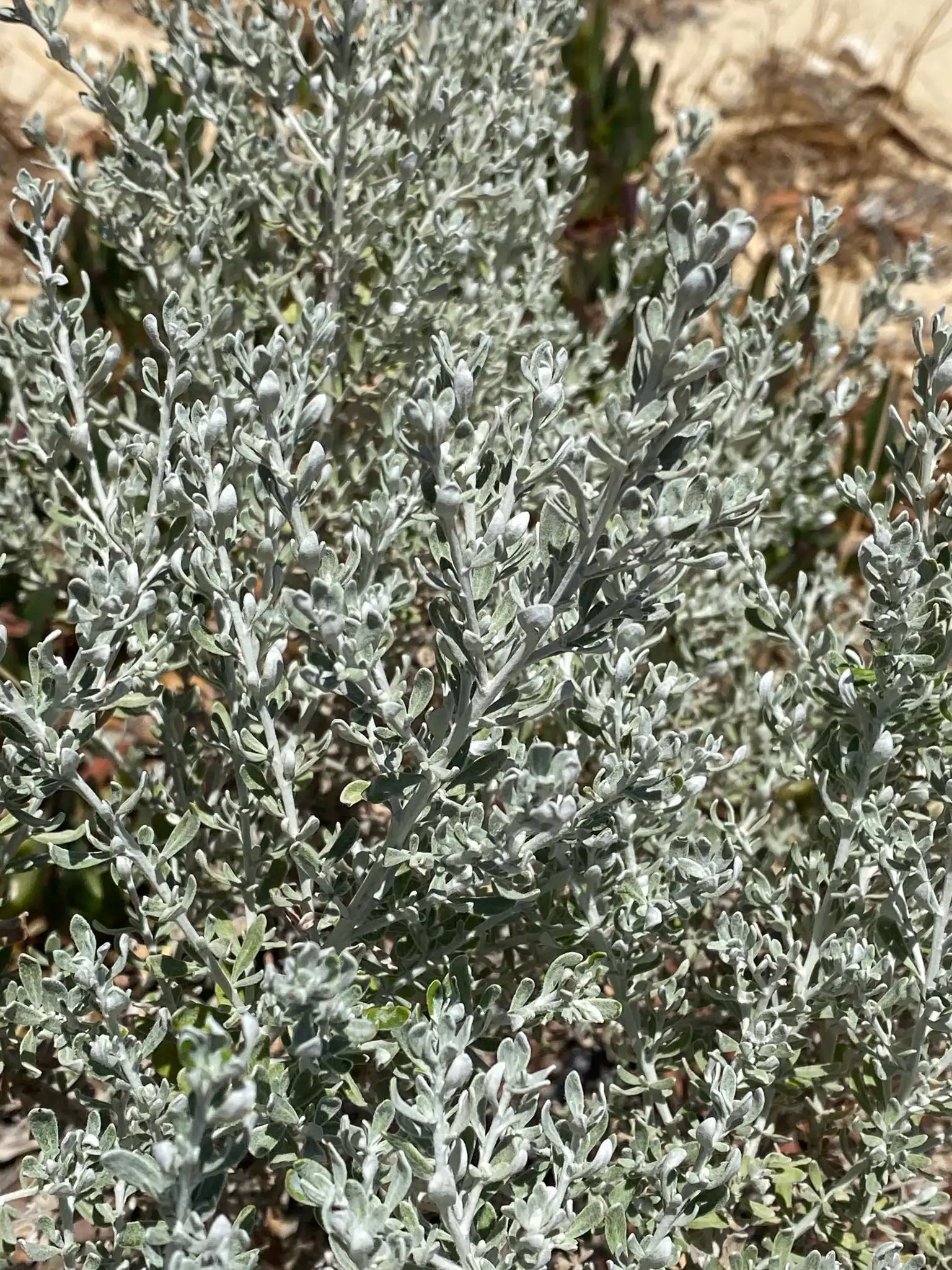
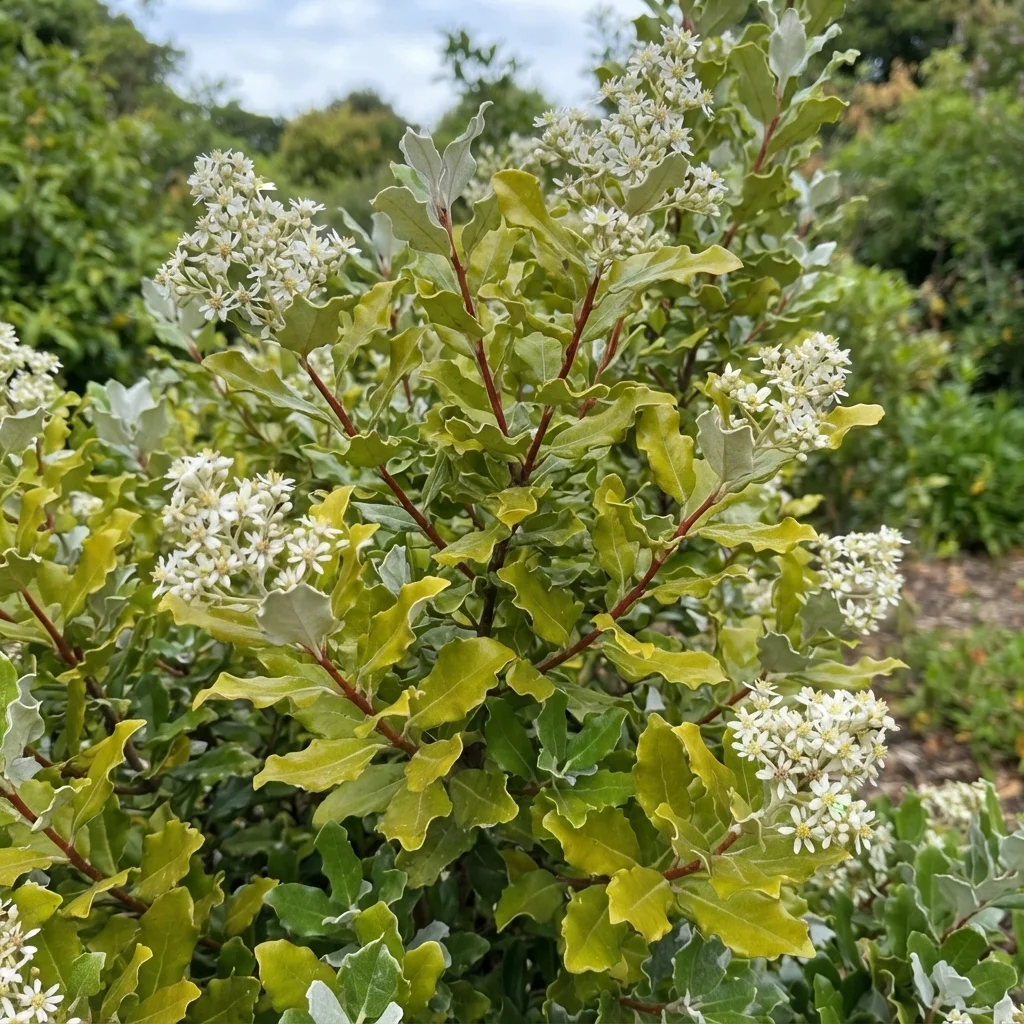
Olearia axillaris, commonly known as coast daisy-bush, is an erect, densely branched evergreen shrub native to coastal Australia, reaching heights of up to ten feet. Its narrow, linear leaves are distinctly discolorous, showing a green upper surface and a densely felted, woolly white underside that releases a rosemary-like aroma when crushed.
The species is distinguished by its extreme tolerance to salt spray and maritime winds, making it a primary colonizer of coastal sand dunes. Small, cream-white flower heads with yellow centers sit directly in the leaf axils, appearing continuously from late spring through winter.
Uses & Benefits:
Essentials
At a Glance
Plant Type
Shrub
Height
118"
Width
98"
Light
Full Sun
Zones
9, 10
Water
Low
Humidity
High
Lifespan
Perennial
Native To
Australia
Toxicity
Minor toxicity to pets if ingested in large quantities
Bloom period
Late spring – Winter
In flower about 10 months of the year
Planting
How to Grow
- Select a planting site in full sun with sandy, light, or gravelly soil that drains rapidly.
- Dig a hole twice as wide as the root ball but no deeper, ensuring the crown sits slightly above the surrounding soil level.
- Water deeply immediately after planting to settle the soil, then withhold water until the top few inches of soil dry out completely.
- Avoid adding organic compost, heavy mulches, or high-phosphorus fertilizers to the planting hole.
Pro Tip
Provide exceptionally sharp, sandy drainage and full, unshaded sun; planting in heavy clay or rich, organic garden beds causes rapid root rot.
Keep It Thriving
Care Guide
Do
- Grow in full, unshaded sun to maintain a compact, bushy habit.
- Ensure the soil is exceptionally well-drained, especially during wet winter months.
- Prune lightly a few times a year to encourage dense, branching growth.
Don't
- Do not plant in heavy clay, waterlogged soils, or low-lying areas that collect water.
- Do not cut back severely into old, thick, leafless wood, as it will fail to shoot back.
- Do not overwater or apply heavy organic fertilizers.
Seasonal Care Calendar
| Task | Jan | Feb | Mar | Apr | May | Jun | Jul | Aug | Sep | Oct | Nov | Dec |
|---|---|---|---|---|---|---|---|---|---|---|---|---|
| Mulch | ||||||||||||
| Pest Check | ||||||||||||
| Plant | ||||||||||||
| Prune |
Watch Out For
Pests & Diseases
Common Pests
Common Diseases
In the Garden
Landscape Uses & Companions
Landscape Uses
Companion Plants
Multiply
Propagation Methods
Good to Know
Common Questions
Coast Daisy-bush questions
What zones can Coast Daisy-bush grow in?
Coast Daisy-bush is hardy in USDA Zones 9–10. Inside that range it survives winter in the ground; outside it, grow it as an annual or a container plant you protect.
When does Coast Daisy-bush bloom?
Coast Daisy-bush typically blooms in late spring through winter. Exact timing shifts a week or two with your zone — Sow's bloom calendar maps it to your garden.
Does Coast Daisy-bush need full sun?
Coast Daisy-bush does best in full sun (6+ hours).
Is Coast Daisy-bush drought tolerant?
Yes — once established (usually after the first full season), Coast Daisy-bush handles dry spells with minimal watering. Water deeply its first year to build the root system that makes that possible.
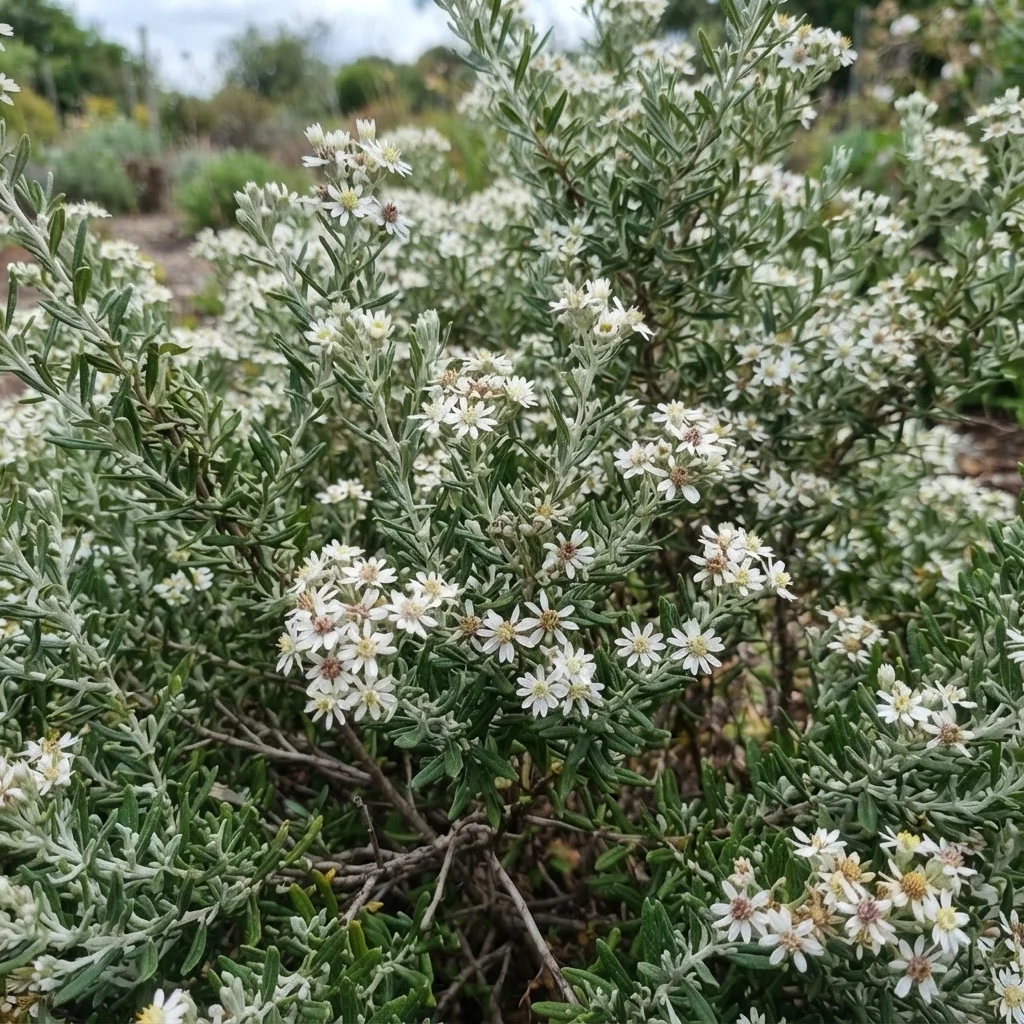
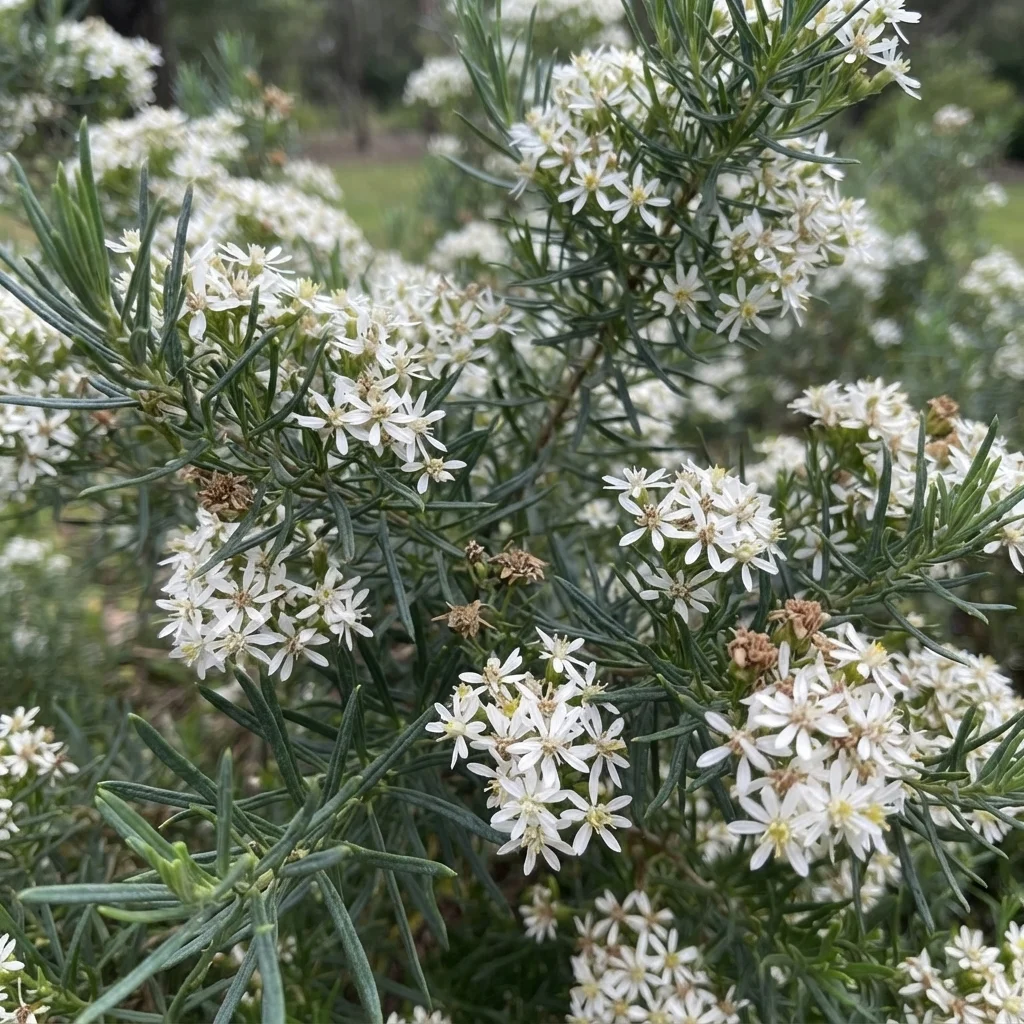
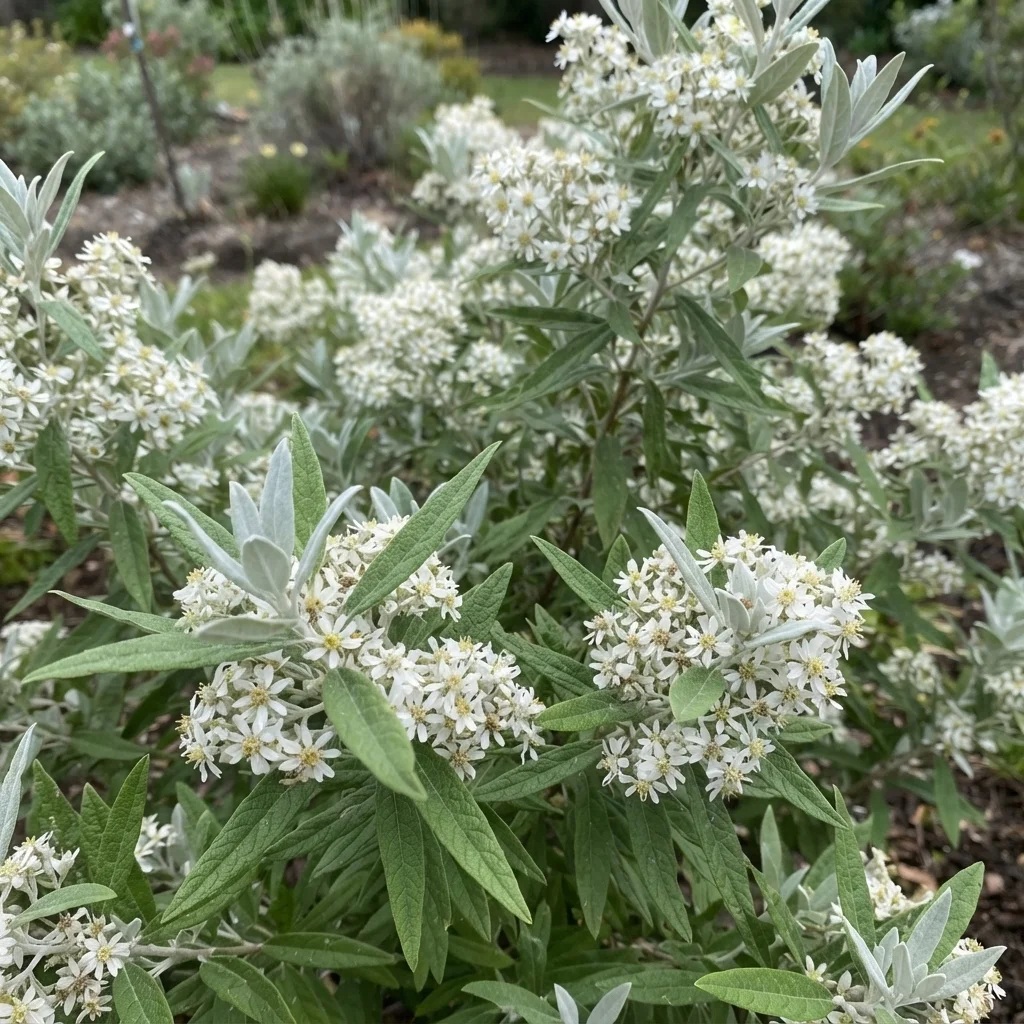
More Olearia to compare
Keep exploring
Explore the genus
Hardy in your zone?
Grow Coast Daisy-bush with confidence
See it in a design of your actual yard, get zone-matched care reminders, and track it season by season in your garden journal.