The Story
Plant Bio
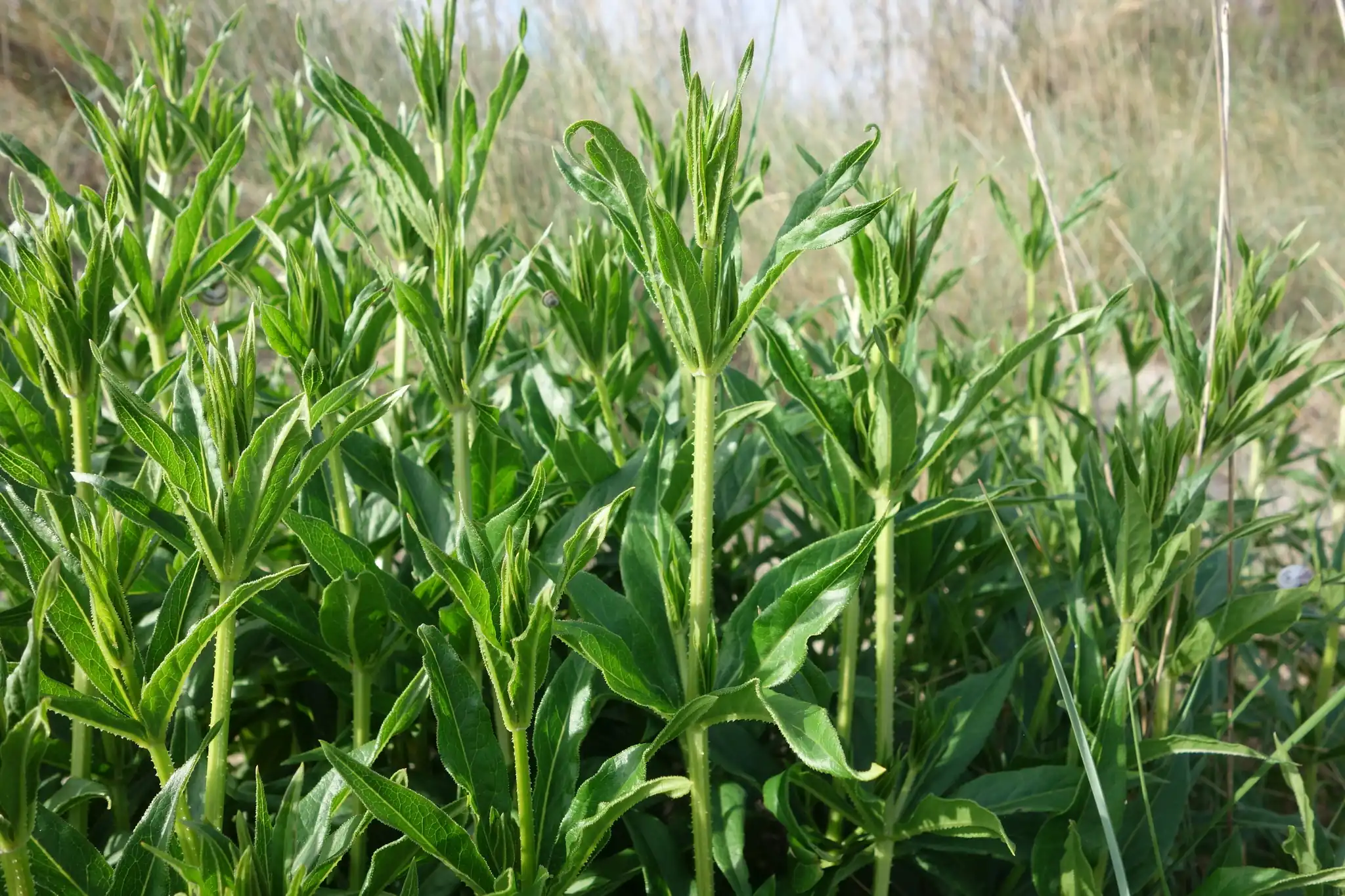
Rubia tinctorum, commonly known as madder, is a scrambling herbaceous perennial native to Eurasia, historically cultivated for the red dye extracted from its roots. The plant climbs using tiny, backward-pointing prickles along its square stems, which hold whorls of star-like, semi-evergreen leaves.
This species is distinguished by its extensive, thick red-brown rhizomatous root system that yields the classic alizarin dye. In summer, it produces loose clusters of tiny, pale yellow to greenish-yellow flowers that attract generalist pollinators.
Uses & Benefits:
Essentials
At a Glance
Plant Type
Perennial
Height
60"
Width
36"
Light
Full Sun, Partial Sun
Zones
6, 7, 8, 9
Water
Moderate
Humidity
Moderate
Lifespan
Perennial
Native To
Eurasia
Toxicity
Skin Irritant / Toxic if Ingested
Bloom period
Summer
In flower about 3 months of the year
Planting
How to Grow
- Select a planting site in full sun to partial shade with deep, well-drained loamy soil.
- Incorporate agricultural lime or chalk into the soil if the pH is acidic to encourage dye pigment development.
- Install a physical root barrier or plant in a large, dedicated bed to contain the aggressively spreading underground rhizomes.
- Provide a trellis, fence, or neighboring sturdy plants to support the scrambling, prickly stems as they climb.
Pro Tip
To maximize the concentration of red pigments in the roots, grow madder in neutral to alkaline, lime-rich soil and allow the root system to mature undisturbed for at least three to five years before harvesting.
Keep It Thriving
Care Guide
Do
- Keep the soil consistently moist but well-drained during the first two years of establishment.
- Prune back dead or unruly stems to the ground in late winter or early spring.
- Apply a light topdressing of organic compost or balanced organic matter annually.
Don't
- Do not over-fertilize, as excess nitrogen promotes lush foliage at the expense of root development.
- Do not plant in heavy, poorly drained clay soils where standing water will cause root rot.
- Do not harvest the roots prematurely; wait at least three years for the dye compounds to concentrate.
Seasonal Care Calendar
| Task | Jan | Feb | Mar | Apr | May | Jun | Jul | Aug | Sep | Oct | Nov | Dec |
|---|---|---|---|---|---|---|---|---|---|---|---|---|
| Fertilize | ||||||||||||
| Harvest | ||||||||||||
| Propagate | ||||||||||||
| Prune |
Watch Out For
Pests & Diseases
Common Pests
Common Diseases
In the Garden
Landscape Uses & Companions
Landscape Uses
Companion Plants
Multiply
Propagation Methods
Good to Know
Common Questions
Common Madder questions
What zones can Common Madder grow in?
Common Madder is hardy in USDA Zones 6–9. Inside that range it survives winter in the ground; outside it, grow it as an annual or a container plant you protect.
Is Common Madder deer resistant?
Not reliably. Deer may browse Common Madder, especially tender spring growth — plan on repellents or fencing where pressure is high.
When does Common Madder bloom?
Common Madder typically blooms in summer through summer. Exact timing shifts a week or two with your zone — Sow's bloom calendar maps it to your garden.
Does Common Madder need full sun?
Common Madder does best in full sun to part shade. In hot climates, afternoon shade keeps blooms fresher longer.
Keep exploring
Explore the genus
Hardy in your zone?
Grow Common Madder with confidence
See it in a design of your actual yard, get zone-matched care reminders, and track it season by season in your garden journal.