The Story
Plant Bio
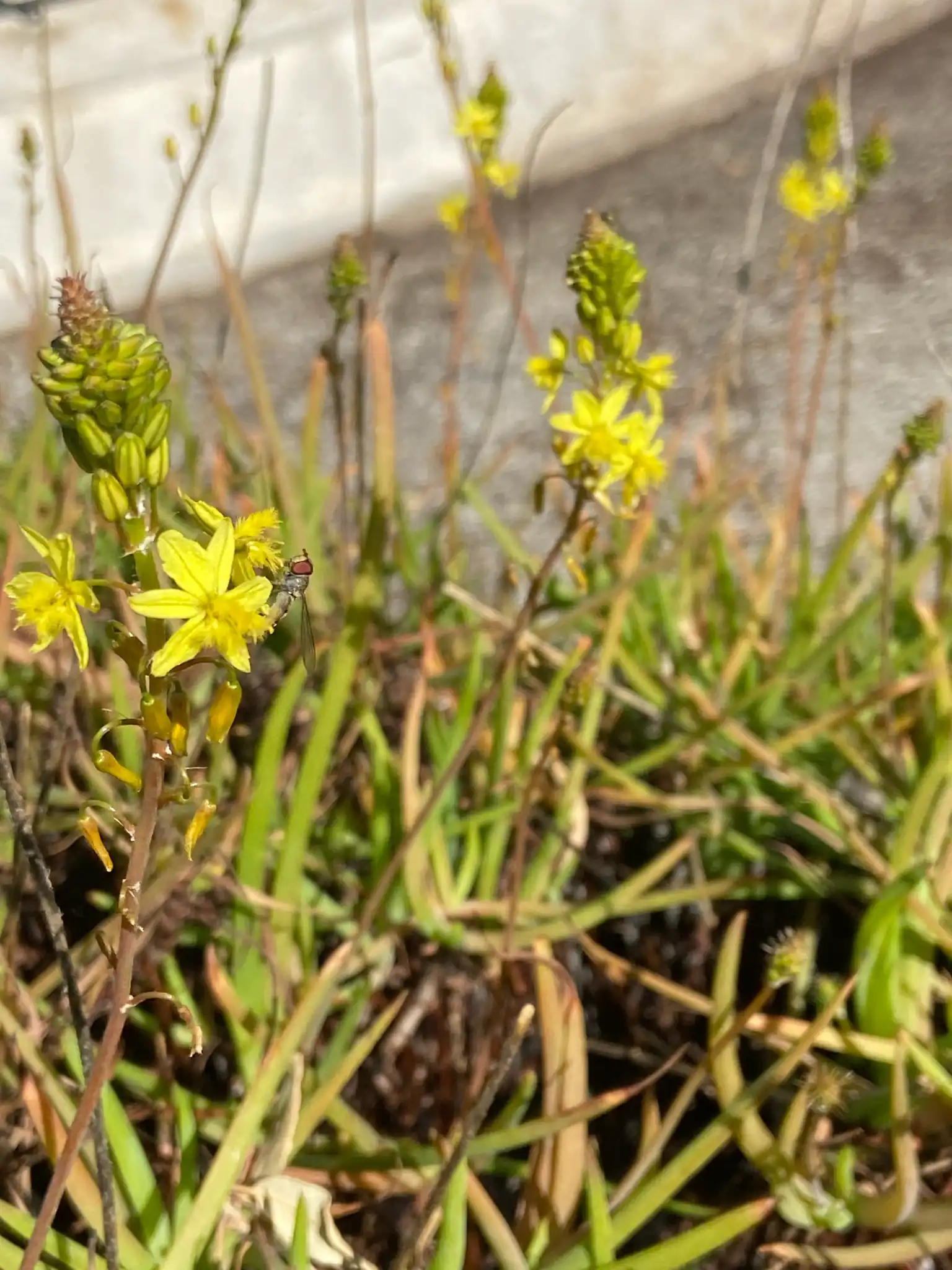
Bulbine frutescens is a succulent, clump-forming perennial native to South Africa, characterized by its fleshy, linear, blue-green leaves arranged in rosettes. Slender, terminal racemes rise above the foliage from spring through fall, bearing small, star-shaped flowers with distinctive bearded yellow stamens.
This species is highly drought-tolerant once established and thrives in hot, dry conditions where other perennials struggle. The gel-like sap within its succulent leaves is traditionally used to soothe minor skin irritations similarly to Aloe vera.
Uses & Benefits:
Essentials
At a Glance
Plant Type
Perennial
Height
24"
Width
48"
Light
Full Sun, Partial Sun
Zones
8, 9, 10
Water
Low
Humidity
Moderate
Lifespan
Perennial
Native To
South Africa
Toxicity
Non-toxic
Bloom period
Spring – Fall
In flower about 9 months of the year
Planting
How to Grow
- Select a planting site in full sun to partial shade with exceptionally well-draining sandy or loamy soil.
- Dig a hole twice the width of the root ball and plant at the same depth as the nursery container, ensuring the crown is not buried.
- Water moderately after planting to settle the soil, then reduce frequency, allowing the soil to dry completely between waterings.
- Apply a light, balanced, slow-release fertilizer in spring, avoiding heavy feeding which can cause weak, floppy growth.
Pro Tip
Avoid shearing the plant back aggressively like an ornamental grass, as this weakens the branching succulent stems; instead, selectively trim spent flower stalks to the base and remove only frost-damaged stems in spring.
Keep It Thriving
Care Guide
Do
- Plant in raised beds or sandy mixes to ensure sharp drainage.
- Deadhead spent flower spikes to the base to encourage continuous blooming.
- Protect the root zone with light mulch, keeping it clear of the plant's crown.
Don't
- Do not overwater or plant in heavy, poorly drained clay soils, which rapidly induces root rot.
- Do not cut back into old, leafless woody stem bases when pruning.
- Do not grow in low-light indoor environments expecting survival without direct sun.
Seasonal Care Calendar
| Task | Jan | Feb | Mar | Apr | May | Jun | Jul | Aug | Sep | Oct | Nov | Dec |
|---|---|---|---|---|---|---|---|---|---|---|---|---|
| Deadhead | ||||||||||||
| Divide | ||||||||||||
| Fertilize | ||||||||||||
| Pest Check | ||||||||||||
| Spring Cleanup |
Watch Out For
Pests & Diseases
Common Pests
Common Diseases
In the Garden
Landscape Uses & Companions
Landscape Uses
Companion Plants
Multiply
Propagation Methods
Good to Know
Common Questions
Bulbine Lily questions
What zones can Bulbine Lily grow in?
Bulbine Lily is hardy in USDA Zones 8–10. Inside that range it survives winter in the ground; outside it, grow it as an annual or a container plant you protect.
Is Bulbine Lily deer resistant?
Not reliably. Deer may browse Bulbine Lily, especially tender spring growth — plan on repellents or fencing where pressure is high.
When does Bulbine Lily bloom?
Bulbine Lily typically blooms in spring through fall. Exact timing shifts a week or two with your zone — Sow's bloom calendar maps it to your garden.
Does Bulbine Lily need full sun?
Bulbine Lily does best in full sun to part shade. In hot climates, afternoon shade keeps blooms fresher longer.
Is Bulbine Lily drought tolerant?
Yes — once established (usually after the first full season), Bulbine Lily handles dry spells with minimal watering. Water deeply its first year to build the root system that makes that possible.
Keep exploring
Explore the genus
Hardy in your zone?
Grow Bulbine Lily with confidence
See it in a design of your actual yard, get zone-matched care reminders, and track it season by season in your garden journal.