The Story
Plant Bio
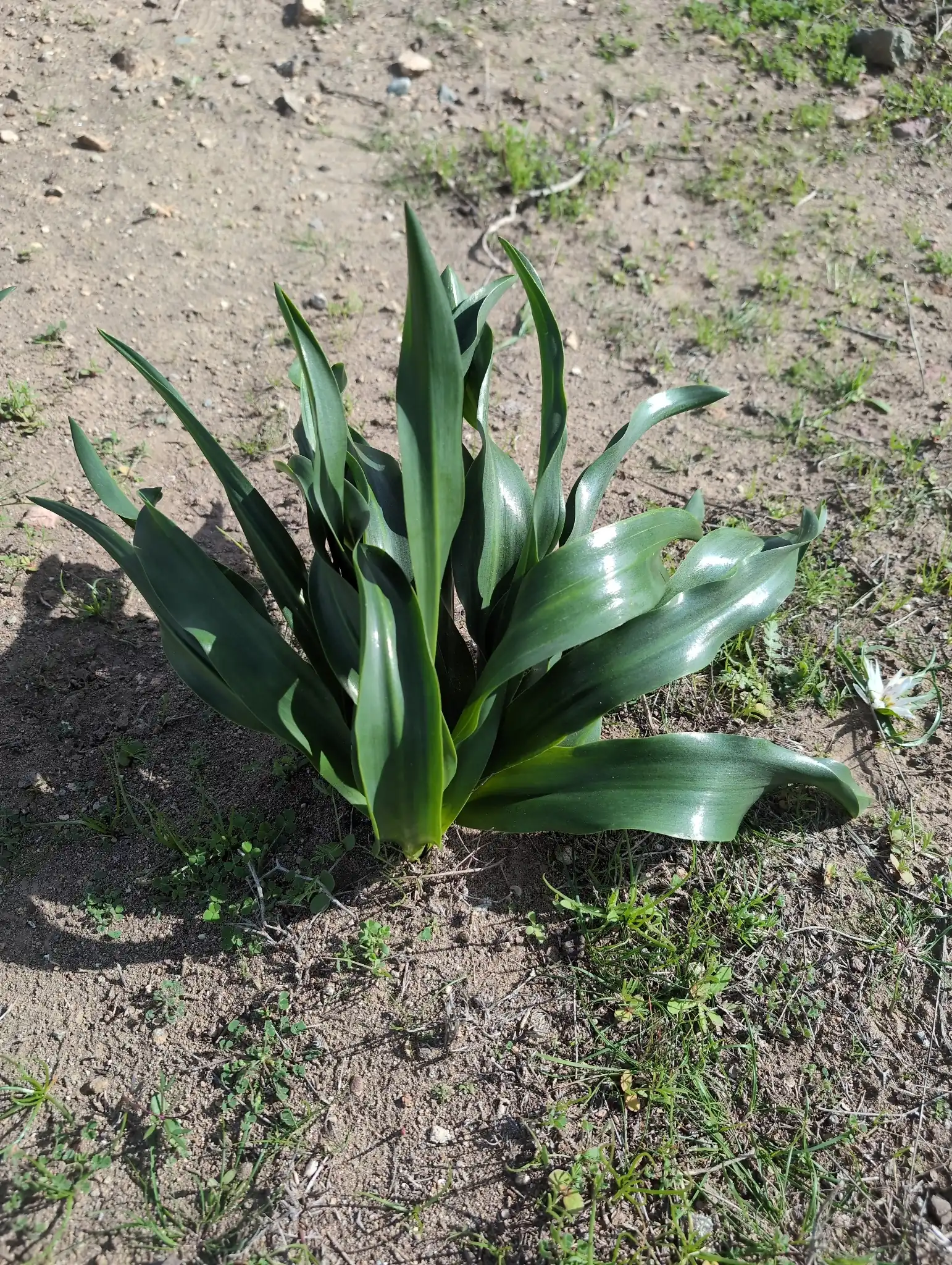
Drimia maritima, commonly known as sea squill, is a massive geophytic bulb native to the Mediterranean Basin that produces a dramatic seasonal cycle of foliage and flowers. During the cool winter months, the partially exposed bulb supports a lush basal rosette of strap-shaped, glaucous blue-green leaves that die back completely by early summer.
In late summer, tall, rigid, unbranched flower spikes emerge from the dormant bulb, reaching up to seven feet high. These towering cylindrical racemes carry hundreds of small, star-shaped white flowers that open progressively from the bottom upward.
Uses & Benefits:
Essentials
At a Glance
Plant Type
Bulb Corm Tuber
Height
83"
Width
35"
Light
Full Sun, Partial Sun
Zones
8, 9, 10
Water
Low
Humidity
Low to Moderate
Lifespan
Perennial
Native To
Mediterranean Basin, Africa
Toxicity
Highly toxic if ingested; sap is a skin irritant
Bloom period
Late summer – Autumn
In flower about 4 months of the year
Planting
How to Grow
- Select a planting site in full sun with exceptionally well-drained sandy, loamy, or rocky soil.
- Dig a shallow hole and position the bulb so that the top one-third to one-half sits exposed above the soil surface.
- Water sparingly during the active fall and winter growing season, allowing the soil to dry between waterings.
- Withhold all supplemental water during the summer dormant period when the foliage has died back completely.
Pro Tip
Plant the massive bulb with the top one-third to one-half completely exposed above the soil line, and withhold all summer irrigation to prevent fatal bulb rot during dormancy.
Keep It Thriving
Care Guide
Do
- Allow the foliage to turn completely yellow and dry naturally in early summer before removing it.
- Wear gloves when handling the bulbs or foliage to protect skin from the irritating, acrid sap.
- Leave the bulbs undisturbed in the ground for years, as they resent root disruption.
Don't
- Do not bury the bulb completely beneath the soil surface, which triggers rot.
- Do not water the plant during its summer dormancy period.
- Do not prune or cut back green, active leaves prematurely.
Seasonal Care Calendar
| Task | Jan | Feb | Mar | Apr | May | Jun | Jul | Aug | Sep | Oct | Nov | Dec |
|---|---|---|---|---|---|---|---|---|---|---|---|---|
| Fertilize | ||||||||||||
| Pest Check | ||||||||||||
| Plant | ||||||||||||
| Prune |
Watch Out For
Pests & Diseases
Common Pests
Common Diseases
In the Garden
Landscape Uses & Companions
Landscape Uses
Multiply
Propagation Methods
Good to Know
Common Questions
Sea Squill questions
What zones can Sea Squill grow in?
Sea Squill is hardy in USDA Zones 8–10. Inside that range it survives winter in the ground; outside it, grow it as an annual or a container plant you protect.
Is Sea Squill deer resistant?
Yes — Sea Squill is rated deer-resistant. Deer typically pass it over, though extreme hunger can override any plant's defenses.
When does Sea Squill bloom?
Sea Squill typically blooms in late summer through autumn. Exact timing shifts a week or two with your zone — Sow's bloom calendar maps it to your garden.
Does Sea Squill need full sun?
Sea Squill does best in full sun to part shade. In hot climates, afternoon shade keeps blooms fresher longer.
Is Sea Squill drought tolerant?
Yes — once established (usually after the first full season), Sea Squill handles dry spells with minimal watering. Water deeply its first year to build the root system that makes that possible.
Keep exploring
Explore the genus
Hardy in your zone?
Grow Sea Squill with confidence
See it in a design of your actual yard, get zone-matched care reminders, and track it season by season in your garden journal.