The Story
Plant Bio
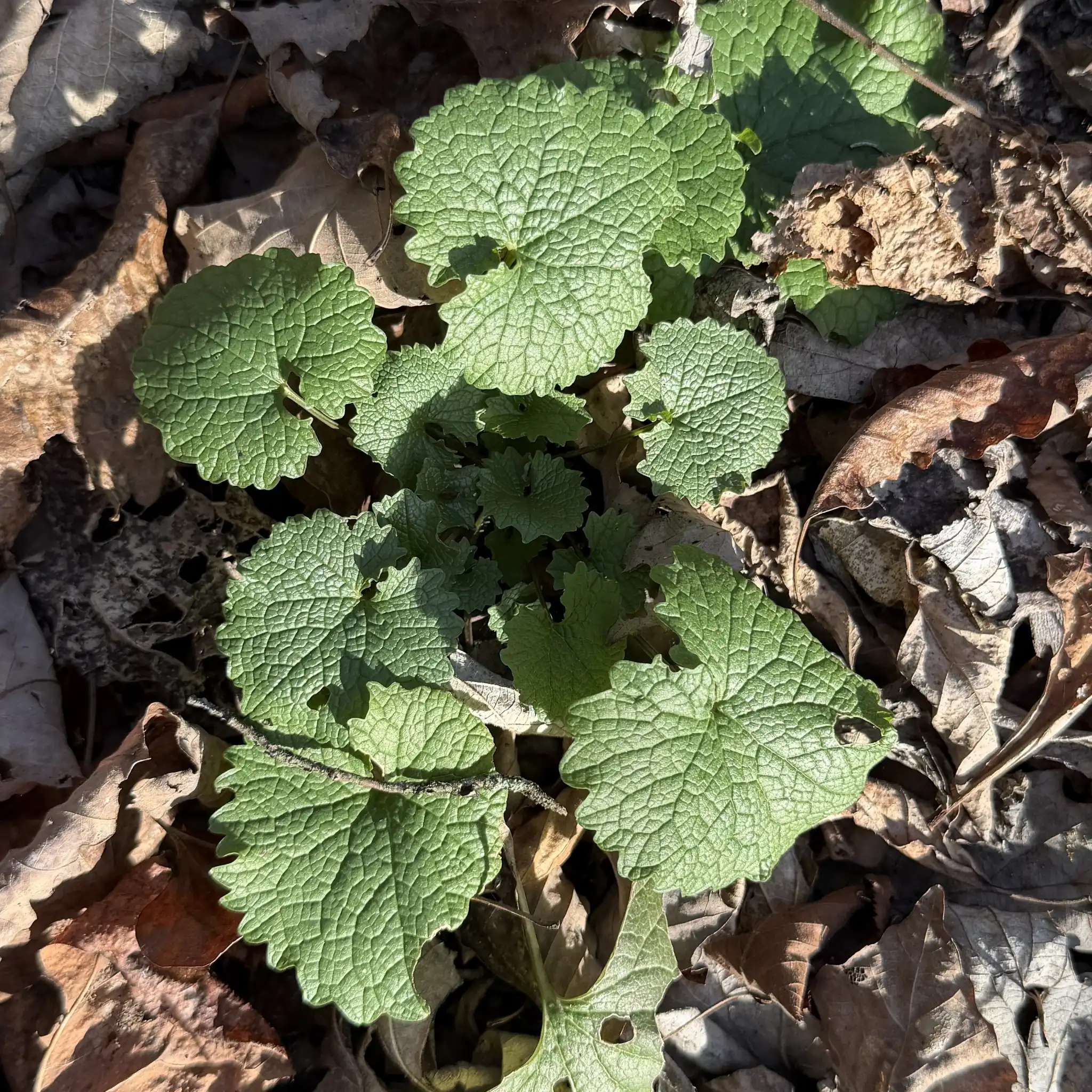
Alliaria petiolata is an invasive biennial herb of the mustard family that establishes rapidly in forest understories and disturbed soils. In its first year, the plant forms a low-growing basal rosette of kidney-shaped leaves, which then bolts in the second spring to produce erect, flowering stems up to forty inches tall.
The species is distinguished by its triangular, sharply toothed stem leaves that emit a strong garlic odor when crushed. Terminal clusters of small, white, four-petaled flowers produce abundant slender seed pods that disperse seeds ballistically up to several feet.
Uses & Benefits:
Essentials
At a Glance
Plant Type
Perennial
Height
40"
Width
18"
Light
Full Sun, Partial Sun, Shade
Zones
4, 5, 6, 7, 8
Water
Low to moderate
Humidity
Moderate
Lifespan
Biennial
Native To
Eurasia and North Africa
Toxicity
Mild skin irritant
Bloom period
Spring – Late spring
In flower about 3 months of the year
Planting
How to Grow
- Identify first-year basal rosettes in damp, shaded woodland edges or disturbed garden beds.
- Grasp the plant firmly at the soil line to ensure the entire S-shaped taproot is extracted.
- Pull plants in spring when the soil is moist to prevent the root from snapping.
- Bag and dispose of all pulled material in municipal waste to prevent seed maturation and dispersal.
Pro Tip
Hand-pull the entire root system before seed pods mature in mid-summer; leaving even a fraction of the root crown allows the biennial to resprout and set seed.
Keep It Thriving
Care Guide
Do
- Pull plants before they transition from flower to green seed pod.
- Monitor cleared areas for several years to exhaust the persistent soil seed bank.
- Replant cleared sites with native groundcovers like wild ginger or foamflower to suppress regrowth.
Don't
- Do not compost pulled plants, as seeds can survive and spread via finished compost.
- Do not mow bolting plants, which often triggers secondary flowering lower on the stem.
- Do not allow plants to mature to the dry, brown seed pod stage.
Seasonal Care Calendar
| Task | Jan | Feb | Mar | Apr | May | Jun | Jul | Aug | Sep | Oct | Nov | Dec |
|---|---|---|---|---|---|---|---|---|---|---|---|---|
| Pest Check | ||||||||||||
| Prune | ||||||||||||
| Spring Cleanup | ||||||||||||
| Winter Prep |
Watch Out For
Pests & Diseases
Common Pests
Common Diseases
In the Garden
Landscape Uses & Companions
Landscape Uses
Companion Plants
Multiply
Propagation Methods
Good to Know
Common Questions
Garlic Mustard questions
What zones can Garlic Mustard grow in?
Garlic Mustard is hardy in USDA Zones 4–8. Inside that range it survives winter in the ground; outside it, grow it as an annual or a container plant you protect.
Is Garlic Mustard deer resistant?
Yes — Garlic Mustard is rated deer-resistant. Deer typically pass it over, though extreme hunger can override any plant's defenses.
When does Garlic Mustard bloom?
Garlic Mustard typically blooms in spring through late spring. Exact timing shifts a week or two with your zone — Sow's bloom calendar maps it to your garden.
Does Garlic Mustard need full sun?
Garlic Mustard does best in full sun to part shade. In hot climates, afternoon shade keeps blooms fresher longer.
Keep exploring
Explore the genus
Hardy in your zone?
Grow Garlic Mustard with confidence
See it in a design of your actual yard, get zone-matched care reminders, and track it season by season in your garden journal.