The Story
Plant Bio
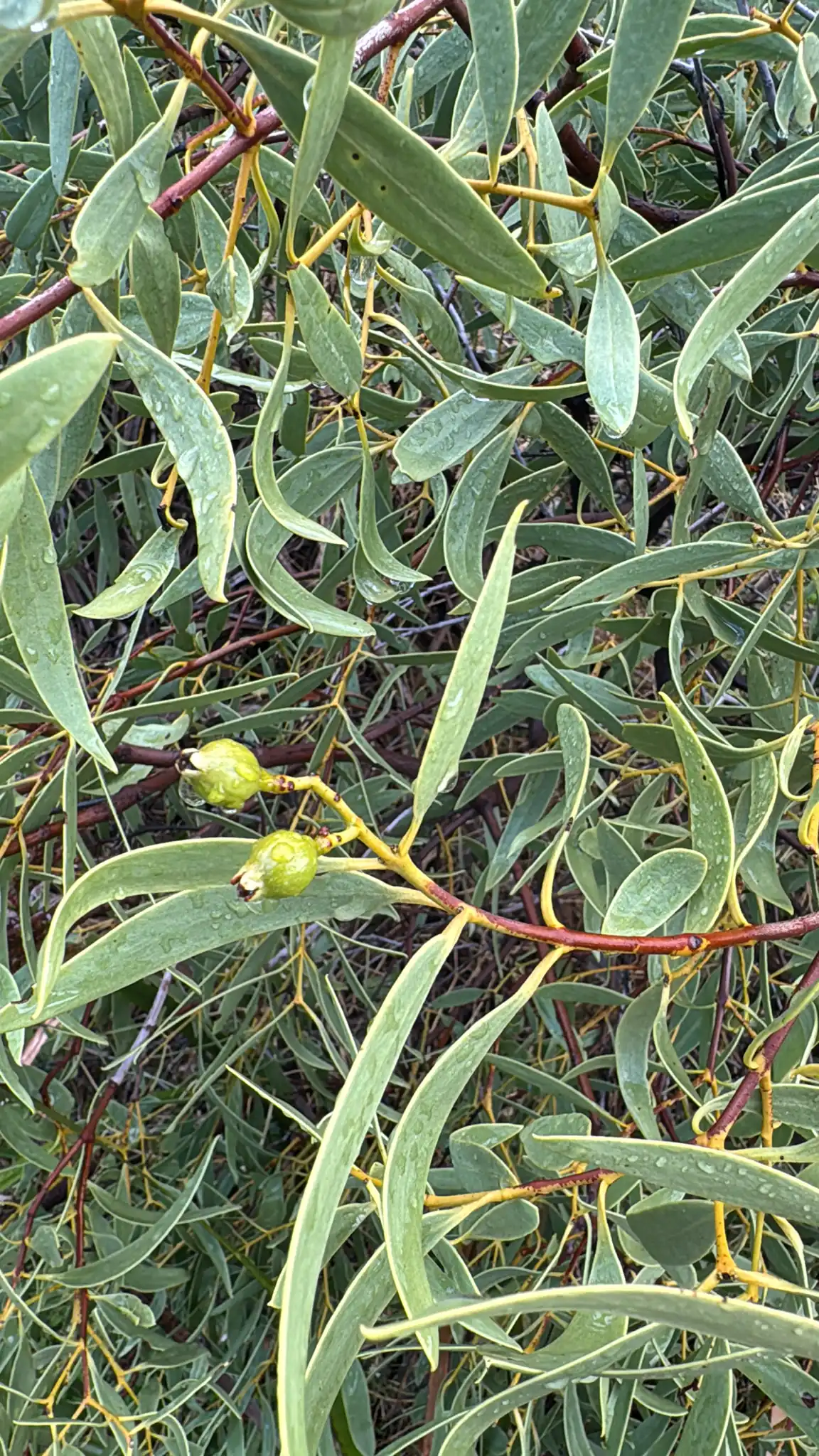
Santalum acuminatum, known as quandong, is an evergreen semi-parasitic shrub or small tree native to the arid interior of Australia. It features an upright to spreading, often pendulous growth habit with sparse, light green to yellowish-green lanceolate leaves.
This species is highly distinguished by its edible, bright red fleshy fruits and its obligate hemiparasitic nature, requiring the roots of a host plant to survive. The small flowers are greenish-white on the exterior and brownish-red on the interior, clustering in terminal panicles during winter and spring.
Uses & Benefits:
Essentials
At a Glance
Plant Type
Shrub
Height
236"
Width
157"
Light
Full Sun
Zones
9, 10
Water
Low
Humidity
Low to moderate
Native To
Australia
Toxicity
Non-toxic
Bloom period
Winter – Spring
In flower about 6 months of the year
Planting
How to Grow
- Select a planting site in full sun with exceptional drainage, such as sandy loam or gravelly soil.
- Plant a compatible host species, such as an Acacia or native grass, within three to six feet of the planting hole.
- Position the young plant carefully to avoid disturbing the delicate root connections already established with its container host.
- Water sparingly to establish, ensuring the soil dries out completely between applications to prevent root rot.
Pro Tip
Failing to establish a compatible host plant, such as an Acacia, within a few feet of the root system will cause this hemiparasite to wither and die.
Keep It Thriving
Care Guide
Do
- Plant alongside a nitrogen-fixing host plant like an Acacia to provide essential water and nutrients.
- Use highly porous, sandy, or gravelly soil mixes to ensure rapid drainage.
- Protect young plants from browsing deer and rabbits with sturdy wire cages.
Don't
- Do not attempt to grow this plant in isolation without a living host root system.
- Avoid heavy artificial fertilization, especially near the sensitive root zone.
- Never allow the soil to remain waterlogged or wet during cold winter months.
Seasonal Care Calendar
| Task | Jan | Feb | Mar | Apr | May | Jun | Jul | Aug | Sep | Oct | Nov | Dec |
|---|---|---|---|---|---|---|---|---|---|---|---|---|
| Pest Check | ||||||||||||
| Propagate | ||||||||||||
| Prune | ||||||||||||
| Winter Prep |
Watch Out For
Pests & Diseases
Common Pests
Common Diseases
In the Garden
Landscape Uses & Companions
Landscape Uses
Companion Plants
Multiply
Propagation Methods
Good to Know
Common Questions
Quandong questions
What zones can Quandong grow in?
Quandong is hardy in USDA Zones 9–10. Inside that range it survives winter in the ground; outside it, grow it as an annual or a container plant you protect.
Is Quandong deer resistant?
Not reliably. Deer may browse Quandong, especially tender spring growth — plan on repellents or fencing where pressure is high.
When does Quandong bloom?
Quandong typically blooms in winter through spring. Exact timing shifts a week or two with your zone — Sow's bloom calendar maps it to your garden.
Does Quandong need full sun?
Quandong does best in full sun (6+ hours).
Is Quandong drought tolerant?
Yes — once established (usually after the first full season), Quandong handles dry spells with minimal watering. Water deeply its first year to build the root system that makes that possible.
Keep exploring
Explore the genus
Hardy in your zone?
Grow Quandong with confidence
See it in a design of your actual yard, get zone-matched care reminders, and track it season by season in your garden journal.