The Story
Plant Bio
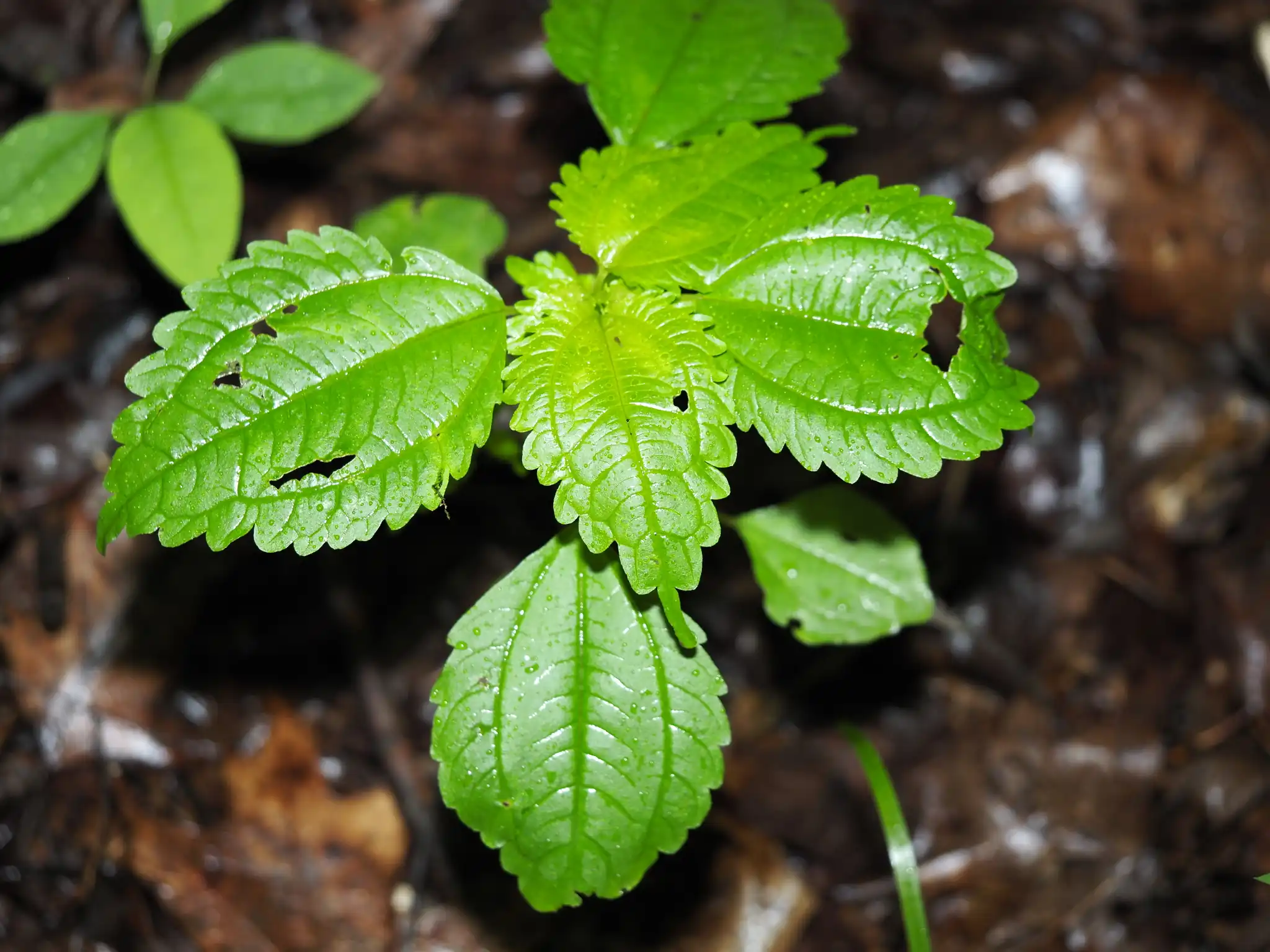
Pilea pumila, commonly known as Canadian clearweed, is a delicate summer annual herb native to damp woodland understories across eastern and central North America. The plant is distinguished by its translucent, watery stems that reveal internal fluid movement and its complete lack of stinging hairs.
The simple, opposite leaves feature deeply serrated margins and are thin and membranous, displaying a pale, almost whitish-green underside beneath a dark green upper surface. Inconspicuous, apetalous greenish flowers cluster in short axillary racemes that remain shorter than the leaf petioles.
Uses & Benefits:
Essentials
At a Glance
Plant Type
Annual
Height
24"
Width
12"
Light
Partial Sun, Shade
Zones
4, 5, 6, 7, 8
Water
High
Humidity
Medium to High
Lifespan
Annual
Native To
North America
Toxicity
Non-toxic
Bloom period
Summer – Autumn
In flower about 6 months of the year
Planting
How to Grow
- Sow seeds directly onto moist, rich organic soil in a fully shaded or partially shaded woodland location during early spring.
- Maintain consistent soil moisture throughout the growing season, as the shallow root system wilts rapidly under dry conditions.
- Allow the plants to flower and set seed naturally in late summer to ensure a self-sustaining colony for the following year.
- Leave the frost-killed foliage in place over winter to protect the fallen seeds and mimic natural forest floor litter.
Pro Tip
Identify this species by its completely smooth, watery stem to avoid mistaking it for stinging nettle; its presence indicates consistently moist, high-humus soil conditions.
Keep It Thriving
Care Guide
Do
- Keep the soil consistently moist and rich with organic leaf mold.
- Provide deep shade or filtered light to prevent foliage scorch.
- Allow the plant to self-seed freely to maintain its presence as an annual.
Don't
- Do not plant in dry, sandy soils or areas exposed to intense afternoon sun.
- Do not apply heavy fertilizers, which can cause weak, floppy growth.
- Do not mistake the young plants for stinging nettle and pull them out unnecessarily.
Seasonal Care Calendar
| Task | Jan | Feb | Mar | Apr | May | Jun | Jul | Aug | Sep | Oct | Nov | Dec |
|---|---|---|---|---|---|---|---|---|---|---|---|---|
| Pest Check | ||||||||||||
| Plant | ||||||||||||
| Spring Cleanup | ||||||||||||
| Winter Prep |
Watch Out For
Pests & Diseases
Common Pests
Common Diseases
In the Garden
Landscape Uses & Companions
Landscape Uses
Multiply
Propagation Methods
Good to Know
Common Questions
Canadian Clearweed questions
What zones can Canadian Clearweed grow in?
Canadian Clearweed is hardy in USDA Zones 4–8. Inside that range it survives winter in the ground; outside it, grow it as an annual or a container plant you protect.
When does Canadian Clearweed bloom?
Canadian Clearweed typically blooms in summer through autumn. Exact timing shifts a week or two with your zone — Sow's bloom calendar maps it to your garden.
Does Canadian Clearweed need full sun?
Canadian Clearweed does best in part shade.
More Pilea to compare

Keep exploring
Explore the genus
Hardy in your zone?
Grow Canadian Clearweed with confidence
See it in a design of your actual yard, get zone-matched care reminders, and track it season by season in your garden journal.