The Story
Plant Bio
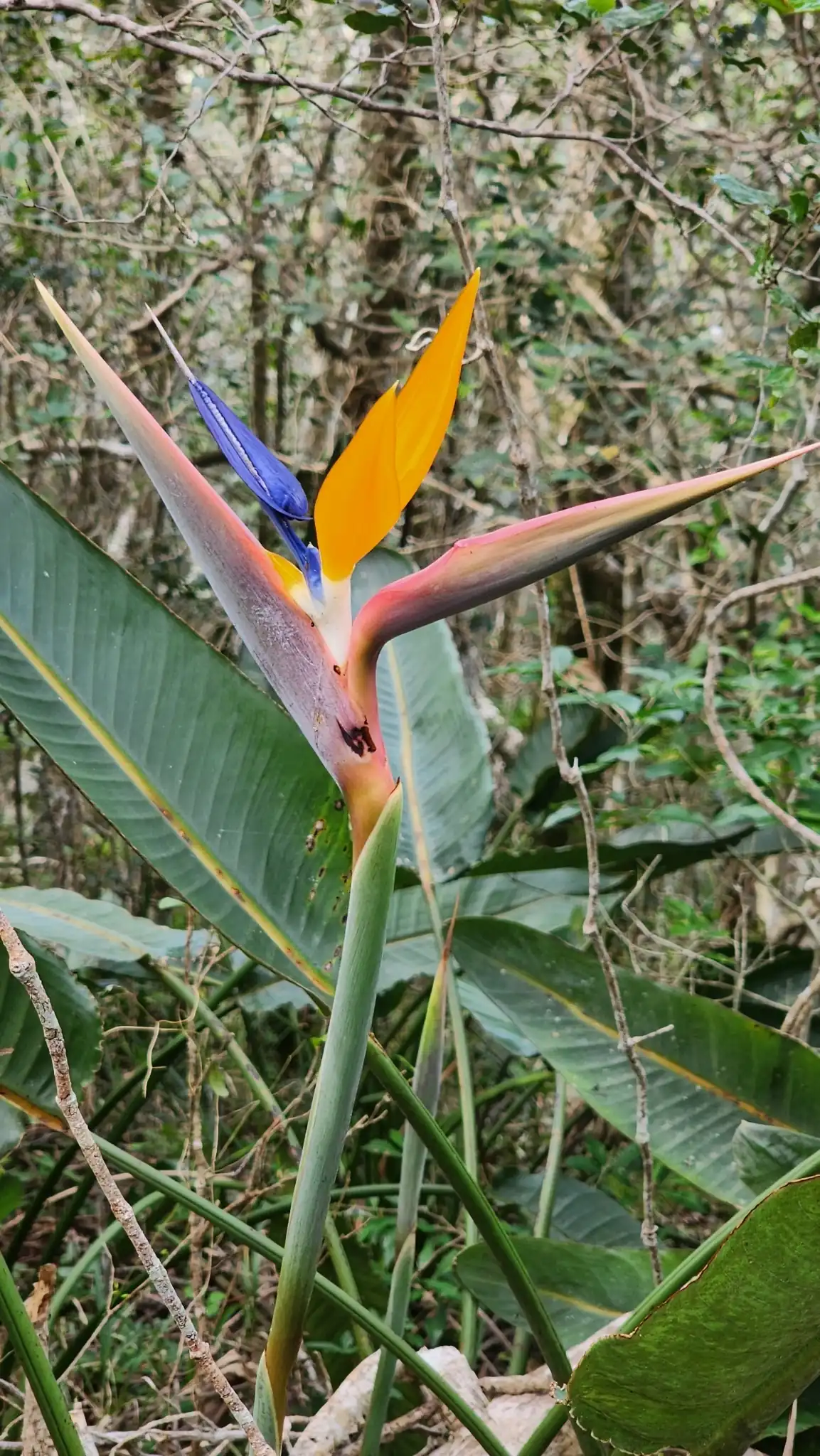
Strelitzia is a genus of five species of perennial plants, native to South Africa. They are known for their dramatic, bird-like flowers and large, paddle-shaped leaves, creating a bold, tropical effect.
Strelitzia reginae is the most iconic species, famous for its spectacular flower structure. It features brilliant orange sepals and vivid blue petals emerging from a beak-like spathe, uncannily resembling the head of a crested crane.
Uses & Benefits:
Essentials
At a Glance
Plant Type
Tropical
Height
60"
Width
48"
Light
Full Sun, Partial Sun
Zones
10
Water
Moderate
Humidity
High
Lifespan
Very long-lived
Native To
South Africa
Toxicity
Toxic to dogs and cats
Bloom period
Late winter – Late spring
In flower about 4 months of the year
Marketplace
Where to Buy
Shipping costs Year-round shipping Free shipping
Planting
How to Grow
- Choose a spot with bright, indirect light or some direct sun.
- Use a rich, well-draining potting mix.
- Plant in a container that is snug for the root ball.
- Water thoroughly when the top 1-2 inches of soil are dry.
- Fertilize regularly during spring and summer.
- Wipe leaves with a damp cloth to keep them clean and dust-free.
Pro Tip
To encourage blooming, allow the plant to become slightly root-bound and provide a period of cooler, drier conditions in the fall.
Keep It Thriving
Care Guide
Do
- Provide bright light for best growth and flowering.
- Allow soil to dry out slightly between waterings.
- Increase humidity by misting or using a pebble tray.
- Feed regularly during the growing season.
Don't
- Do not let the plant sit in waterlogged soil.
- Avoid placing it in low-light conditions.
- Don't expose it to cold drafts or temperatures below 50°F (10°C).
- Don't be too quick to repot; they bloom best when slightly pot-bound.
Seasonal Care Calendar
| Task | Jan | Feb | Mar | Apr | May | Jun | Jul | Aug | Sep | Oct | Nov | Dec |
|---|---|---|---|---|---|---|---|---|---|---|---|---|
| Divide | ||||||||||||
| Fertilize | ||||||||||||
| Pest Check |
Watch Out For
Pests & Diseases
Common Pests
Common Diseases
In the Garden
Landscape Uses & Companions
Landscape Uses
Companion Plants
Multiply
Propagation Methods
Good to Know
Common Questions
Bird of Paradise questions
What zones can Bird of Paradise grow in?
Bird of Paradise is hardy in USDA Zone 10. Inside that range it survives winter in the ground; outside it, grow it as an annual or a container plant you protect.
Is Bird of Paradise deer resistant?
Yes — Bird of Paradise is rated deer-resistant. Deer typically pass it over, though extreme hunger can override any plant's defenses.
When does Bird of Paradise bloom?
Bird of Paradise typically blooms in late winter through late spring. Exact timing shifts a week or two with your zone — Sow's bloom calendar maps it to your garden.
Does Bird of Paradise need full sun?
Bird of Paradise does best in full sun to part shade. In hot climates, afternoon shade keeps blooms fresher longer.
Is Bird of Paradise drought tolerant?
Yes — once established (usually after the first full season), Bird of Paradise handles dry spells with minimal watering. Water deeply its first year to build the root system that makes that possible.
More Strelitzia to compare
Keep exploring
Explore the genus
Hardy in your zone?
Grow Bird of Paradise with confidence
See it in a design of your actual yard, get zone-matched care reminders, and track it season by season in your garden journal.