
The Story
Plant Bio
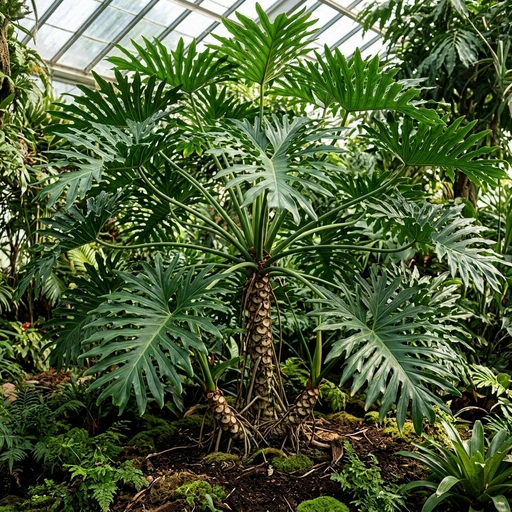
A popular houseplant, Monstera deliciosa is known for its large, dramatic, split leaves. It can grow as a climbing or trailing plant. Note: This plant is not a Philodendron, its correct botanical name is Monstera deliciosa.
Known for its unique fenestrated (split) leaves that develop as the plant matures. It can thrive in typical indoor conditions.
Uses & Benefits:
Essentials
At a Glance
Plant Type
Shrub
Height
60 inches
Width
30 inches
Light
Partial Sun, Shade
Zones
10
Water
Moderate, allow top inch of soil to dry
Humidity
High humidity preferred
Lifespan
Long-lived perennial
Native To
Southern Mexico, Central America
Toxicity
Toxic to pets and humans if ingested
Bloom period
Late summer – Early fall
In flower about 2 months of the year
Planting
How to Grow
- Select a well-draining pot with drainage holes.
- Tuck cuttings into moist soil or water until roots develop, about 2-4 weeks.
- Place in bright, indirect sunlight for optimal growth.
- Water when the top inch of soil feels dry, maintaining consistent moisture.
- Mist leaves regularly to increase humidity, especially in dry environments.
- Transplant into larger pots as the plant outgrows its current container.
Pro Tip
Use a mix of peat-based soil with perlite for excellent drainage and aeration.
Keep It Thriving
Care Guide
Do
- Provide bright, indirect light ☀️
- Maintain consistent moisture without overwatering 💧
- Use a balanced fertilizer monthly during the growing season 🌱
- Prune to remove dead or damaged leaves ✂️
- Increase humidity with regular misting or a humidifier 🌫️
Don't
- Avoid direct sunlight that can scorch leaves ❌
- Do not let the soil stay waterlogged 💦❌
- Refrain from over-fertilizing to prevent root burn ❌
- Do not ignore signs of pests or diseases ❌
- Avoid drastic temperature fluctuations ❌
Seasonal Care Calendar
| Task | Jan | Feb | Mar | Apr | May | Jun | Jul | Aug | Sep | Oct | Nov | Dec |
|---|---|---|---|---|---|---|---|---|---|---|---|---|
| Fertilize | ||||||||||||
| Pest Check | ||||||||||||
| Propagate | ||||||||||||
| Prune | ||||||||||||
| Stake |
Watch Out For
Pests & Diseases
Common Pests
Common Diseases
In the Garden
Landscape Uses & Companions
Landscape Uses
Companion Plants
Multiply
Propagation Methods
Good to Know
Common Questions
Swiss Cheese Plant questions
What zones can Swiss Cheese Plant grow in?
Swiss Cheese Plant is hardy in USDA Zone 10. Inside that range it survives winter in the ground; outside it, grow it as an annual or a container plant you protect.
Is Swiss Cheese Plant deer resistant?
Yes — Swiss Cheese Plant is rated deer-resistant. Deer typically pass it over, though extreme hunger can override any plant's defenses.
When does Swiss Cheese Plant bloom?
Swiss Cheese Plant typically blooms in late summer through early fall. Exact timing shifts a week or two with your zone — Sow's bloom calendar maps it to your garden.
Does Swiss Cheese Plant need full sun?
Swiss Cheese Plant does best in part shade.
More Philodendron to compare
Keep exploring
Explore the genus
Hardy in your zone?
Grow Swiss Cheese Plant with confidence
See it in a design of your actual yard, get zone-matched care reminders, and track it season by season in your garden journal.