The Story
Plant Bio
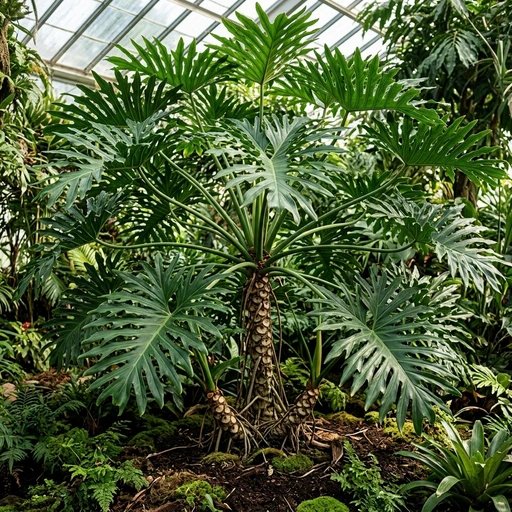
A large, non-climbing, tree-like plant with deeply dissected, lobed leaves that create a lush, tropical effect. It develops a thick, woody trunk-like stem with age.
This species is known for its dramatic, deeply lobed leaves that can reach up to 3 feet long, giving it a bold, architectural presence. Unlike many philodendrons, it forms an upright, tree-like habit rather than vining.
Uses & Benefits:
Essentials
At a Glance
Plant Type
Tropical
Height
144"
Width
144"
Light
Partial Sun, Shade
Zones
9, 10
Water
Moderate
Humidity
High
Lifespan
Long-lived
Native To
Brazil, Bolivia, Paraguay
Toxicity
Toxic to pets and humans if ingested
Bloom period
Late spring – Early summer
In flower about 2 months of the year
Planting
How to Grow
- Choose a pot with excellent drainage, one size larger than the root ball.
- Use a well-aerated, peat-based potting mix.
- Place in a spot with bright, indirect sunlight.
- Water thoroughly when the top inch of soil feels dry.
- Fertilize monthly during spring and summer with a balanced liquid fertilizer.
- Wipe leaves with a damp cloth to remove dust and aid photosynthesis.
Pro Tip
Provide bright, indirect light and high humidity; direct sun will scorch the leaves and low light causes leggy growth.
Keep It Thriving
Care Guide
Do
- Provide high humidity by misting or using a pebble tray.
- Rotate the plant periodically for even growth.
- Repot every 2-3 years or when root-bound.
Don't
- Do not overwater; allow soil to dry slightly between waterings.
- Avoid placing in direct, hot sunlight.
- Don't let it sit in cold drafts.
Seasonal Care Calendar
| Task | Jan | Feb | Mar | Apr | May | Jun | Jul | Aug | Sep | Oct | Nov | Dec |
|---|---|---|---|---|---|---|---|---|---|---|---|---|
| Fertilize | ||||||||||||
| Pest Check |
Watch Out For
Pests & Diseases
Common Pests
Common Diseases
In the Garden
Landscape Uses & Companions
Landscape Uses
Multiply
Propagation Methods
Good to Know
Common Questions
Lacy Tree Philodendron questions
What zones can Lacy Tree Philodendron grow in?
Lacy Tree Philodendron is hardy in USDA Zones 9–10. Inside that range it survives winter in the ground; outside it, grow it as an annual or a container plant you protect.
Is Lacy Tree Philodendron deer resistant?
Yes — Lacy Tree Philodendron is rated deer-resistant. Deer typically pass it over, though extreme hunger can override any plant's defenses.
When does Lacy Tree Philodendron bloom?
Lacy Tree Philodendron typically blooms in late spring through early summer. Exact timing shifts a week or two with your zone — Sow's bloom calendar maps it to your garden.
Does Lacy Tree Philodendron need full sun?
Lacy Tree Philodendron does best in part shade.
More Philodendron to compare
Keep exploring
Explore the genus
Hardy in your zone?
Grow Lacy Tree Philodendron with confidence
See it in a design of your actual yard, get zone-matched care reminders, and track it season by season in your garden journal.