The Story
Plant Bio
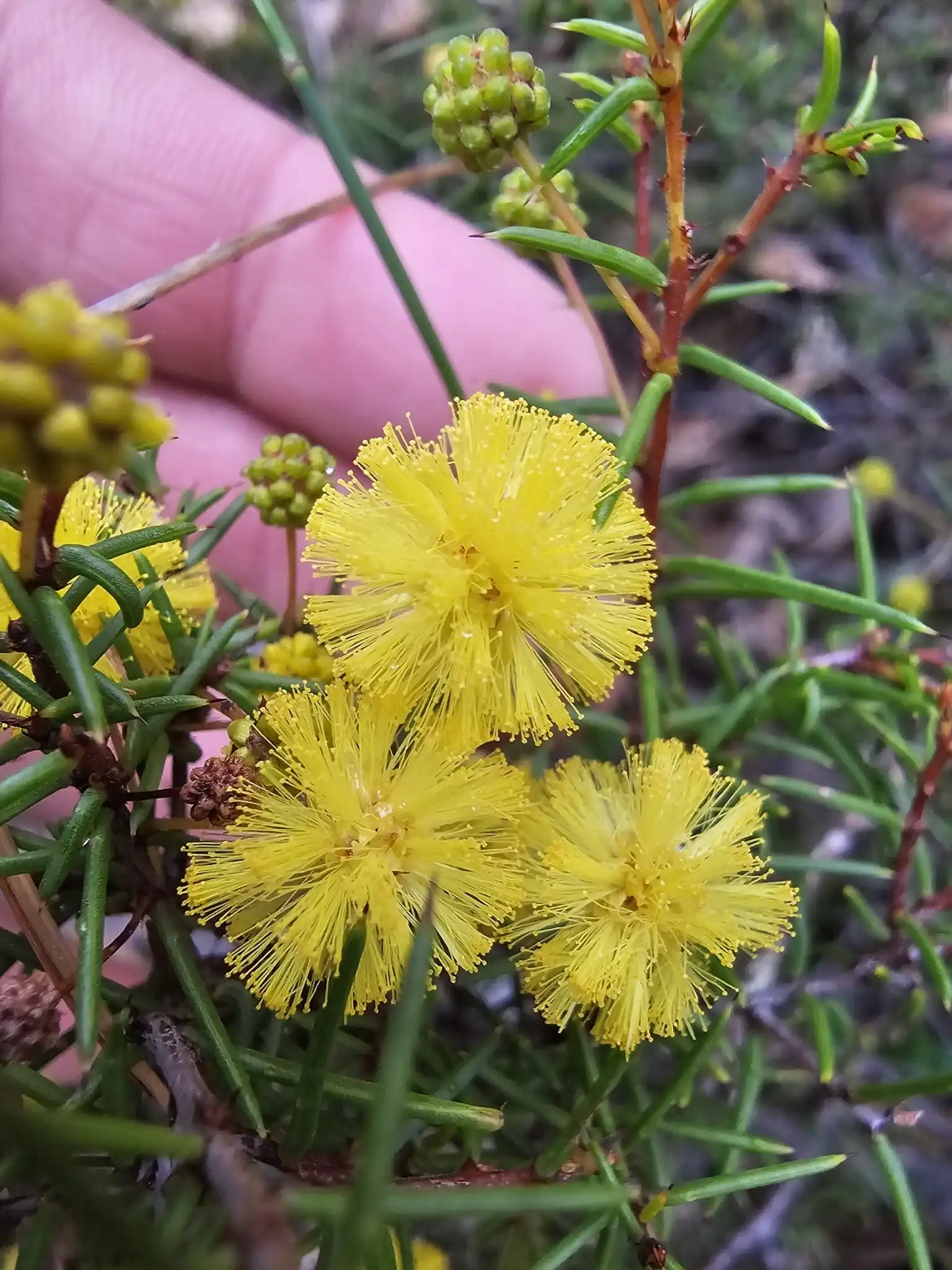
Acacia brownii, commonly known as heath wattle, is a low-growing evergreen Australian shrub reaching one to three feet in height, with rigid, needle-like phyllodes that terminate in sharp, pungent points. The bright yellow flowers are produced from winter into spring, held in small, globular heads borne singly in the leaf axils.
This species is distinguished by its highly defensive, prickly foliage structure, which acts as a physical barrier and provides safe nesting cover for small birds. The stiff, four-angled phyllodes and bright golden blooms make it a highly textured addition to dry, sunny gardens.
Uses & Benefits:
Essentials
At a Glance
Plant Type
Shrub
Height
39"
Width
78"
Light
Full Sun, Partial Sun
Zones
8, 9, 10
Water
Low
Humidity
Low
Lifespan
Short-lived
Native To
Australia
Toxicity
Non-toxic (mechanical irritant)
Bloom period
Winter – Spring
In flower about 6 months of the year
Planting
How to Grow
- Select a planting site with full sun to partial shade and exceptionally fast-draining, sandy or gravelly soil.
- Dig a hole twice as wide as the root ball but of equal depth, ensuring the plant sits slightly above the surrounding soil level to prevent collar rot.
- Water deeply immediately after planting to settle the soil, then restrict irrigation to periods of prolonged dry weather during the establishment phase.
- Apply a light layer of organic mulch around the base, keeping it clear of the main stem to avoid moisture retention.
Pro Tip
Plant in exceptionally fast-draining, sandy or gravelly loam and restrict supplemental watering strictly to the establishment phase; heavy, moisture-retaining soils will rapidly trigger fatal root rot.
Keep It Thriving
Care Guide
Do
- Do plant in highly porous, fast-draining substrate to prevent root rot.
- Do prune lightly immediately after flowering to maintain a dense, compact habit.
- Do wear thick gloves when handling the plant to protect against the sharp, needle-like foliage.
Don't
- Don't prune hard into old, leafless wood, as the plant will fail to regenerate from bare timber.
- Don't overwater or allow the roots to sit in soggy, waterlogged soil.
- Don't apply high-phosphorus or heavy commercial fertilizers, which can burn the root system.
Seasonal Care Calendar
| Task | Jan | Feb | Mar | Apr | May | Jun | Jul | Aug | Sep | Oct | Nov | Dec |
|---|---|---|---|---|---|---|---|---|---|---|---|---|
| Fertilize | ||||||||||||
| Pest Check | ||||||||||||
| Prune | ||||||||||||
| Winter Prep |
Watch Out For
Pests & Diseases
Common Pests
Common Diseases
In the Garden
Landscape Uses & Companions
Landscape Uses
Companion Plants
Multiply
Propagation Methods
Good to Know
Common Questions
Heath Wattle questions
What zones can Heath Wattle grow in?
Heath Wattle is hardy in USDA Zones 8–10. Inside that range it survives winter in the ground; outside it, grow it as an annual or a container plant you protect.
When does Heath Wattle bloom?
Heath Wattle typically blooms in winter through spring. Exact timing shifts a week or two with your zone — Sow's bloom calendar maps it to your garden.
Does Heath Wattle need full sun?
Heath Wattle does best in full sun to part shade. In hot climates, afternoon shade keeps blooms fresher longer.
Is Heath Wattle drought tolerant?
Yes — once established (usually after the first full season), Heath Wattle handles dry spells with minimal watering. Water deeply its first year to build the root system that makes that possible.
More Acacia to compare
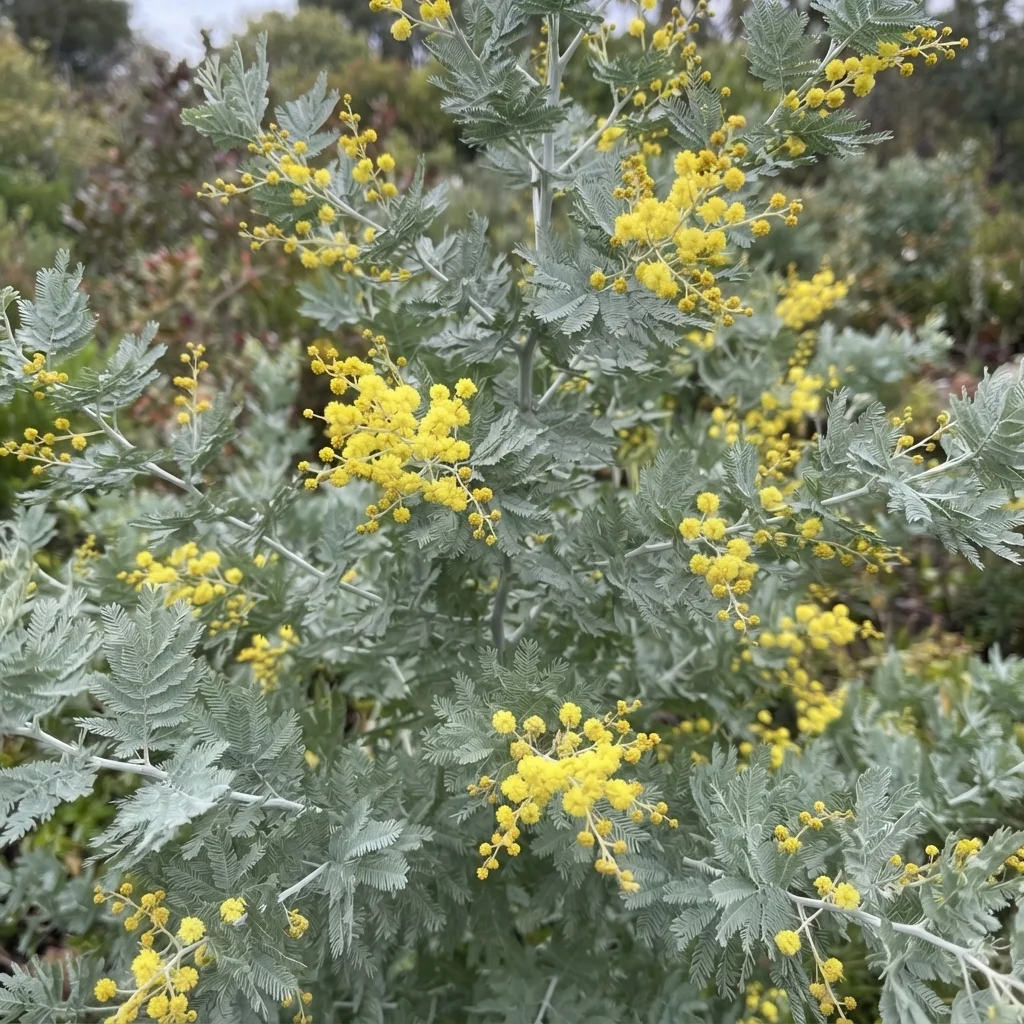
Silver wattle
Acacia dealbata
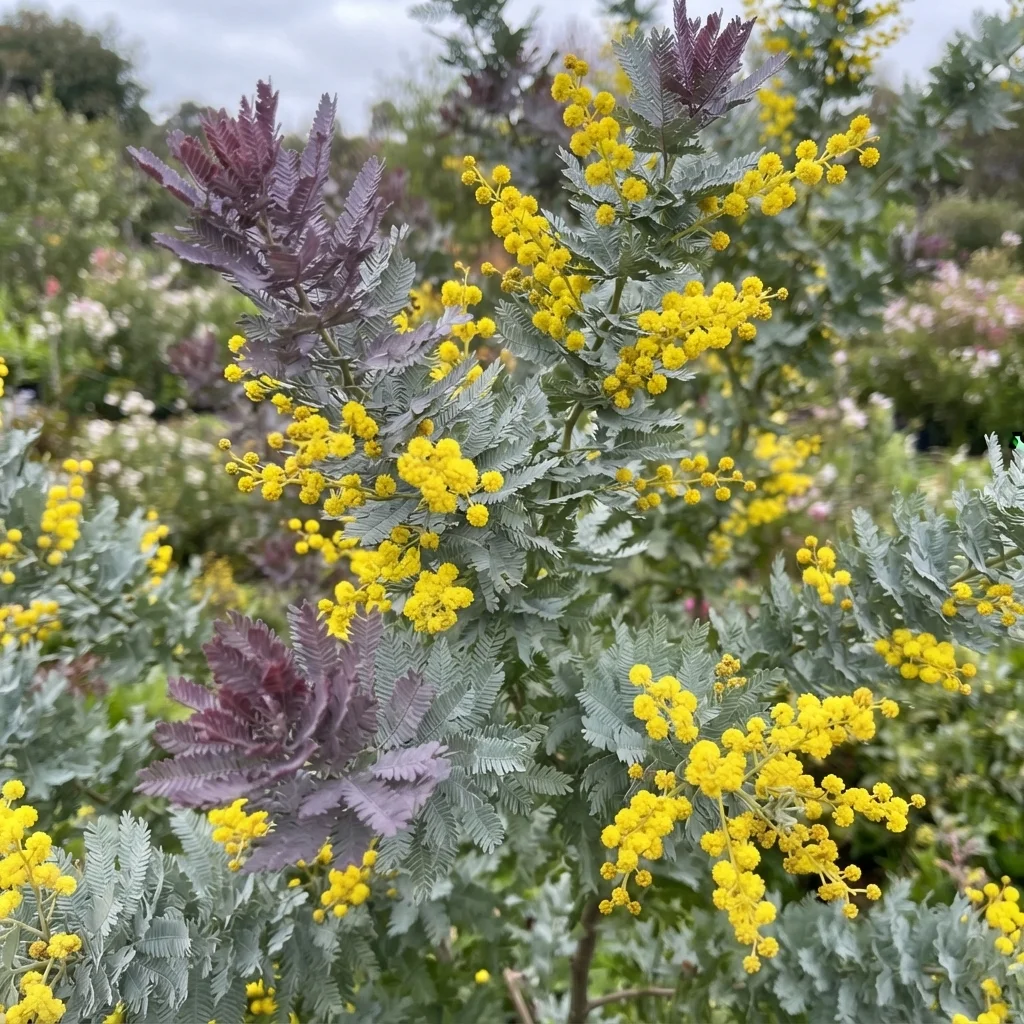
Cootamundra Wattle
Acacia baileyana 'Purpurea'
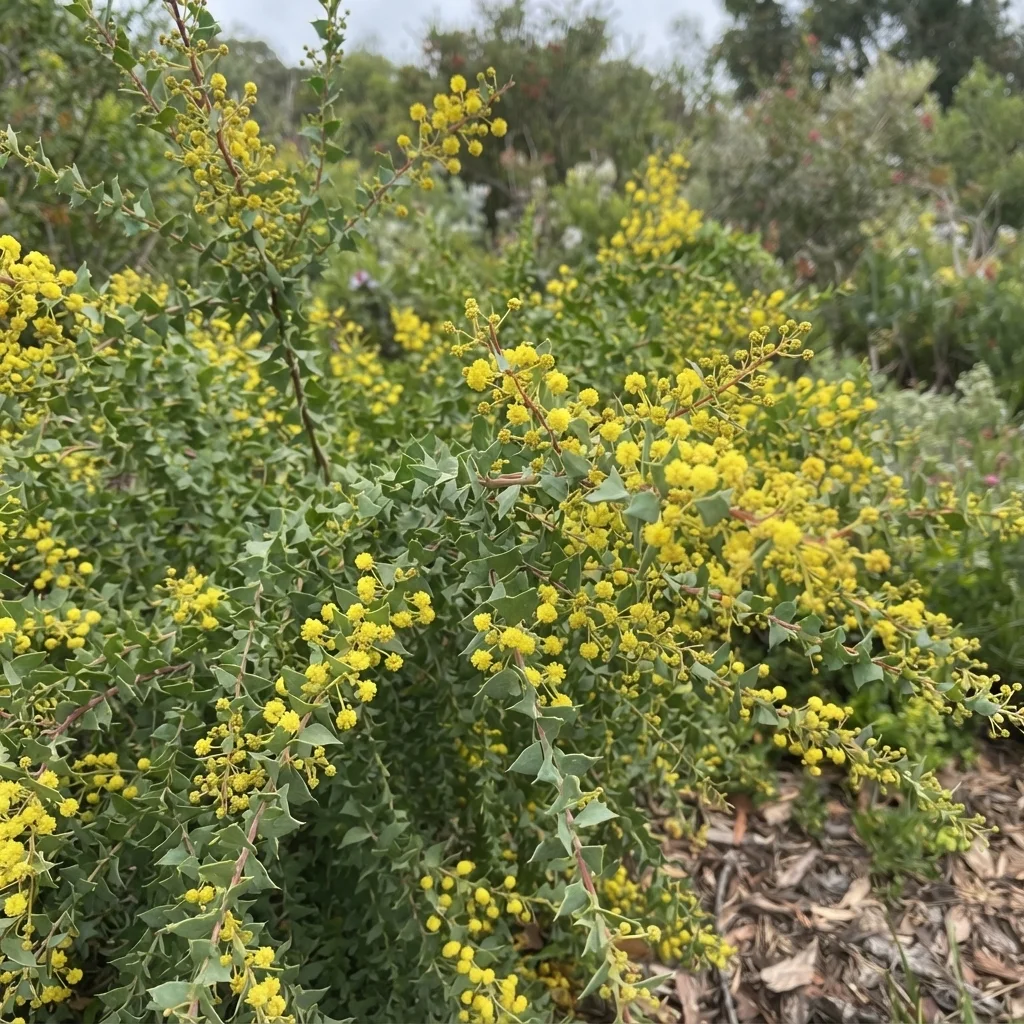
Ovens Wattle
Acacia pravissima
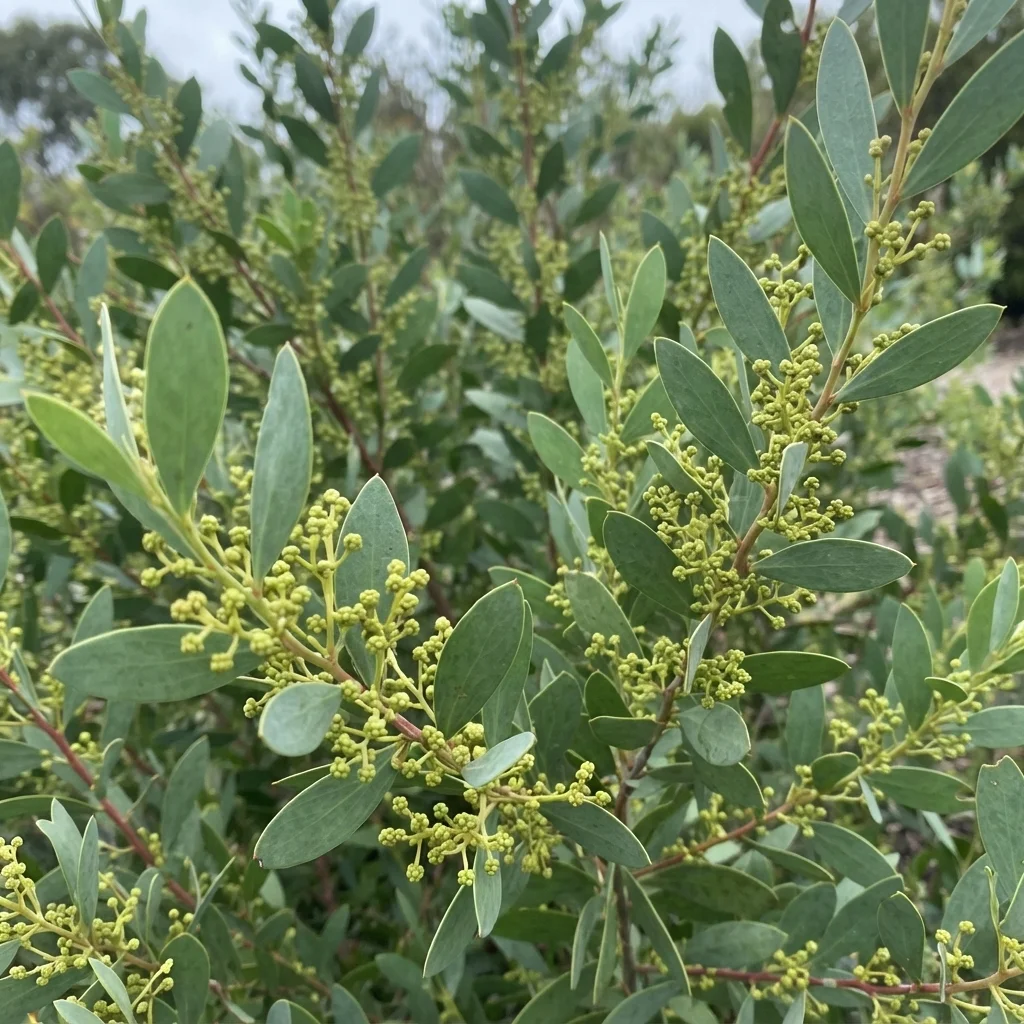
Box-leaf Wattle
Acacia buxifolia
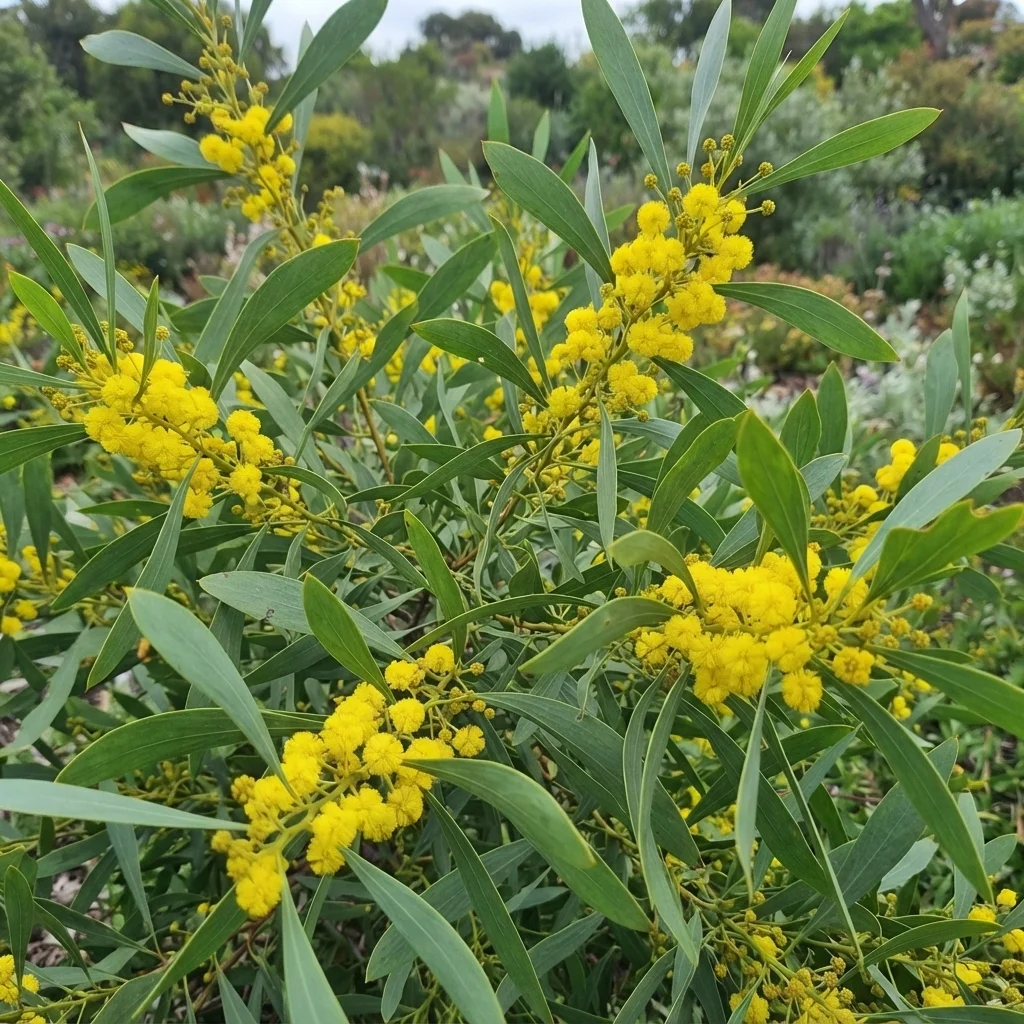
Golden Wreath Wattle
Acacia saligna
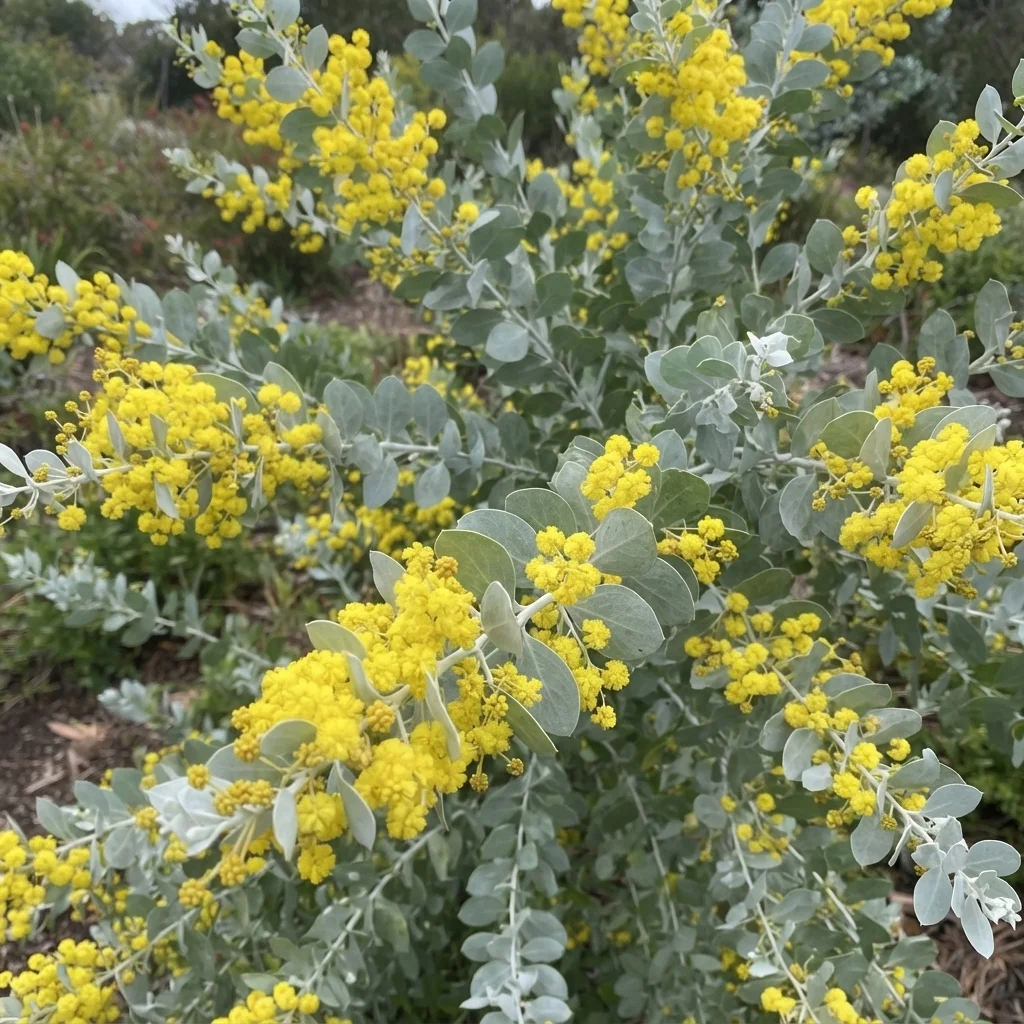
Pearl Acacia
Acacia podalyriifolia
Keep exploring
Explore the genus
Hardy in your zone?
Grow Heath Wattle with confidence
See it in a design of your actual yard, get zone-matched care reminders, and track it season by season in your garden journal.