The Story
Plant Bio
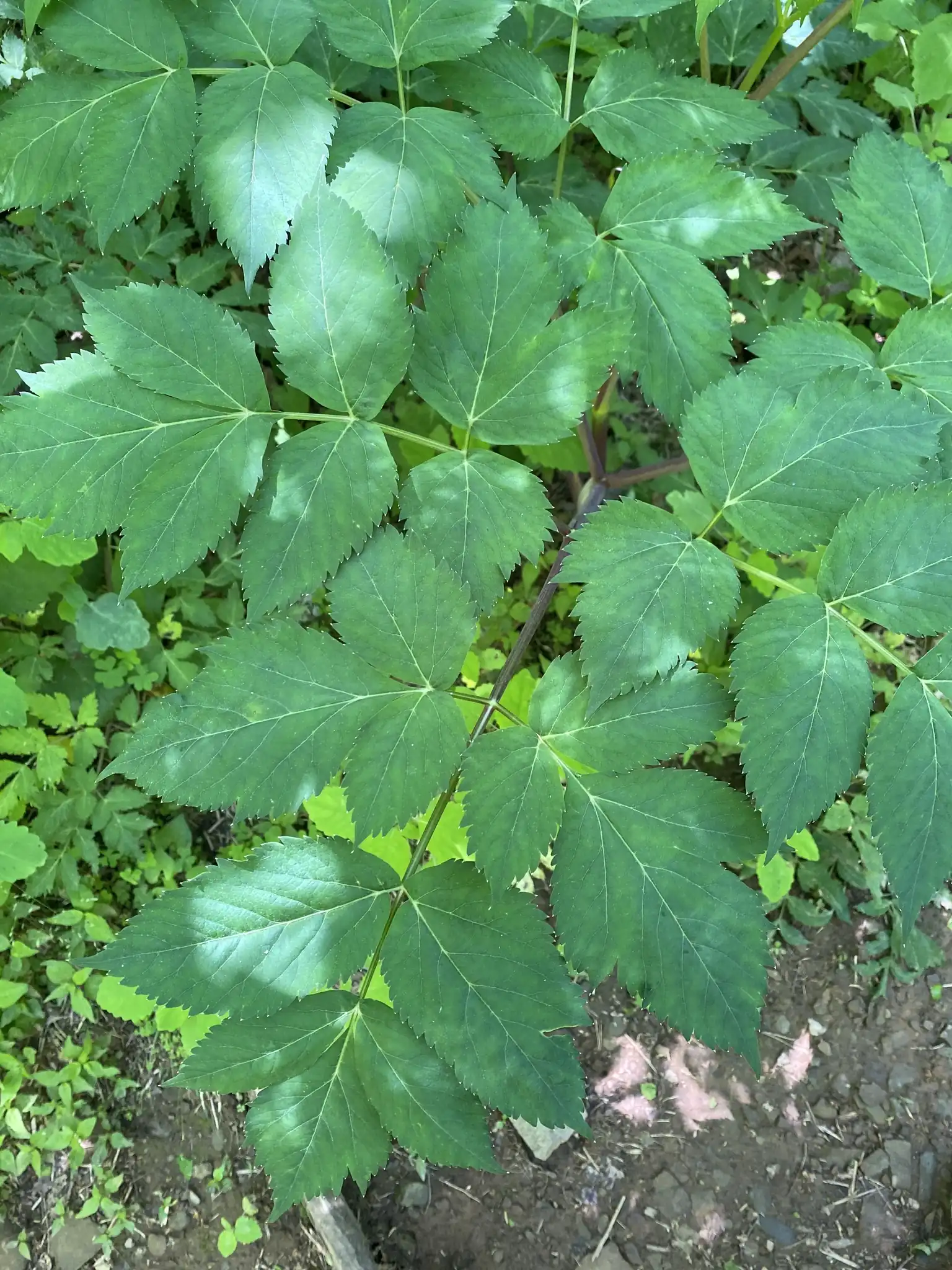
Angelica triquinata, commonly known as mountain angelica, is an erect, robust herbaceous perennial native to the high-elevation woods and meadows of the Appalachian Mountains. The smooth stems mature from green to a striking purplish-red, featuring distinctive sheaths that create a filmy appearance.
This species is distinguished by its large, compound umbels of greenish-white flowers held above coarsely toothed, compound foliage. The leaflets feature sharp-pointed apexes and a marginal fringe of minute hairs.
Uses & Benefits:
Essentials
At a Glance
Plant Type
Perennial
Height
72"
Width
48"
Light
Full Sun, Partial Sun
Zones
5, 6, 7, 8
Water
High
Humidity
High
Lifespan
Perennial
Native To
North America
Toxicity
Skin Irritant
Bloom period
Summer – Late summer
In flower about 3 months of the year
Planting
How to Grow
- Select a planting site with rich, organic soil in full sun to partial shade, preferring afternoon shade in southern regions.
- Amend the planting area with compost to ensure high organic matter and excellent moisture retention.
- Install the plant at the same depth as its container, watering thoroughly to settle the soil around the roots.
- Maintain consistent soil moisture throughout the growing season, never allowing the soil to dry out completely.
Pro Tip
Wear gloves and long sleeves when handling this plant; the foliage and sap contain active furocoumarins that trigger severe phyto-photodermatitis when exposed to sunlight.
Keep It Thriving
Care Guide
Do
- Mulch around the base to retain soil moisture and keep roots cool.
- Wear protective gloves when pruning or handling the foliage.
- Leave spent flower stalks through winter to provide structural interest.
Don't
- Do not allow the soil to dry out completely during summer heat waves.
- Do not apply heavy chemical fertilizers, as rich organic soil is sufficient.
- Do not plant in poorly drained, stagnant waterlogged areas.
Seasonal Care Calendar
| Task | Jan | Feb | Mar | Apr | May | Jun | Jul | Aug | Sep | Oct | Nov | Dec |
|---|---|---|---|---|---|---|---|---|---|---|---|---|
| Mulch | ||||||||||||
| Pest Check | ||||||||||||
| Propagate | ||||||||||||
| Prune |
Watch Out For
Pests & Diseases
Common Pests
Common Diseases
In the Garden
Landscape Uses & Companions
Landscape Uses
Multiply
Propagation Methods
Good to Know
Common Questions
Mountain Angelica questions
What zones can Mountain Angelica grow in?
Mountain Angelica is hardy in USDA Zones 5–8. Inside that range it survives winter in the ground; outside it, grow it as an annual or a container plant you protect.
Is Mountain Angelica deer resistant?
Not reliably. Deer may browse Mountain Angelica, especially tender spring growth — plan on repellents or fencing where pressure is high.
When does Mountain Angelica bloom?
Mountain Angelica typically blooms in summer through late summer. Exact timing shifts a week or two with your zone — Sow's bloom calendar maps it to your garden.
Does Mountain Angelica need full sun?
Mountain Angelica does best in full sun to part shade. In hot climates, afternoon shade keeps blooms fresher longer.
More Angelica to compare
Keep exploring
Explore the genus
Hardy in your zone?
Grow Mountain Angelica with confidence
See it in a design of your actual yard, get zone-matched care reminders, and track it season by season in your garden journal.