The Story
Plant Bio
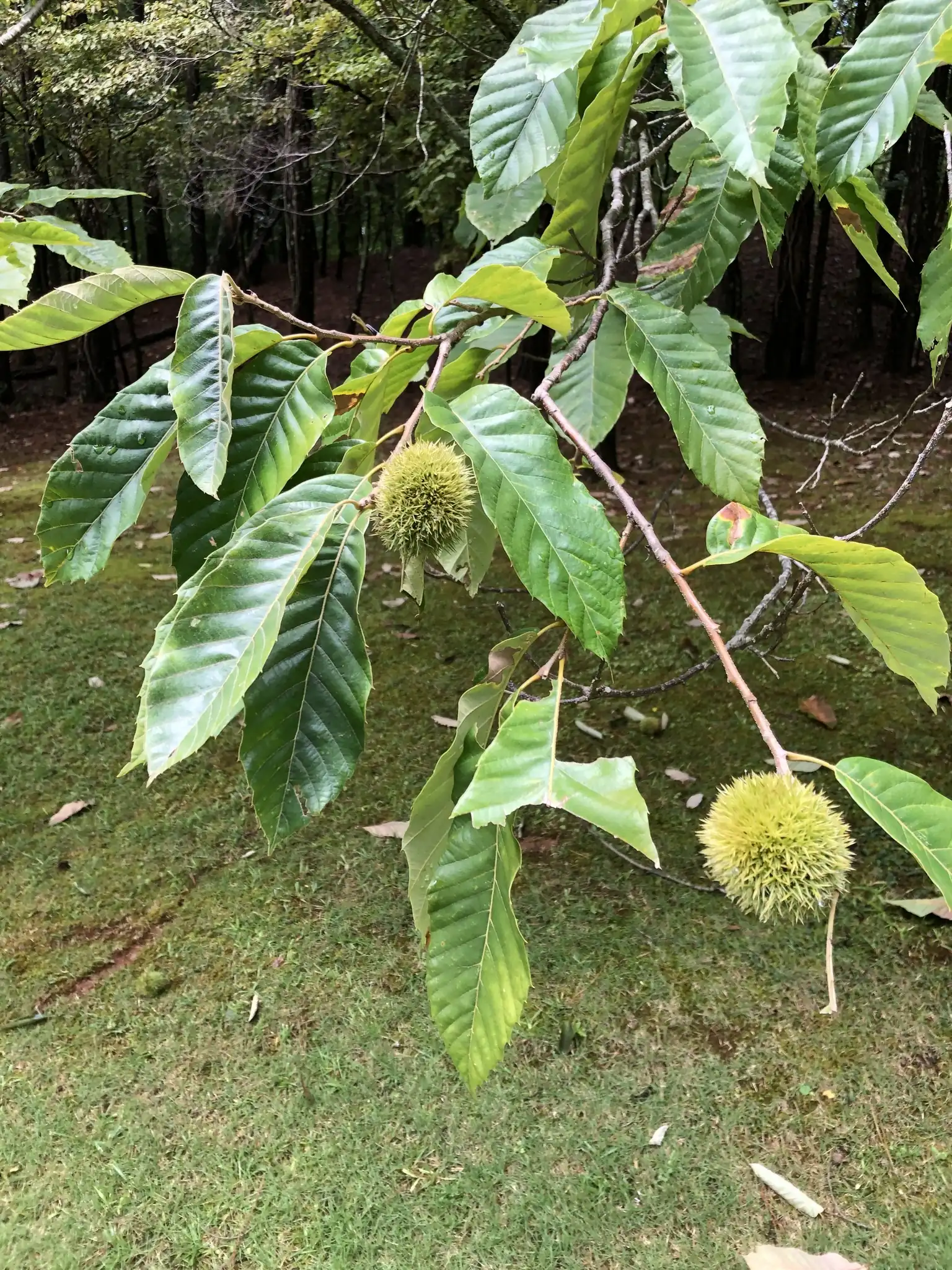
Castanea mollissima is a medium-sized, low-branched deciduous tree native to China. It is widely cultivated for its sweet, edible nuts and, most importantly, its strong resistance to chestnut blight.
Its key feature is its resistance to the blight that wiped out the American Chestnut. It produces large, flavorful nuts encased in an extremely spiny, sharp bur that splits open upon ripening in the fall.
Uses & Benefits:
Essentials
At a Glance
Plant Type
Tree
Height
480"
Width
480"
Light
Full Sun
Zones
4, 5, 6, 7, 8
Water
Moderate
Humidity
Adaptable
Lifespan
Medium (50-75 years)
Native To
China, Korea
Toxicity
Nuts are edible; spiny burs are a physical hazard
Bloom period
Early summer – Mid-summer
In flower about 2 months of the year
Marketplace
Where to Buy
Shipping costs Year-round shipping Free shipping
Planting
How to Grow
- Select a site in full sun with excellent drainage and acidic soil.
- Plant at least two different cultivars 40 feet apart.
- Dig a hole wide enough for the roots to spread out naturally.
- Set the tree so the root collar is at or slightly above the soil line.
- Backfill with native soil, eliminating air pockets.
- Water thoroughly and mulch, but keep mulch away from the trunk.
Pro Tip
Plant at least two different cultivars to ensure cross-pollination, as Chinese Chestnuts are not self-fertile and require a partner for nut production.
Keep It Thriving
Care Guide
Do
- Provide full sun all day for best growth and nut production.
- Ensure the soil is well-drained; chestnuts hate 'wet feet'.
- Prune young trees to develop a modified central leader structure.
- Protect young tree trunks from sunscald and rodent damage.
Don't
- Don't plant in heavy clay or poorly drained soils.
- Avoid planting in alkaline (high pH) soils.
- Don't plant just one tree if you want to harvest nuts.
- Don't allow weeds or grass to compete with young trees.
Seasonal Care Calendar
| Task | Jan | Feb | Mar | Apr | May | Jun | Jul | Aug | Sep | Oct | Nov | Dec |
|---|---|---|---|---|---|---|---|---|---|---|---|---|
| Fertilize | ||||||||||||
| Harvest | ||||||||||||
| Plant | ||||||||||||
| Prune |
Watch Out For
Pests & Diseases
Common Pests
Common Diseases
In the Garden
Landscape Uses & Companions
Landscape Uses
Companion Plants
Multiply
Propagation Methods
Good to Know
Common Questions
Chinese Chestnut questions
What zones can Chinese Chestnut grow in?
Chinese Chestnut is hardy in USDA Zones 4–8. Inside that range it survives winter in the ground; outside it, grow it as an annual or a container plant you protect.
Is Chinese Chestnut deer resistant?
Not reliably. Deer may browse Chinese Chestnut, especially tender spring growth — plan on repellents or fencing where pressure is high.
When does Chinese Chestnut bloom?
Chinese Chestnut typically blooms in early summer through mid-summer. Exact timing shifts a week or two with your zone — Sow's bloom calendar maps it to your garden.
Does Chinese Chestnut need full sun?
Chinese Chestnut does best in full sun (6+ hours).
Is Chinese Chestnut drought tolerant?
Yes — once established (usually after the first full season), Chinese Chestnut handles dry spells with minimal watering. Water deeply its first year to build the root system that makes that possible.
More Castanea to compare
Keep exploring
Explore the genus
Hardy in your zone?
Grow Chinese Chestnut with confidence
See it in a design of your actual yard, get zone-matched care reminders, and track it season by season in your garden journal.