The Story
Plant Bio
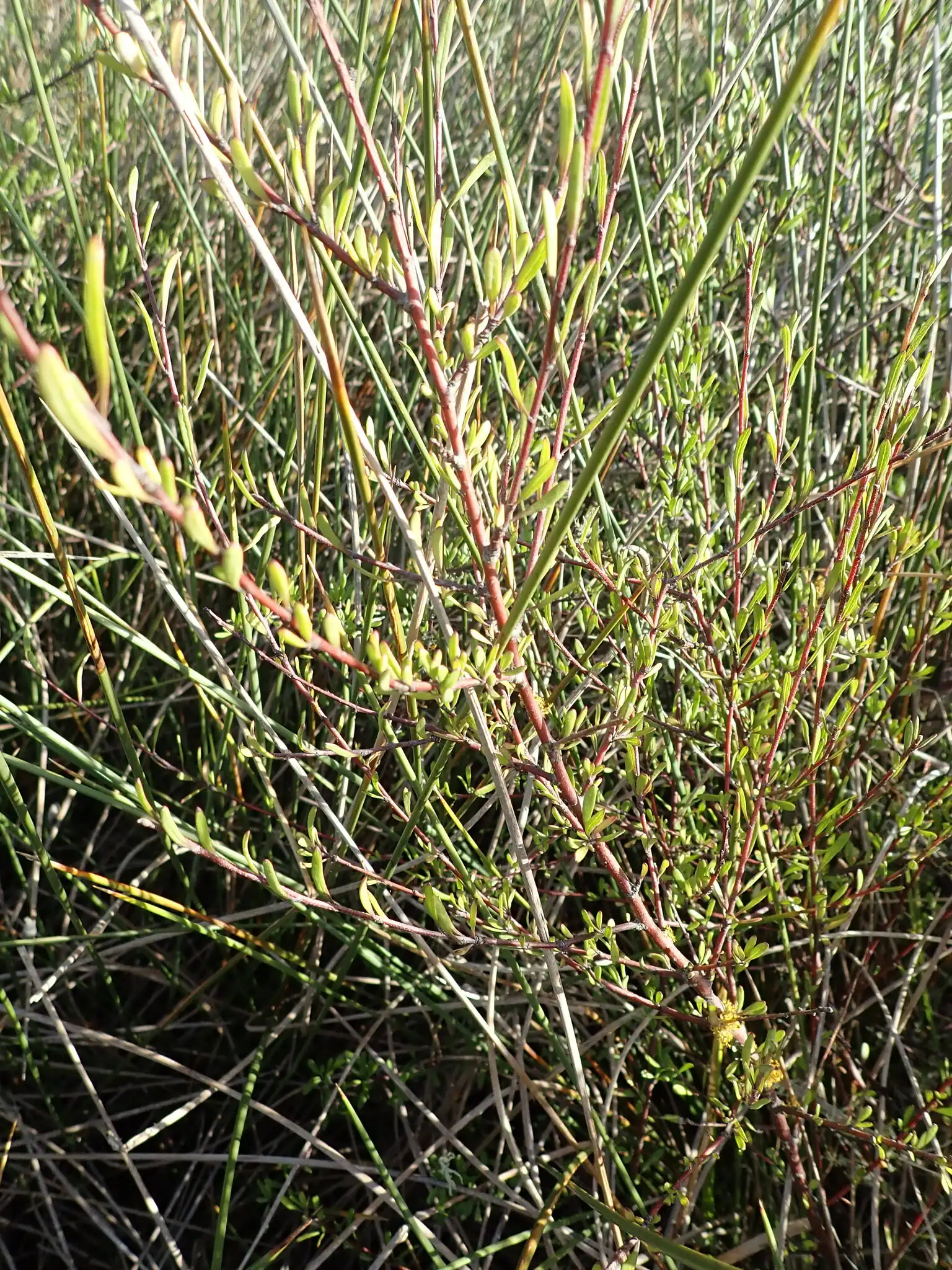
Plagianthus divaricatus, the saltmarsh ribbonwood, is a deciduous to semi-deciduous shrub endemic to New Zealand, where it colonizes coastal saltmarshes and estuarine margins. The plant forms a dense, tangled mound of interlaced, zigzagging branchlets that create a highly textured, structural silhouette.
Small, narrow leaves are clad in tiny, star-shaped hairs that give the foliage a distinctive silvery-gray cast. In spring, the branches bear tiny, drooping, cream-colored flowers that emit a sweet fragrance to attract insect pollinators.
Uses & Benefits:
Essentials
At a Glance
Plant Type
Shrub
Height
72"
Width
60"
Light
Full Sun, Partial Sun
Zones
8, 9, 10
Water
Medium to High
Humidity
High
Lifespan
Long-lived
Native To
New Zealand
Toxicity
Non-toxic
Bloom period
Spring – Late spring
In flower about 3 months of the year
Planting
How to Grow
- Select a planting site in full sun to light partial shade with moist, organic, or heavy clay soil.
- Dig a hole twice the width of the root ball and set the plant at the same depth as it was in the container.
- Water thoroughly after planting to settle the soil around the roots, maintaining consistent moisture during establishment.
- Apply a layer of organic mulch around the base to retain soil moisture and suppress weeds.
Pro Tip
Avoid shearing this shrub back into old, leafless wood, as bare interior stems lack latent buds and fail to resprout. Plant in moist, poorly drained, or brackish sites where its natural tolerance for waterlogging can be utilized.
Keep It Thriving
Care Guide
Do
- Plant in waterlogged, heavy clay, or saline soils where other shrubs fail to establish.
- Prune lightly immediately after spring flowering to maintain a compact shape.
- Provide full sun to maximize branch density and flower production.
Don't
- Do not cut back into old, bare wood, which destroys the plant's natural framework.
- Do not allow young plants to dry out completely during their first growing season.
- Do not apply heavy doses of high-nitrogen fertilizer, which promotes weak, leggy growth.
Seasonal Care Calendar
| Task | Jan | Feb | Mar | Apr | May | Jun | Jul | Aug | Sep | Oct | Nov | Dec |
|---|---|---|---|---|---|---|---|---|---|---|---|---|
| Fertilize | ||||||||||||
| Mulch | ||||||||||||
| Propagate | ||||||||||||
| Prune |
Watch Out For
Pests & Diseases
Common Pests
Common Diseases
In the Garden
Landscape Uses & Companions
Landscape Uses
Companion Plants
Multiply
Propagation Methods
Good to Know
Common Questions
Saltmarsh Ribbonwood questions
What zones can Saltmarsh Ribbonwood grow in?
Saltmarsh Ribbonwood is hardy in USDA Zones 8–10. Inside that range it survives winter in the ground; outside it, grow it as an annual or a container plant you protect.
When does Saltmarsh Ribbonwood bloom?
Saltmarsh Ribbonwood typically blooms in spring through late spring. Exact timing shifts a week or two with your zone — Sow's bloom calendar maps it to your garden.
Does Saltmarsh Ribbonwood need full sun?
Saltmarsh Ribbonwood does best in full sun to part shade. In hot climates, afternoon shade keeps blooms fresher longer.
Is Saltmarsh Ribbonwood drought tolerant?
Yes — once established (usually after the first full season), Saltmarsh Ribbonwood handles dry spells with minimal watering. Water deeply its first year to build the root system that makes that possible.
More Plagianthus to compare
Keep exploring
Explore the genus
Hardy in your zone?
Grow Saltmarsh Ribbonwood with confidence
See it in a design of your actual yard, get zone-matched care reminders, and track it season by season in your garden journal.